Pairing
기아 디자인 크리에이티브 철학인 ‘오퍼짓 유나이티드(Opposites United)’의 관점에서 Pairing은 두 가지 다른 개념과 의미가 결합하여, 뜻밖의 의외성을 도출하는 창의적 프로세스입니다. 이를 서로 다른 분야에서 자신만의 세계를 구축한 아티스트들이 페어링 과정을 통해 빚어낸 창의적 작품과 시너지, 그 작품이 탄생하기까지의 스토리를 통해 ‘오퍼짓 유나이티드(Opposites United)’의 근본적인 답을 찾아갑니다.
Pairing
In the context of Kia Design’s creative philosophy, ‘Opposites United’, Pairing is the creative process of combining two different concepts to create something unexpected. We explore the creative work of pairings by artists from different fields, and tell the stories of how these collaborations came about.
낯선 풍경에서 발견한 인간다움
나나 & 펠릭스Discovering Our Humanity
in Unfamiliar Landscapes
NANA & FELIX사람은 한 가지 기준으로 설명되지 않습니다. 같은 집과 도시에 살더라도 각자가 경험하는 삶은 다르고, 한 사람 안에도 서로 어긋나는 생각과 마음이 공존합니다. 나나와 펠릭스가 주목하는 것은 겉으로 드러난 차이 자체보다 그 뒤에 놓인 개인의 경험과 환경입니다.
지난 10여 년간 두 사람은 아파트와 신도시, 버려진 액자, 도시의 공기와 하천 등 익숙한 풍경을 낯선 자리에 옮겨 놓으며 그 안에 놓인 삶의 여러 층위를 살펴왔습니다. 최근에는 ‘안전의 건축’을 통해 우리가 서로를 보호하고 믿는 방식으로 시선을 넓혔습니다. 서로 다른 문화적 배경과 성향을 지닌 두 사람은 작업에서도 서로의 제안을 비평하고 상대를 설득하며 하나의 답에 머무르지 않습니다.
《기아 디자인 매거진》 Vol.19 Pairing은 그들의 작업과 대화를 통해 우리가 한 사람을 안다고 생각할 때 무엇을 놓치고 있는지 묻습니다.No single definition can fully capture a person. Even within the same home or city, each of us experiences life differently. Within each person, too, conflicting thoughts and feelings coexist. Nana & Felix look beyond the differences we can see to the experiences and circumstances that shape a life.
For more than a decade, Nana & Felix have made familiar landscapes feel unfamiliar. Through apartment blocks and new towns, discarded picture frames, urban air and streams, they explore the many layers of human experience. Their recent work on the “architecture of safety” turns to how we protect and trust one another. Different in background and temperament, the two artists test each other’s proposals and make the case for their ideas, never settling on a single answer. In this Pairing feature for KIA DESIGN MAGAZINE Vol. 19, their work and conversation raise a question: when we think we know someone, what are we missing?
Editor’s Note
나나와 펠릭스는 빠르게 변하는 도시에서 사라지는 것과 그 자리를 채우는 것을 살피고, 그 변화가 사람들의 일상에 어떻게 드러나는지 작품에 담습니다. 외모와 피부색을 이유로 한 차별이 인간의 존엄과 공존을 해치는 문제로 드러나던 무렵, 두 사람은 이러한 구분의 시선을 흑백사진의 명암에 빗댔고, 사는 곳으로 지위를 가늠하는 사회에서는 아파트 브랜드를 가훈처럼 족자에 써 넣었습니다. 미술관의 관람 지침을 모아 전시장 벽을 채우기도 했습니다. 이 작품들은 익숙한 풍경을 다시 보게 하며, 우리가 서로를 어떤 기준으로 바라보고 어떤 규칙을 따르며 살아가는지 묻습니다.
그렇다고 작품이 기준과 규칙을 드러내는 데서 그치지는 않습니다. 그 안에서 살아가는 사람들의 바람도 담겨 있습니다. 현실적인 조건을 고려하면서도 앞으로 이어갈 일상을 그리고, 안전을 바라면서도 스스로 판단하고 움직일 자유를 놓지 않으려는 마음입니다. 작품은 한 사람 안에 공존하는 이런 마음을 나란히 보여 주며, 나와 다른 선택을 한 사람에게도 지나온 삶과 지키고 싶은 것이 있음을 헤아려 보게 합니다. 외모나 피부색, 사는 곳처럼 겉으로 드러난 조건만으로 한 사람을 판단하지 않을 때, 작품이 끝내 비추는 것은 저마다 다른 삶을 살아가면서도 비슷한 것을 바라고 함께 살아가는 사람들입니다.
※ 이 인터뷰에 담긴 의견은 나나와 펠릭스의 개인적 견해이며, 《기아 디자인 매거진》의 공식 입장과 별개입니다.
Nana & Felix observe what disappears from fast-changing cities and what takes its place, and they capture in their work how these changes surface in people’s everyday lives. At a time when discrimination based on appearance and skin color was coming to be seen as a threat to human dignity and coexistence, the duo likened this way of sorting people to the tonal scale of black-and-white photography. In a society that gauges status by where people live, they rendered apartment brand names in calligraphy on hanging scrolls, like family mottos. They have also filled an exhibition wall with visitor guidelines gathered from museums. These works invite us to look again at familiar landscapes and ask by what criteria we see one another and what rules we live by.
Yet the works do more than expose criteria and rules. They also hold the hopes of the people who live by them: the wish to weigh practical realities while picturing the life ahead, and to seek safety without giving up the freedom to think and act for oneself. By setting side by side these desires that coexist within a single person, the works prompt us to consider that those who make choices different from our own also have lives behind them and things they want to protect. When we stop judging people by visible traits alone, such as appearance, skin color or where they live, what the works ultimately reveal are people leading different lives, wanting similar things and living side by side.
※ This interview reflects the personal views of Nana and Felix and does not represent the official position of Kia Design Magazine.
Chapter 01.
하나의 기준으로 설명되지 않는 사람들
Chapter 01.
More Than a Single Definition
사람은 이름 하나, 겉모습 하나에 다 담기지 않습니다.
익숙한 기준으로 사람을 구분하기 전에, 그 사람이 지나온 삶과 소중히 여기는 가치부터 들여다봐야 합니다.
나나와 펠릭스는 사람을 나누기보다, 한 사람 안에 함께 있는 여러 모습과 모순을 들여다봅니다.There is more to a person than a label or what they look like.
Before placing someone in a familiar category, we need to consider what they have lived through and what they hold dear.
Rather than dividing people into categories, Nana & Felix explore the many facets and contradictions within each person.
두 분은 서로 다른 언어와 환경에서 성장하셨습니다. 각자의 경험은 소속감을 바라보는 태도와 서로를 이해하는 데 어떤 영향을 주었나요?
저희의 성장 배경은 다르지만 비슷한 경험을 했어요. 한 사람은 핀란드에서 집 안과 밖에서 쓰는 언어가 다른 환경에서 자랐고, 다른 한 사람은 한국에서 어릴 때 학교를 여러 번 옮기며 한곳에 오래 머물지 않았거든요. 둘 다 이른 나이에 해외로 이주하기도 했고요. 그래서 살아온 시간의 대부분을 특정한 장소나 집단에 온전히 속하지 않은 채 보냈다고 할 수 있어요. 어디엔가 꼭 속해야 한다는 생각은 그리 강하지 않지만, 사람들이 왜 그토록 소속되기를 원하는지에는 오랫동안 관심을 가져왔죠. 처음 만났을 때는 정치, 종교, 윤리 등 삶 전반에 관해 이야기하면서 서로의 기본적인 가치관이 잘 맞는다는 것을 알게 되었어요. 서로 간에 문화적 차이를 느끼지 못했고, 대화도 편안하게 이어졌어요. 작업에 대해 이야기를 나누고 서로에게 솔직한 비평을 건네는 일도 자연스러웠죠.
You grew up with different languages and in different environments. How did those experiences shape the way you see belonging, and the way you came to understand each other?
Our backgrounds are different, but there are similarities in our experiences. One of us grew up in Finland speaking one language at home and a different one outside it. The other changed schools several times as a child in Korea, never staying in one place for long. We both moved abroad at a young age, too. So you could say we have spent most of our lives without fully belonging to any one place or group. We don’t feel a particularly strong need to belong somewhere, but we have long been curious why people want to belong so much. When we first met, we talked about politics, religion, ethics and life in general, and found that our basic values were very much in tune. We didn’t sense any cultural gap between us, and the conversation flowed easily. It felt natural to talk about our work and give each other honest criticism.
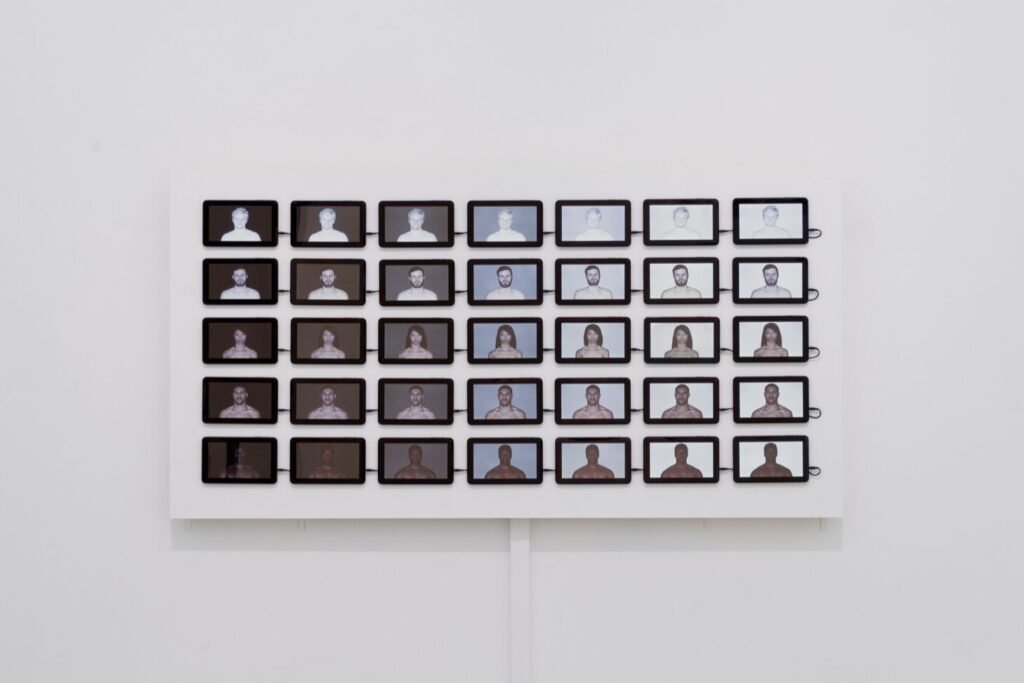
《The Zone System》에서는 사람을 분류하는 기준을 다루셨습니다. 작업 당시 어떤 상황에 주목했나요?
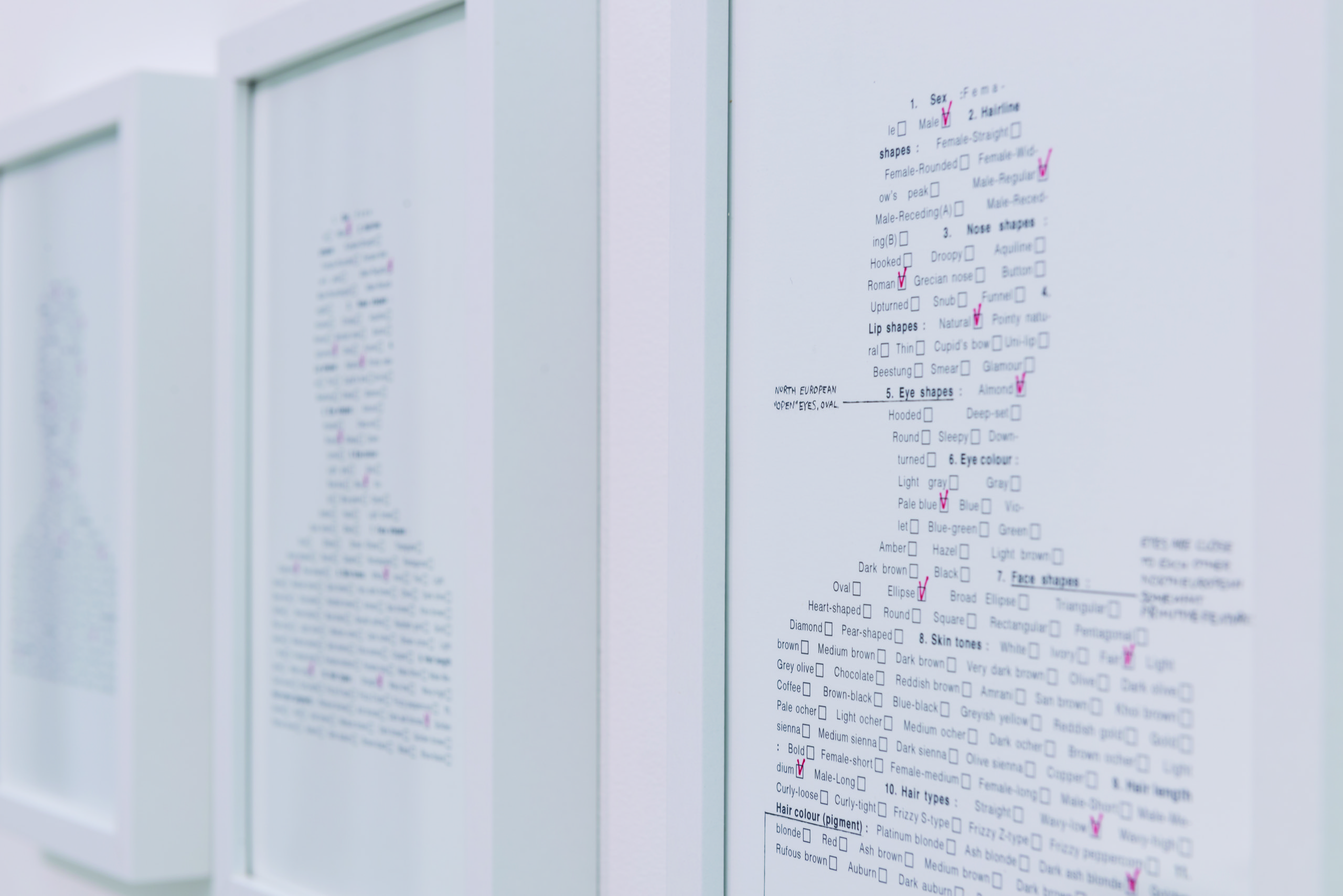
당시 핀란드를 비롯한 유럽에서는 외국인 배척을 앞세운 강경 우파 세력이 부상하고 있었어요. 저희는 사람들이 외모나 피부색을 기준으로 타인을 쉽게 분류하고 판단하는 방식에 주목했죠. 《The Zone System》에서는 흑백사진의 명암을 여러 단계로 나누는 ‘존 시스템’을 통해 이러한 사회적 분류 방식을 비추어 보았어요. 이 프로젝트의 다른 작업에서는 프랜시스 골턴의 합성 초상 기법과 수사 기관에서 범죄 용의자의 얼굴 특징을 묘사하는 데 사용하던 방법들을 차용하기도 했어요.
In The Zone System, you examine the criteria used to categorize people. What was happening around you when you made the work?
At the time, hard-right forces campaigning against foreigners were on the rise in Finland and elsewhere in Europe. We noticed how readily people classify and judge others by their appearance or skin color. In The Zone System, we used the zone system, which divides the tones of black-and-white photography into a series of steps, to reflect on this kind of social categorization. Other works in the project drew on Francis Galton’s composite portraits and methods that law enforcement used to describe the facial features of criminal suspects.
외모나 피부색처럼 겉으로 드러난 기준으로 사람을 구분하는 방식에는 어떤 한계가 있다고 보셨나요?
우리가 누군가를 바라보는 시선 자체가 완전히 객관적일 수 없다는 이야기를 하고 싶었어요. 판단의 기준은 시대에 따라 달라지고, 우리의 기억도 언제나 정확한 것은 아니니까요. 오늘날 당연하게 여겨지는 도덕적 규범이나 사회적 기준도 불과 10년 전에는 그렇지 않았을 수 있어요. 지금 우리가 살아가는 현실의 기준도 영원불변의 진실은 아니라고 생각해요.
What are the limits of categorizing people by visible features such as appearance or skin color?
We wanted to point out that the way we see another person can never be entirely objective. The criteria we judge by change with the times, and our memories aren’t always accurate either. Moral codes and social norms that seem obvious today might not have seemed that way even ten years ago. The standards of the reality we live in now aren’t eternal truths either.
두 분은 예술을 ‘익숙한 세계를 살짝 옆으로 밀어보는 일’이라고 표현했습니다. 그렇게 조금 다른 자리에서 바라보는 것이 왜 중요할까요?
저희는 아무리 익숙한 것도 오래 들여다보면 낯설어질 수 있다는 이야기를 자주 해요. 한 단어를 계속 되뇌다 보면 “이게 정말 이런 단어였나?” 싶어지는 것처럼요. 저희가 작업을 통해 추구하는 것도 이와 비슷해요. 늘 당연하게 여겨왔던 것을 계속 바라보다 보면 어느 순간 “잠깐, 이게 어떻게 이렇게 된 거지?”라는 질문을 던지게 되는 거죠. 저희에게 예술은 현실을 완전히 새롭게 만드는 게 아니라, 익숙한 세계를 ‘살짝 옆으로 밀어보는 일’에 가까워요. 그렇게 조금만 시선을 옮겨도 평소에는 놓치고 지나쳤던 것들을 알아차리고, 일상의 현실을 조금은 낯선 방식으로 바라볼 수 있으니까요.
You describe art as “nudging the familiar world slightly to one side.” Why does that small shift in perspective matter?
We often talk about how anything, however familiar, can start to seem strange if you look at it long enough. It is like saying a word over and over until you wonder, “Is that really a word?” Something similar happens in our work. You keep looking at what you have always taken for granted, until suddenly you ask, “Hang on, how did it end up like this?” For us, art is not about completely reinventing reality. It is more like “nudging the familiar world slightly to one side.” That small shift lets you notice what you normally overlook and see everyday reality in a less familiar way.
그렇게 낯설게 바라본 장면을 관객과는 어떻게 나누고 싶으신가요? 작품에 정해진 답을 담지 않는 이유도 궁금합니다.
분명한 의견을 저희도 가지고 있지만, 작품을 통해 사람들에게 무엇을 어떻게 생각해야 하는지 말하고 싶지는 않아요. 예술은 답을 제시하기보다는 질문을 던질 여지를 남겨야 한다고 생각해요. 익숙한 것을 다른 각도에서 바라보면 무엇이 달라지는지 관객 스스로 생각해 볼 수 있기를 바라요.
How do you hope to share these unfamiliar perspectives with an audience? Why leave the work open-ended rather than offer a fixed answer?
We have clear views of our own, but we don’t want the work to tell people what to think. We believe art should leave room for questions rather than provide answers. We hope people will consider for themselves what changes when they look at something familiar from a different angle.
사람은 서로 반대되는 마음을 동시에 품기도 합니다. 그런 모순도 인간의 한 모습으로 받아들여야 할까요?
그렇다고 생각해요. 사람이 언제나 논리적으로 판단하거나 최선의 선택만 하는 것은 아니니까요. 우리가 만들어가는 사회도 마찬가지예요. 하나의 가치만으로 사회 전체를 설명할 수는 없죠. 환경을 생각하면서도 계속 소비하고, 자유를 원하면서도 더 많은 안전과 통제를 바라잖아요. 이렇게 서로 충돌하는 욕구들이 나란히 존재하는 거죠. 저희는 그런 모순 속에도 아름다움이 있을 수 있다고 생각해요. 자신의 모순을 인정하면 타인에게도 조금 더 관대해질 수 있을 테니까요. 그것은 서로를 더 잘 이해하고, 변화를 가능하게 할 수 있는 기회이기도 하죠.
We can hold opposing feelings at the same time. Should we accept those contradictions as part of being human?
We think so. People aren’t always logical, and they don’t always make the best choices. The same goes for the society we create: no single value can explain it all. We care about the environment but keep consuming. We want freedom, but we also want greater safety and control. Those conflicting desires exist side by side. We think there can be something beautiful about that. When we acknowledge our own contradictions, we can be a little more generous toward others. That also gives us a better chance of understanding one another and making change possible.
《The Zone System 더 존 시스템》, 2014, 35채널 동기화된 영상; 컬러/무음, 반복재생 (약 12분), 약 200×95cm
Chapter 02.
서로 다른 삶이 머무는 자리
Chapter 02.
Where Different Lives Unfold
사람에게 서로 다른 마음이 공존하듯, 사람이 만든 도시에도 상반된 얼굴이 있습니다. 새 도시에는 발전을 향한 기대가 담겨 있지만, 그 풍경에는 낯섦과 불편함도 함께 배어 있습니다. 나나와 펠릭스는 변화하는 도시의 양면성을 바라보면서, 그곳에서 저마다의 삶을 이어가는 사람들에게도 시선을 기울입니다.
Like the people who build them, cities have contrasting sides. A new city carries hopes of progress. Yet its landscape can also feel unfamiliar and unsettling. Nana & Felix explore these contrasts in changing cities while keeping the people who live there in view.
서로 다른 가치와 욕망이 공존하는 모습은 사람들이 만든 도시 풍경에서도 볼 수 있을 것 같습니다. 두 분은 한국의 빠른 도시 변화에서 독특한 아름다움을 발견했다고 하셨는데요. 처음 어떤 점에 끌렸고, 그것이 어떻게 ‘발전의 미학’이라는 관심으로 이어졌나요?
한국에 온 뒤 송도나 천안, 아산 같은 곳을 자주 찾았어요. 바다나 탁 트인 들판이었던 자리에 완전히 새로운 도시가 들어서는 모습은 정말 놀라웠어요. 서울에서도 오래된 동네가 새로운 풍경으로 바뀌는 과정을 보았고요. 건물과 거리가 바뀌면서 오랜 시간 쌓인 문화와 기억도 함께 사라지는 모습에 눈길이 갔어요. 아파트 단지에 익숙한 사람이라면 별다른 생각 없이 지나칠 수도 있겠지만, 한발 물러서서 바라본 그 풍경은 저희에게 낯설고 폭력적으로 다가왔어요. 처음 저희를 끌어당긴 것은 그 파괴와 상실이 남긴 쓸쓸한 아름다움이었어요. 사라지는 풍경을 마주하며 느끼는 슬픔은 지금도 저희 작업에 남아 있어요. 이런 풍경 속을 걷고, 그곳에서 생활하고 작업하면서 새로운 도시를 만드는 과정에서 무엇이 남고 무엇이 사라지는지 생각하게 됐어요. 저희 작업은 ‘발전’이라는 말을 당연하게 받아들이기보다, 그 의미를 풍경 속에서 다시 살펴보려는 시도예요. 그렇게 ‘발전의 미학’이라는 개념을 구체화해왔죠.
초기 작업 중 하나인 《발전 Progress》는 평범한 LED 전광판에 ‘progress’라는 단어만을 주문처럼 반복해서 보여주는 작업이었어요. 발전 자체를 부정하려는 것은 아니에요. 발전이란 무엇을 의미하고, 그 기준은 누가 정하며, 우리는 어떤 방향으로 나아가야 하는지 폭넓게 생각해 보자는 것이었죠.
Cities give form to different values and desires. You have described finding a distinctive beauty in Korea’s rapid urban transformation. What first drew you to it, and how did it lead to your interest in the “aesthetics of progress”?
After coming to Korea, we visited places like Songdo, Cheonan and Asan quite often. It was extraordinary to see whole new cities rising out of what had been sea or open fields. In Seoul, too, we watched old neighborhoods turn into new landscapes. As buildings and streets changed, we noticed how the culture and memories built up over many years disappeared along with them. If you are used to apartment complexes, you might not give them a second thought. But step back, and the landscape struck us as strange, even violent. What first drew us in was the melancholy beauty left behind by all that destruction and loss. The sadness we feel when facing a disappearing landscape still runs through our work. Walking through these landscapes, and living and working in them, we began to think about what remains and what disappears as new cities are built. Our work is an attempt not to take the word “progress” for granted, but to look again at what it means within the landscape. That is how the idea of the “aesthetics of progress” took shape.
One of our early works, Progress, was an ordinary LED sign that repeated nothing but the word “progress,” like a mantra. We’re not rejecting progress itself. We wanted to think broadly about what progress means, who sets its standards and which direction we should be heading in.
‘발전의 미학’은 아파트를 다룬 작업에서도 드러나는 것 같습니다. 한국 도시 발전을 대표하는 아파트는 누군가에게 사회적 지위의 상징이지만, 누군가에게는 일상이 이어지는 집이기도 합니다. 두 분은 이 서로 다른 의미를 어떻게 바라보셨나요?
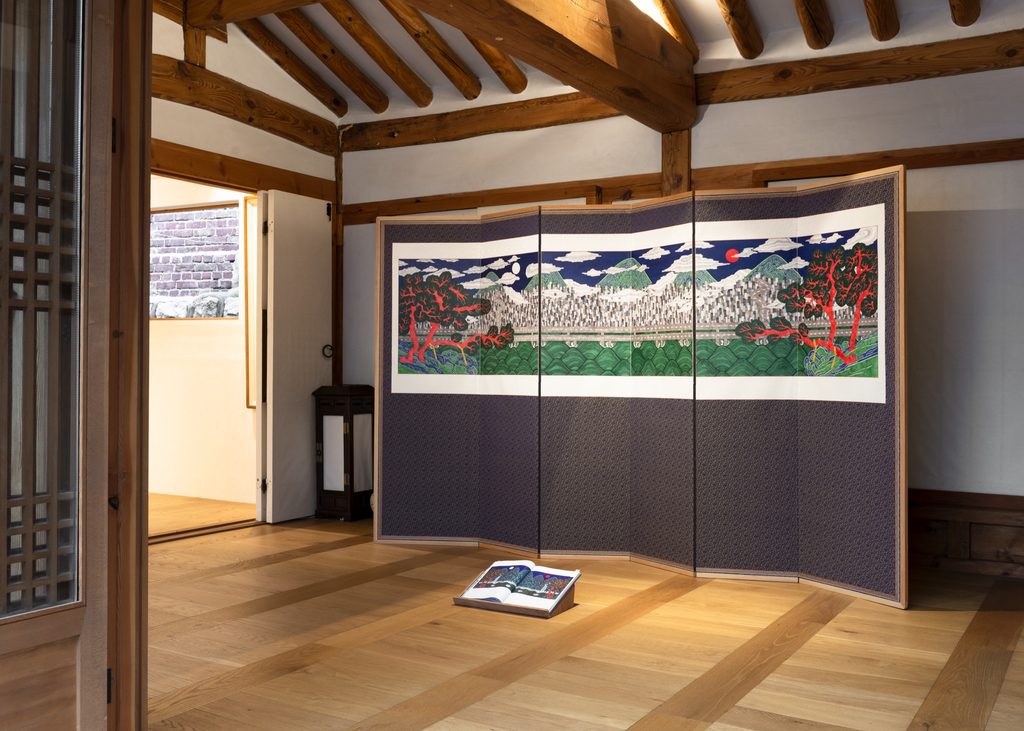
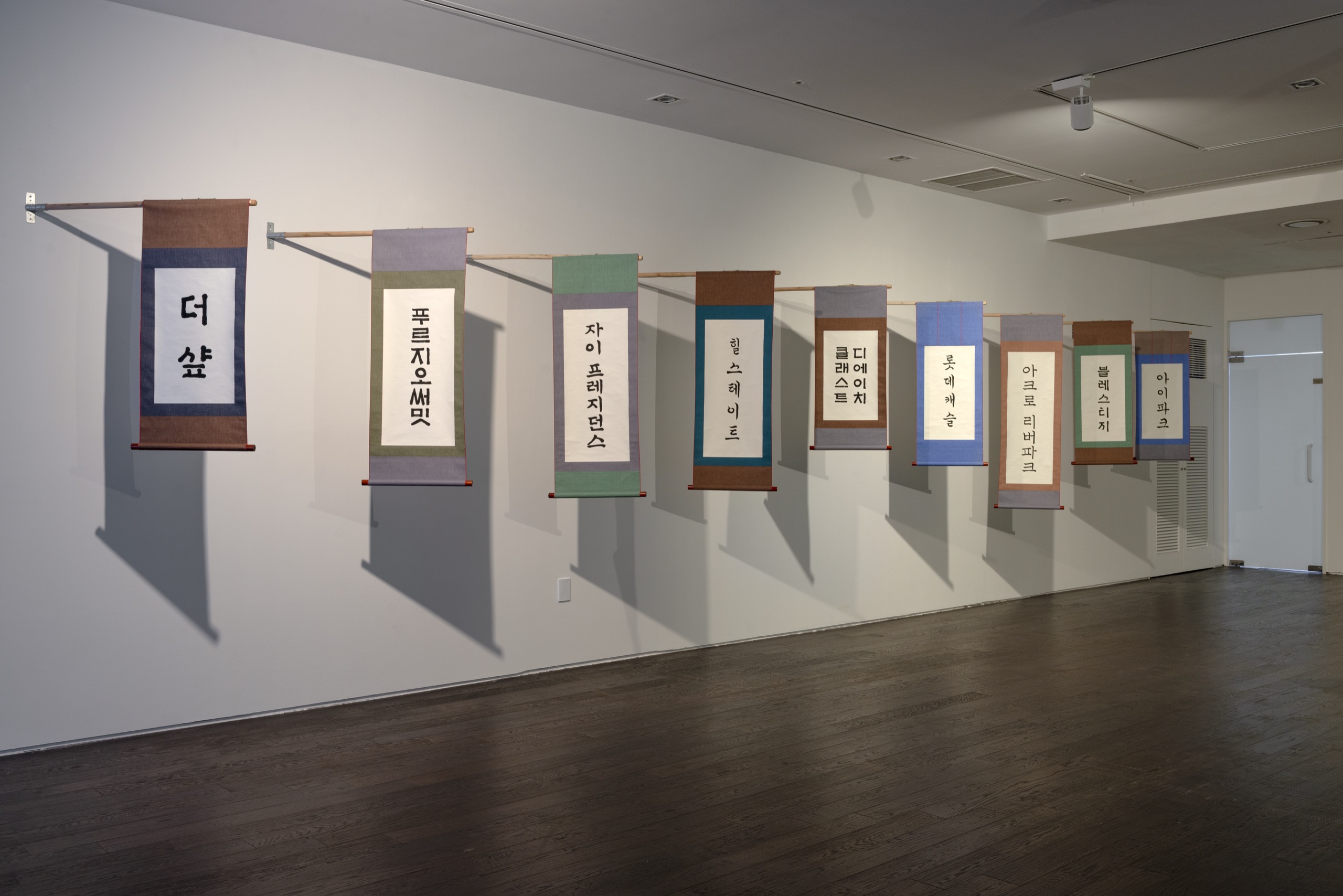
《당신이 사는 곳이 당신을 말해줍니다》는 2000년대 중후반 실제 건설사 광고에 사용된 문구에서 가져온 제목이에요. 이 작업에서는 아파트 브랜드 이름을 마치 가훈처럼 서예 작품으로 만들었어요. 자신이 사는 집의 이름이 어떻게 사회적 지위를 드러내는지를 살펴보고 싶었죠. 《일월오봉아파트고속도로도》에서는 조선시대 회화인 《일월오봉도》에 아파트와 고속도로를 더했어요. 전통의 풍경을 오늘날의 모습으로 바꾸어 보면서, 우리가 자신과 사회의 모습을 어떤 기준으로 선택해 보여주는지 살펴보고자 했어요.
그렇다고 아파트에 사는 사람들의 삶을 사회적 지위나 자산의 가치만으로 설명할 수는 없다고 생각해요. 아파트는 누군가가 일상을 이어가는 집이기도 하잖아요. 집을 구입하는 일은 많은 사람에게 큰 선택이에요. 특히 아파트를 고를 때는 자산 가치도 중요한 기준이 되곤 하죠. 저희는 아파트가 어떻게 투자 대상으로 자리 잡았는지, 그에 따른 이익은 누구에게 돌아가는지 살펴보고 싶어요.
The “aesthetics of progress” also runs through your work with apartments. An apartment may symbolize Korea’s urban development, signal social status or simply be a home where everyday life goes on. How did you approach those different meanings?
You Are Where You Live takes its title from an actual construction company advertisement from the mid-to-late 2000s. We turned apartment brand names into works of calligraphy, like family mottos, to look at how the name of your home can signal your social standing. In The Sun, Moon, Five Peaks, Apartments and Motorways, we added apartments and motorways to Irworobongdo, the Joseon-dynasty painting of the sun, moon and five peaks. By recasting a traditional landscape in today’s terms, we wanted to look at the criteria by which we choose how to present ourselves and our society.
That said, the lives of people who live in apartments can’t be explained by social status or asset value alone. An apartment is also a home where someone’s everyday life goes on. Buying a home is a big decision for many people, and with apartments in particular, asset value is often a key consideration. We want to look at how apartments came to be treated as investments, and who benefits from that.
각각 15×18cm (한 쌍15×36cm)
버려진 액자를 모으기 시작한 계기와, 그 물건들이 한데 모여 만들어낸 풍경이 궁금합니다.
2016년, 개인적으로 힘든 시기를 보내던 때 마음을 달래기 위해 밤늦게까지 도시의 뒷골목을 걷기 시작했어요. 초현대적인 스마트 도시의 그늘에 가려진 채 존재하는, 버려지고 쓸모없어지거나 시대에 뒤처진 것들을 사진으로 찍으며 끝없이 걸었죠. 도시를 실제로 지탱하고 있는 임시방편이나 즉흥적인 해결책들에 매료되었던 것 같아요. 시간이 지나면서 유난히 많은 액자가 버려져 있다는 사실을 발견했어요. 저희가 사진으로 담고 있던 세부적인 요소들처럼, 액자에도 사람들이 쉽게 지나치는 아름다움이 담겨 있다고 느껴 수집하기 시작했어요.
지금까지 약 500개의 액자를 모았어요. 그중에는 돌잔치 사진이나 결혼사진, 졸업사진처럼 원래의 내용물이 그대로 남아 있는 것도 있어요. 이미 지나가 버린 삶의 흔적들이죠. 비어 있는 액자에는 저희가 직접 찍은 사진을 넣어요. 전시할 때는 이러한 액자들을 공간 안으로 점점 확장되는 설치작업으로 구성하는데, 마치 기묘하고 이미 사라져버린 풍경처럼 보여요. 저희는 액자 하나하나에 담긴 개인적인 이야기를 추적하려고 하지 않아요. 오히려 액자들이 함께 만들어내는 집단적인 이야기에 더 관심이 있어요. 우리가 공간과 시간 속에서 어떻게 살아가고, 그것들과 어떤 관계를 맺는지에 관한 이야기죠.
유럽에서는 100년이 넘은 건물을 흔히 만날 수 있어요. 그런 집에 살면 소유자라기보다 잠시 집을 돌보는 사람처럼 느껴질 때가 있어요. 내가 떠난 뒤에도 그 집은 오랫동안 그 자리에 남아 있을 테니까요. 반면 건물이나 동네가 새로 바뀌는 곳에서는 집과 공동체, 소속감을 느끼는 방식도 달라질 수 있겠죠. 저희는 이 작업을 통해 사라지는 풍경에 대한 쓸쓸함을 마주하고 이해하려고 해요.
What led you to start collecting discarded picture frames, and what kind of landscape emerged when they came together?
In 2016, while going through a difficult time personally, we began walking the city’s backstreets late at night to clear our heads. We walked endlessly, photographing things that had been discarded, had outlived their use or had fallen behind the times, hidden in the shadow of the ultra-modern smart city. We were fascinated by the makeshift fixes and improvised solutions that actually hold the city together. Over time, we noticed just how many picture frames had been thrown away. Like the details we had been photographing, the frames seemed to hold a kind of beauty people easily pass by, so we started collecting them.
We’ve collected about 500 so far. Some still hold their original contents, such as first-birthday portraits, wedding pictures or graduation photographs: traces of lives that have already passed. Into the empty frames, we put photographs we took ourselves. When we exhibit them, we arrange the frames as an installation that gradually expands through the space, so that it looks like a strange landscape that has already vanished. We don’t try to trace the personal story behind each frame. We’re more interested in the collective story the frames tell together: how we live in space and time, and how we relate to them.
In Europe, it is quite common to find buildings that are more than 100 years old. Living in one, you can feel less like the owner than someone looking after it for a while. The house will still be standing long after you have gone. Where buildings and neighborhoods are being rebuilt, on the other hand, the way people experience home, community and belonging may change as well. Through this work, we try to face and understand the melancholy of disappearing landscapes.
공기와 하천을 다룬 작품에는 사람이 거의 등장하지 않습니다. 그 풍경에서 두 분은 사람의 삶을 어떻게 바라보셨나요?
저희 작업의 중심에는 늘 인간, 혹은 인간의 활동이 있어요. 다만 전시에서는 관객이 중심이 되도록 의도적으로 작품에 인간의 모습을 등장시키지 않으려고 해요.
《SEL2020HEL》은 2016년과 2017년 서울에 머물면서 경험한 공기질 문제에서 출발했어요. 숨쉬기가 어렵다는 직접적인 불편함 외에도, 공기 문제가 자신과 멀리 떨어진 곳의 일처럼 여겨지는 방식에 주목했죠. 우리가 사용하는 물건들은 여러 곳에서 생산되고 소비되잖아요. 저희는 서울과 헬싱키의 공기도 그런 생산과 소비를 통해 서로 연결되어 있다고 생각했어요.
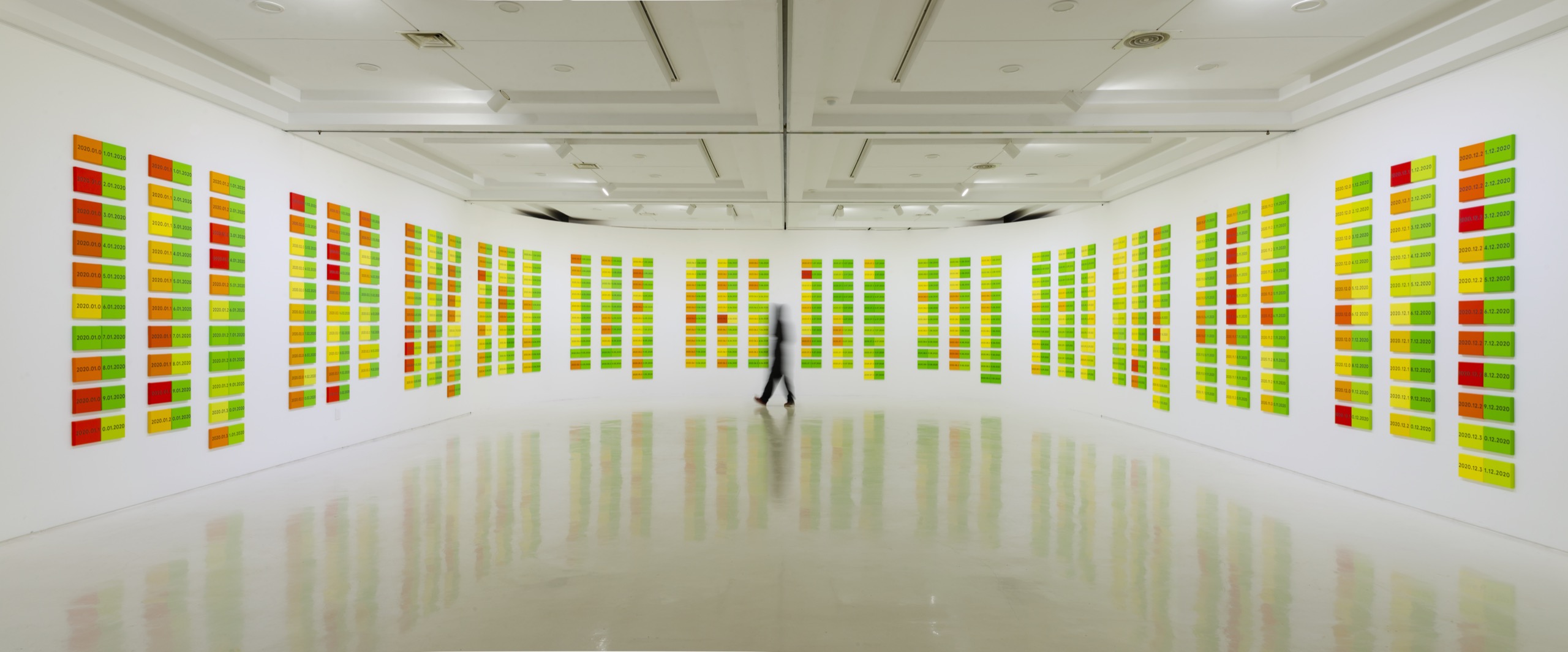
《SEL2020HEL》에서는 2020년 한 해 동안 서울과 헬싱키의 대기질을 매일 기록하고, 그 수치를 색으로 변환했어요. 366일의 데이터는 총 732점의 회화가 되었고, 날짜를 두 점에 걸쳐 함께 적어 각각 366쌍으로 연결했어요. 그해 코로나19 팬데믹이 닥칠 것이라고는 전혀 예상하지 못했어요. 3월부터 이동이 제한되고 산업활동이 줄어드는 동안 공기질이 달라지는 모습을 보게 됐죠. 돌이켜보면 그 변화는 우리가 인간이 만들어낸 풍경을 다루고 있다는 사실을 더 분명하게 해주었어요. 우리가 원하든 원하지 않든, 모두의 활동이 함께 만들어가는 풍경이라는 사실을요.
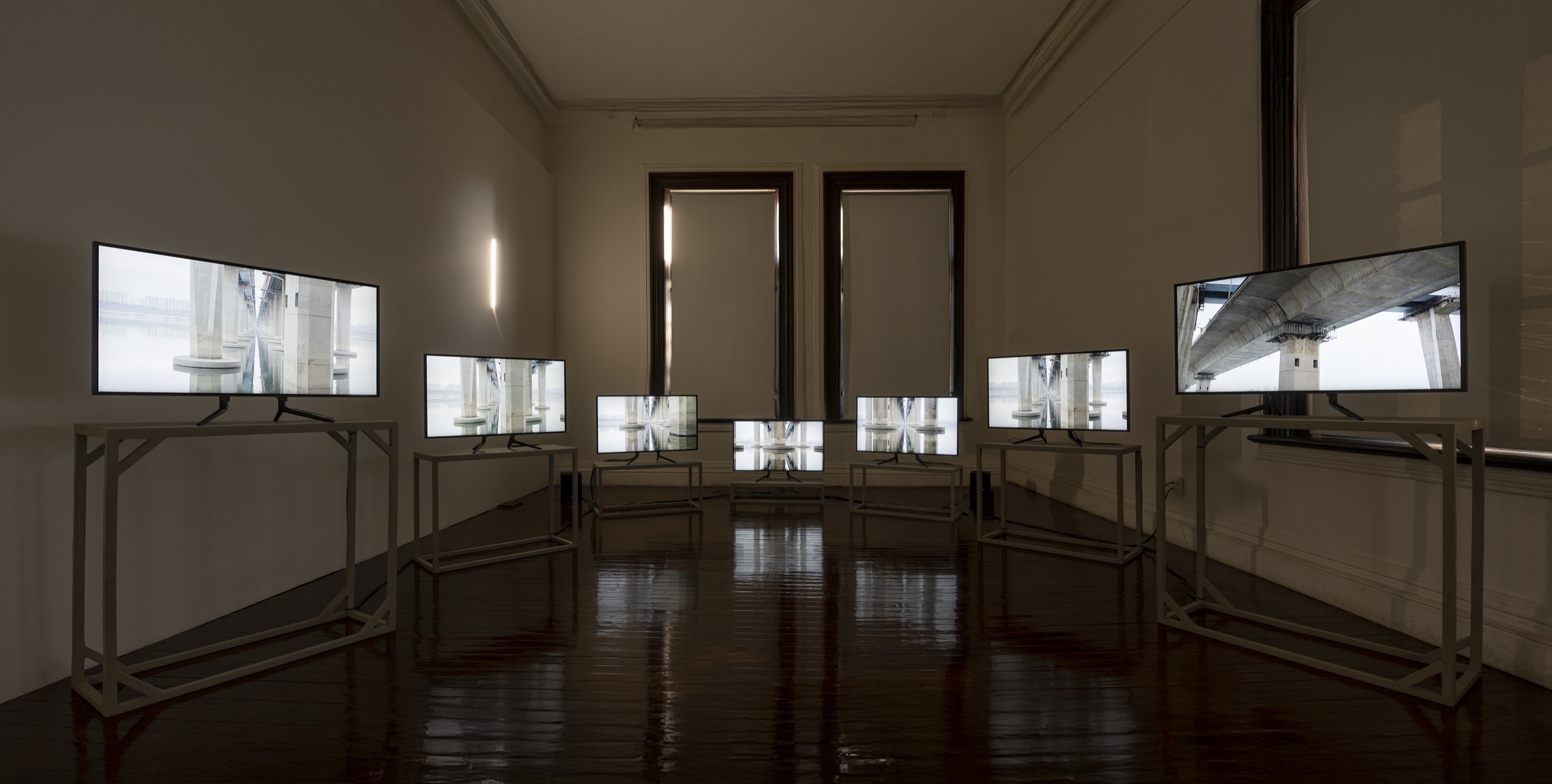
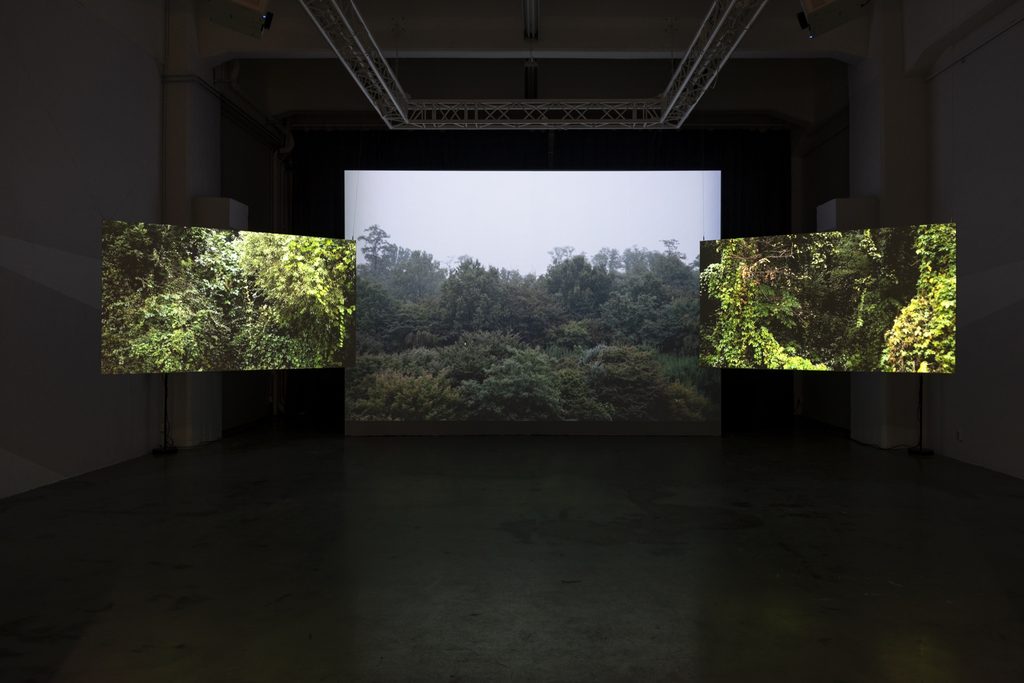
《하천가 Stream-Line》 역시 화면에 사람이 등장하지 않아요. 하지만 하천에 콘크리트를 설치해 물길을 인위적으로 만든 것도 사람이고, 다시 그곳을 찾아 쉬거나 일상생활을 이어가는 것도 사람이에요. 그런 의미에서 저희에게는 매우 인간적인 풍경이에요. 낯설고 부조리하면서도 아름답고, 불편하면서도 경외감을 불러일으키죠. 이 모든 특성이 동시에 존재한다는 점이 풍경과 인간 모두를 그토록 매혹적으로 만든다고 생각해요.
People are largely absent from your works about air and streams. Where do you find human life in those landscapes?
Human beings, or human activity, are always at the center of our work. But in our exhibitions, we deliberately keep human figures out of the work so that the audience can take center stage.
SEL2020HEL began with the air quality problems we experienced while staying in Seoul in 2016 and 2017. Beyond the immediate discomfort of finding it hard to breathe, we were struck by how air pollution tends to be treated as someone else’s problem, somewhere far away. The things we use are made and consumed in many different places, so we felt that even the air in Seoul and Helsinki was connected through that production and consumption.
For SEL2020HEL, we recorded the air quality in both cities every day in 2020 and translated the readings into colors. The 366 days of data became 732 paintings, and we wrote each date across two paintings to link them into 366 pairs. We had no idea the COVID-19 pandemic would hit that year. From March, as movement was restricted and industrial activity slowed, we watched the air quality change. Looking back, that change made it all the clearer that we were dealing with a landscape made by humans: one that everyone’s activity shapes together, whether we like it or not.
No people appear on screen in Stream-Line either. But it was people who channeled those streams with concrete, and it is people who return to rest and go about their lives along them. To us, that makes it a very human landscape. It can be strange and absurd, yet beautiful; uncomfortable, yet awe-inspiring. The fact that all these qualities exist at once is what makes both the landscape and people so fascinating.
Chapter 03.
같은 배를 탄 사람들
Chapter 03.
In the Same Boat
도시를 만들고 변화시키는 일만큼 중요한 것은 그 안에서 함께 살아가는 방식입니다. 우리는 서로의 안전을 위해 규칙과 질서를 만들지만, 때로는 그것을 너무 당연하게 받아들이기도 합니다. 나나와 펠릭스는 안전과 자유, 보호와 신뢰 사이에서 우리가 무엇을 지키고 무엇을 놓치는지 묻습니다.
How we live together within a city matters as much as how we build and transform it. We create rules and establish order to protect one another. Sometimes, though, we take them too much for granted. Between safety and freedom, protection and trust, Nana & Felix ask what we preserve and what we may be overlooking.
도시의 변화와 그 안에서 살아가는 사람들을 살피던 관심이 최근에는 안전을 위한 공간과 행동 지침으로 넓어진 것 같습니다. 두 분이 이야기하는 ‘안전의 건축’은 어떤 생각에서 출발했나요?
지난 10여 년 동안 저희는 끊임없이 사라져가는 풍경의 잔재에 집중해 작업해 왔어요. 그러다 어느 순간 같은 이야기를 반복하지 않으면서 이 주제로 더 할 수 있는 이야기가 거의 다 된 것 같다는 생각이 들었어요. 과거를 그리워하는 마음에만 머무는 것은 아닐까 돌아보기도 했고요. 그래서 사라진 것들이 있던 자리를 대신하고 있는 새로운 풍경을 살펴보고 싶었어요.
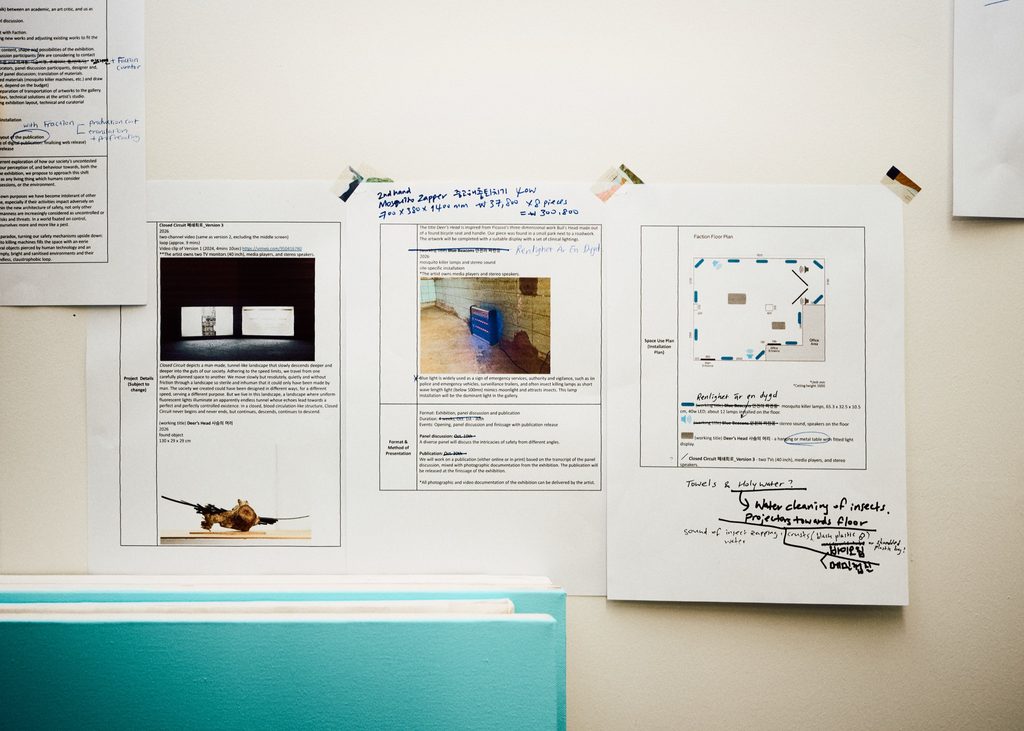
새로운 프로젝트 《안전의 건축 Architecture of Safety》에서는 밝고 투명하며 안전해 보이는 공간 안에서 규칙과 감시가 사람들의 행동에 어떤 영향을 미치는지 살펴보고 있어요. 《폐쇄회로 Closed Circuit》에서는 친근해 보이는 공간 곳곳에 감시 장치가 자리한다는 점에 주목했어요. 서울과 헬싱키를 오가며 서로 다른 도시의 새로운 공간들이 점점 닮아간다고 느꼈죠.
아티스트 북 《착오없는 시행 Trial Without Error》에서는 안전이라는 이름으로 제기되는 서로 다르고, 때로는 모순되는 주장들을 모았어요. ‘발전’처럼 ‘안전’도 쉽게 반대하기 어려운 말이죠. 하지만 안전을 위한 조치가 어떤 기준으로 만들어지고 우리의 행동에 어떤 영향을 미치는지는 살펴볼 필요가 있다고 생각해요. 안전을 중요하게 여기는 것과 그 방식을 돌아보는 일은 함께할 수 있으니까요. 책에 실린 인용문 중 하나인 ‘누구를 위한 안전인가?’라는 질문도 그런 생각과 닿아 있어요.
Your interest in urban change and the people living through it seems to have expanded to the spaces and behavioral guidelines intended to keep us safe. What prompted your interest in the “architecture of safety”?
For more than a decade, we focused on the remnants of landscapes that were constantly disappearing. Eventually, we felt we had said most of what we could about that subject without repeating ourselves. We also wondered whether we were simply dwelling in nostalgia. So we wanted to look at the new landscapes taking the place of what had disappeared.
In our new project, Architecture of Safety, we are looking at how rules and surveillance affect people’s behavior in spaces that look bright, transparent and safe. In Closed Circuit, we focused on how surveillance devices are placed throughout spaces that seem friendly. As we traveled between Seoul and Helsinki, we felt that the new spaces in these two very different cities were becoming increasingly alike.
In the artist’s book Trial Without Error, we collected different, sometimes contradictory arguments put forward in the name of “safety.” Like “progress,” “safety” is hard to argue against. But we think it’s worth examining the criteria behind safety measures and how they affect our behavior. Valuing safety and questioning how it is pursued can go hand in hand. One of the quotations in the book, “Safety for whom?”, speaks to the same idea.
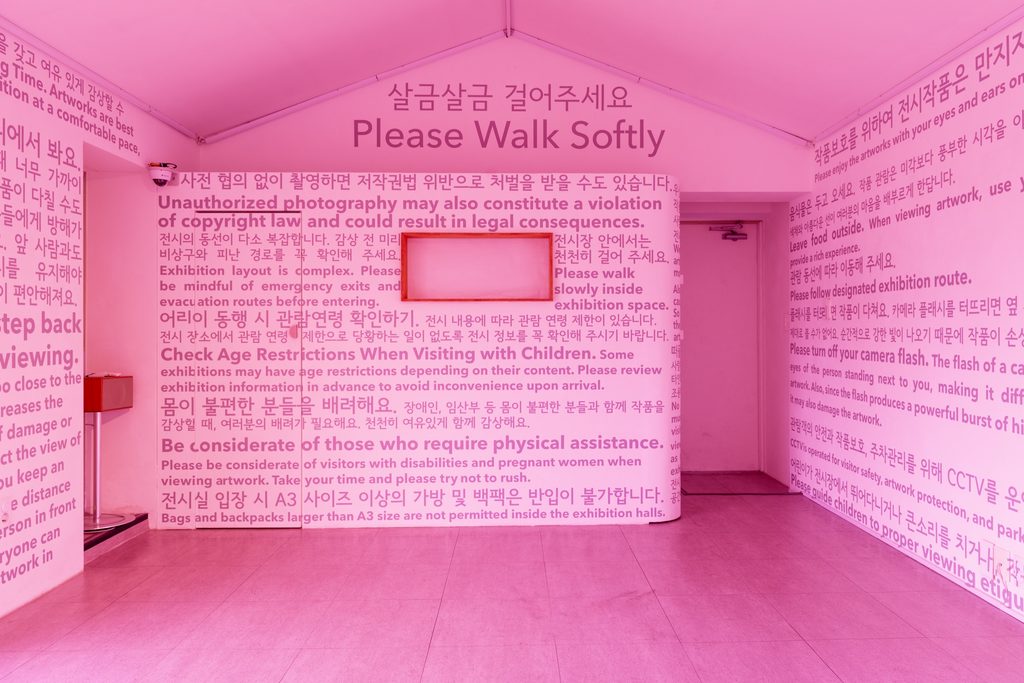
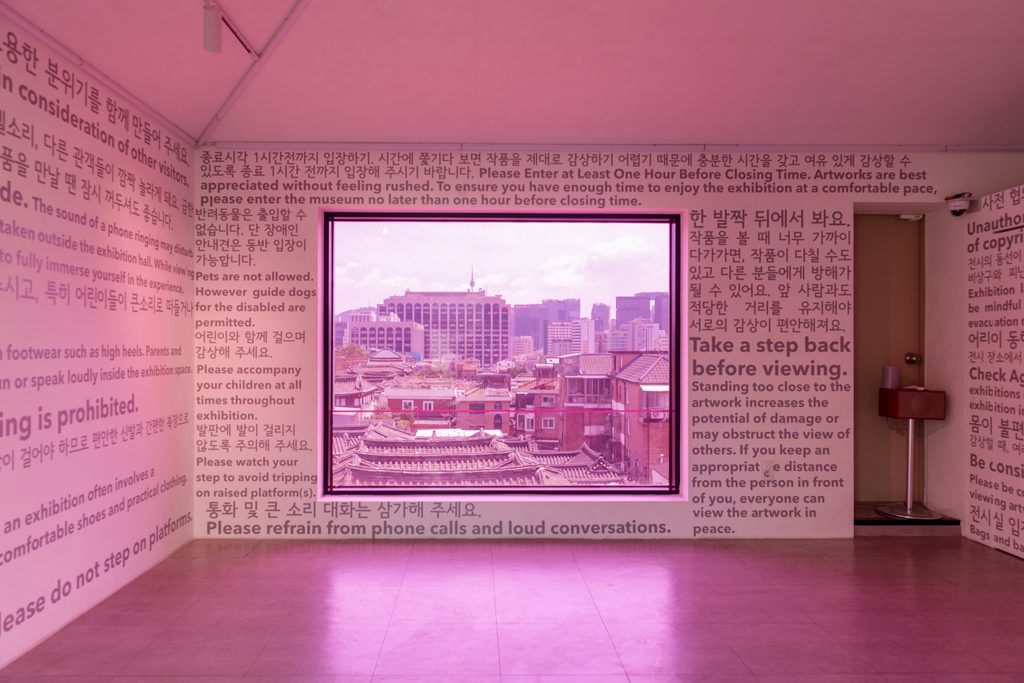
전시 전경; 개인전 《살금살금 걸어주세요 Please Walk Softly》, 2026, 컴바인웍스, 서울
《살금살금 걸어주세요 Please Walk Softly》에서는 미술관의 행동 지침을 모으고 공간을 분홍빛으로 물들였습니다. 이 작업은 어떤 경험에서 출발했나요?
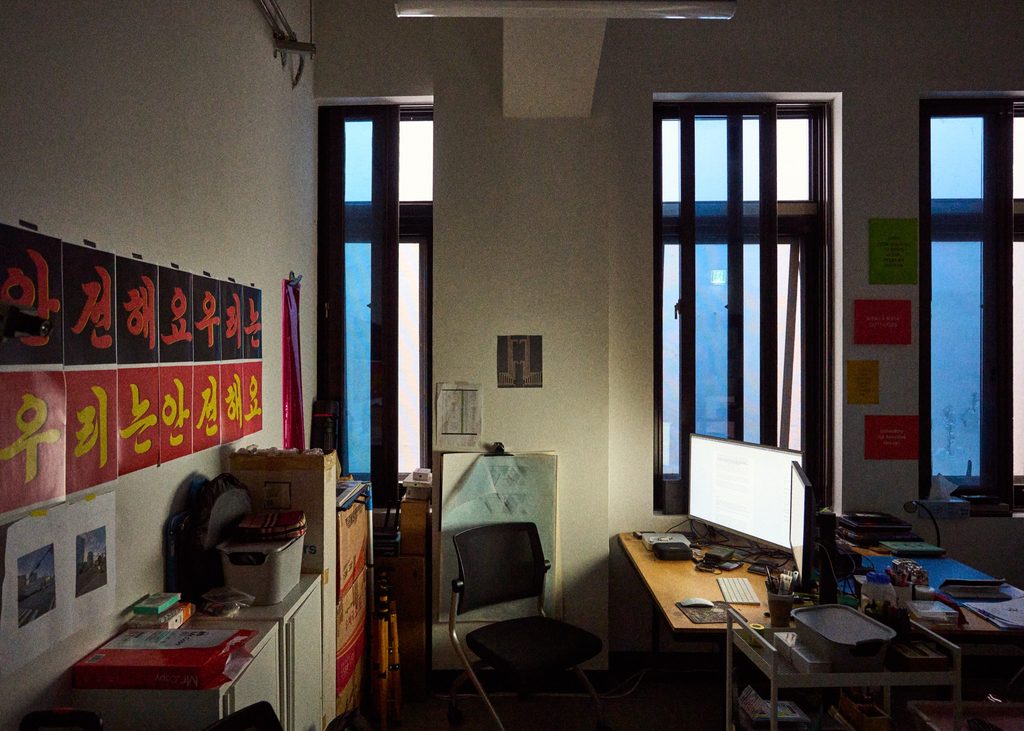
제목부터 저희가 직접 만든 표현은 아니에요. 국립현대미술관의 뮤지엄 에티켓 캠페인에서 사용된 문구 중 하나였어요. 일상에서 경고 문구와 안전 지침을 자주 마주하잖아요. 저희는 안전을 위한 지침이 사람들의 행동 방식까지 세세하게 정하는 모습에 관심이 갔어요. 예술가로서 가장 가까운 환경인 미술관에서도 그런 장면을 만날 수 있었죠. 작품을 보기 전에 관람객이 어떻게 행동해야 하는지 알려주는 안내부터 마주할 때도 있었어요. 그런 지침이 많으면 관람에 앞서 피로감을 느끼기도 했고요. 한번은 전시 소개 글 대신 관람객의 행동 지침이 벽 하나를 가득 채운 미술관을 방문했어요. 그때 이 작업을 만들어야겠다고 생각했죠. 미술관에서 실제로 사용하는 여러 행동 지침을 모아 전시장 벽 전체를 텍스트로 채웠어요. 전시를 어떻게 경험해야 하는지 알려주는 내용만으로 전시를 만든 셈이죠.
문구가 주는 인상과 행동을 규정하는 기능을 함께 생각하며, 전시장 창문 전체에 분홍색 필름을 붙여 공간을 친절하고 안전해 보이는 분홍빛으로 가득 채웠어요. 설치를 마친 뒤 처음에는 무척 강렬했던 색이 몇 분 만에 거의 느껴지지 않을 정도로 희미해지는 것을 발견했어요. 눈이 그 환경에 적응한 거죠. 얼마 지나지 않아 실내의 모든 것이 자연스럽게 느껴지는 반면, 창밖의 풍경은 오히려 유난히 초록색으로 보였어요. 이 경험은 우리가 주변 환경에 얼마나 빠르게 적응하는지, 그리고 낯선 것조차 얼마나 쉽게 ‘정상적인 것’으로 받아들이게 되는지를 예상보다 훨씬 선명하게 보여주었어요.
For Please Walk Softly, you gathered museum instructions and bathed the gallery in pink light. What set the work in motion?
We didn’t come up with the title ourselves. It was one of the phrases used in a museum etiquette campaign at the National Museum of Modern and Contemporary Art, Korea. In everyday life, we constantly encounter warning signs and safety instructions, and we were interested in how instructions meant to keep us safe end up dictating how people behave in fine detail. As artists, we found this in the environment closest to us: the museum. Sometimes, before we had even seen the art, we were met with instructions on how visitors should behave. When there were many of them, we felt tired before the visit had even begun. Once, we visited a museum where, instead of an introduction to the exhibition, an entire wall was filled with rules for visitors. That was when we knew we had to make this work. We collected instructions actually used in museums and covered an entire gallery wall with the text. In effect, we made an exhibition out of nothing but instructions on how to experience an exhibition.
Thinking about both the impression such phrases give and the way they regulate behavior, we covered all the gallery windows with pink film, filling the space with a pink light that looked friendly and safe. But after installing it, we noticed that the color, so strong at first, became almost imperceptible after just a few minutes. Our eyes adjusted. Before long, everything inside felt perfectly natural, while the view outside the windows looked strikingly green. It showed us, more clearly than we had expected, how quickly we adapt to our surroundings and how easily something unfamiliar can come to seem “normal.”
일상의 규칙에도 우리는 금세 익숙해지는데요. 안전을 위한 장치가 우리를 보호하는 한편, 사람 사이의 믿음에는 어떤 영향을 미칠까요?
안전을 위한 조치들은 필요하고, 실제로 우리를 보호해 줘요. 다만 그런 장치가 사람 사이의 신뢰 관계도 지켜주어야 한다고 생각해요. 신뢰가 통제로 대체되지 않도록 주의를 기울여야 하죠.
모든 상황을 규칙과 감시로 세세하게 관리하려고 하면 타인을 믿거나 스스로 판단할 기회가 줄어들 수 있어요. 아무리 노력해도 모든 위험을 없애기는 어렵고요. 완벽한 안전을 위해 미지의 영역을 모두 없애려 한다면, 좋은 일과 새로운 가능성을 만날 여지도 함께 줄어들 수 있다고 생각해요.
We quickly get used to everyday rules, too. While safety measures protect us, what might they do to our trust in one another?
Safety measures are clearly necessary, and they do protect us. But they should also protect the trust between people. We need to be careful that trust is not replaced by control.
If we try to manage every situation in detail with rules and surveillance, we may have fewer chances to trust people and make our own judgments. And however hard we try, it is difficult to eliminate every risk. If we try to remove every unknown in the name of perfect safety, we may also leave less room for good things and new possibilities to come our way.
아이디어를 함께 발전시키고, 작업의 형식을 정하는 과정은 어떻게 이루어지나요?
저희는 성향이 꽤 달라요. 한 사람은 익숙하지 않은 방법을 시도하는 데 조심스러운 편이고, 다른 한 사람은 아이디어가 많고 일단 뛰어들어 시도해 보는 것을 좋아해요. 새로운 작업을 할 때면 보통 한 사람이 아이디어를 제안하고 그 이유를 설명하면, 다른 한 사람은 여러 질문을 던져요. 그런 과정이 아이디어를 포기하거나 다듬게 될 때까지 이어지죠. 처음에는 설득력이 없어 받아들여지지 않았던 아이디어가 며칠 혹은 몇 년이 지난 뒤 전혀 다른 형태로 다시 등장하기도 해요. 처음의 제안이 발전하고 변화하는 과정에서 작업도 더욱 단단해지는 거죠.
처음부터 작업에 사용할 매체를 정해두지도 않아요. 각각의 작업에 가장 잘 어울리는 형식이 있다고 생각하고, 그것을 찾아가려고 해요. 새로운 아이디어가 떠오르면 그것을 실제 작업으로 구현할 기술적인 방법을 모르는 경우도 많아요. 하지만 바로 그런 점이 저희가 작업을 좋아하는 중요한 이유 중 하나예요. 늘 새롭게 배울 것이 남아 있으니까요.
처음에는 사진과 사진을 활용한 조각 작업에서 출발했어요. 이후 회화와 영상, 사운드, 목공, 자수가 작업에 더해졌죠. 저희에게 전시는 최종적인 작품이고, 다양한 요소들을 결합해 장소에 맞는 대규모 설치작업으로 만들어가요. 각자 혼자 작업했다면 아마 익숙한 매체에서 벗어나는 시도는 하지 않았을 거예요. 함께했기 때문에 훨씬 더 폭넓은 접근 방식을 찾아갈 수 있었죠.
How do you develop ideas together and decide on the form a work will take?
We have quite different temperaments. One of us is cautious about trying something unfamiliar. The other has lots of ideas and likes to jump in and give things a go. When we start a new work, one of us usually proposes an idea and explains the reasoning behind it, and the other comes back with lots of questions. That goes on until the idea is either dropped or refined. An idea that fails to convince at first can return days or even years later in a completely different form. As the original proposal evolves, the work becomes stronger.
We don’t decide on a medium at the outset, either. We believe there is a form that best suits each work, and we try to find it. When a new idea comes up, we often don’t know the technical means to realize it. But that is one of the main reasons we love what we do. There is always something new to learn.
We started out with photography and sculptural works using photographs. Painting, video, sound, woodwork and embroidery followed. For us, the exhibition is the final work, and we bring these elements together into large, site-specific installations. Working alone, we probably wouldn’t have ventured beyond the media we knew. Together, we’ve been able to find a much wider range of approaches.
그렇게 함께해온 경험에 비추어, 두 분이 생각하는 ‘휴머니티’는 무엇인가요?
우리가 함께 살아가는 방식은 서로 다른 사람들이 오랜 시간 대화를 나누고, 때로는 의견이 충돌하는 과정을 거치며 만들어져 왔잖아요. 저희에게 휴머니티란 함께 앞으로 나아갈 방법을 계속 찾아가는 일이기도 해요. 앞으로 나아가기 위해 반드시 같은 생각을 하거나 같은 방식으로 문제에 접근할 필요는 없다고 생각해요.
결국 우리는 모두 한배를 탄 사람들이니까요. 배가 뒤집히면 한 사람만 물에 빠지는 게 아니라 우리 모두가 함께 빠지게 되죠.
Drawing on your experience of working together, what does “humanity” mean to you?
The ways we live together have taken shape over a long time, through conversations between different people and, sometimes, disagreements. For us, humanity is also about continuing to find a way forward together. We don’t have to think alike or approach problems in the same way to move forward.
In the end, we are all in the same boat. If it tips over, it isn’t just one of us who falls in. We all do.
나나 & 펠릭스
나나 & 펠릭스는 한국과 핀란드를 오가며 도시와 일상의 풍경에 담긴 사람들의 삶을 탐구하는 작가 듀오다. 2013년 결성해 사진, 영상, 회화, 설치, 사운드 등 작업에 따라 매체를 넘나든다. ‘발전’이라는 단어를 LED 전광판에 띄운 《Progress》, 서울과 헬싱키의 대기질을 기록한 《SEL2020HEL》, 도시 하천을 다룬 《Stream-Line》 등을 통해 ‘발전의 미학’과 인간이 만든 환경을 살펴왔다. 버려진 액자를 수집한 작업에서는 사라진 장소와 시간에 주목했다. 최근에는 안전을 위한 장치가 공간과 관계에 미치는 영향을 ‘안전의 건축’이라는 주제로 살피고 있다.
NANA & FELIX
Nana & Felix are an artist duo working between Korea and Finland. Their practice explores people’s lives through the landscapes of cities and everyday life. Since forming in 2013, they have worked across photography, video, painting, installation and sound, allowing each project to determine its medium. Their exploration of the “aesthetics of progress” and the environments we create includes Progress, an LED display showing the word “progress”; SEL2020HEL, a record of air quality in Seoul and Helsinki; and Stream-Line, a study of urban streams. Their work with discarded picture frames focuses on places and moments that have disappeared. More recently, their work on the “architecture of safety” examines how safety measures shape spaces and relationships.
Epilogue
나나와 펠릭스의 작업은 익숙한 풍경을 낯선 자리에서 다시 보게 합니다. 그러나 그 끝에서 두 사람이 바라보는 것은 언제나 사람입니다. 한 사람은 하나의 기준으로 설명되지 않고, 모든 선택 뒤에는 저마다의 시간과 환경이 있습니다. 같은 현실도 누군가에게는 새로운 기회이지만 다른 누군가에게는 익숙한 것을 떠나보내는 일이 될 수 있습니다. 두 사람은 그 차이를 어느 한쪽의 잘못이나 부족함으로 섣불리 판단하지 않습니다.
‘같은 배’에 탔다는 말은 누구의 선택도 다른 사람의 삶과 무관하지 않다는 뜻일 것입니다. 서로의 삶이 이렇게 이어져 있기에, 한 사람을 이해하는 일은 그 사람이 내린 선택 하나로 끝나지 않습니다. 작품 속 풍경이 낯설게 보이기 시작할 때, 우리는 누군가를 하나의 기준으로 쉽게 단정해 왔던 것은 아닌지 돌아보게 됩니다.
Nana & Felix make familiar landscapes newly strange. Their attention, however, always returns to people. No single definition can fully capture a person; every choice carries a particular history and set of circumstances. The same reality may offer one person a new opportunity and ask another to leave something familiar behind. The artists resist treating that difference as a sign that either person is wrong or somehow lacking.
The image of being “in the same boat” suggests that no one’s choices are separate from the lives of others. Our lives are intertwined, and understanding someone means looking beyond any one decision they have made. As the landscapes in these works begin to feel unfamiliar, a question turns back on us: have we been too quick to judge someone by a single criterion?