Localler
새롭게 떠오르는 문화를 발견해 융합해 나가는 ‘문화의 선구자 Culture Vanguard’ 역시 기아 디자인 크리에이티브 철학의 문화적 특징 중 하나입니다. 기아디자인매거진은 Localler라는 메뉴를 통해 ‘문화의 선구자 Culture Vanguard’라는 타이틀로 한국에서 살고 있는 현지 외국인, 외국에서 살고 있는 현지 한국인들의 경계 없는 스토리를 보여줍니다.
Localler
As a Culture Vanguard, who discovers and integrates emerging culture, is another feature of Kia Design’s creative philosophy. In the Localler menu, Kia Design Magazine presents stories about foreigners living in Korea, as well as Koreans living abroad, under the title ‘Culture Vanguard’.
장소를 읽고, 시선을 다시 세우다
큐레이터 김해주Reading Place, Seeing Anew
Curator Kim Haeju김해주는 전시를 기획할 때 장소에서 질문을 시작합니다. 같은 작품과 이야기라도 어떤 역사와 기억, 관계 위에 놓이는지에 따라 다른 의미를 가질 수 있기 때문입니다. 그는 자료에 그치지 않고 직접 걷고 머물며 그곳에 쌓인 시간과 사람들의 이야기를 살핍니다. 그에게 큐레이팅은 작품과 장소, 관객이 만나는 조건을 세심하게 살피는 일입니다. 이러한 태도는 2022 부산비엔날레 《물결 위 우리》를 준비하면서 더욱 분명해졌습니다. 오래 살아온 고향이었지만, 전시를 위해 들여다본 부산은 그가 안다고 믿었던 모습과 달랐습니다. 그 경험은 익숙했던 부산을 읽는 동시에 자신의 시선을 점검하는 계기가 됐습니다. 흔히 큐레이터에게는 작품을 선정하고 그 의미와 맥락을 관객에게 전달하는 역할을 기대합니다. 김해주는 여기서 한발 더 나아가, 왜 지금 이곳에서 이 질문을 던져야 하는지 스스로 묻고 관객도 익숙한 해석 너머를 바라보도록 이끕니다. 김해주에게 용기는 기존 큐레이션의 역할과 자신의 시선을 함께 확장하는 태도에 가깝습니다. 《기아 디자인 매거진》 Vol.18 Localler는 장소를 통해 질문을 만들고 관객의 사고와 자신의 관점까지 확장해온 큐레이터 김해주의 이야기를 따라갑니다.
For Kim Haeju, an exhibition begins with place and the questions that place sets in motion. The same work or story can shift in meaning depending on the histories, memories, and relationships in which it is situated. She does not stop at documents: she walks, lingers, and listens for the layers of time and the stories of people embedded in a place. Curating, for Kim, is about attending to the conditions under which artworks, places, and audiences meet. This approach came into sharper focus as she prepared the 2022 Busan Biennale, We, on the Rising Wave. Busan had long been home, yet the city that emerged through the exhibition was not the one she thought she knew. The experience prompted her not only to see Busan anew, but also to reconsider her own way of seeing. Curators are often expected to select works and communicate their meanings and contexts to audiences. Kim goes a step further, asking why this particular question needs to be raised here and now, and inviting audiences to look beyond familiar interpretations. For Kim, courage lies in stretching both what curating can do and the reach of her own perspective. Kia Design Magazine Vol.18 Localler follows curator Kim Haeju as she turns place into a source of questions, opening up both the audience’s thinking and her own way of seeing.
Editor’s Note
김해주의 관심은 언제나 장소에서 시작됐습니다. 다만 그가 바라본 장소는 단순한 지리적 배경이 아니었습니다. 그 안에 쌓인 기억과 역사, 사람들의 이동과 관계가 현재의 삶과 어떻게 연결되어 있는지를 살피는 일에 가깝습니다. 익숙하다고 믿는 풍경을 새롭게 들여다보고, 이미 알고 있다고 생각한 것을 낯설게 바라보는 태도는 그의 큐레이팅을 관통하는 중요한 출발점이기도 합니다. 아트선재센터에서 활동하던 시기부터 기억과 이주, 정체성과 공동체를 둘러싼 여러 전시를 기획했습니다. 이주를 경험한 개인의 정체성과 기억, 언어를 살핀 《먼지 흙 돌》과 기억과 디아스포라, 공동체를 다룬 제인 진 카이젠의 개인전 《이별의 공동체》가 대표적입니다. 이러한 경험은 작품 자체보다 그것이 어떤 맥락 속에서 누구와 만나고, 어떤 관계를 만들어내는지를 살피는 그의 큐레이팅 방식으로 이어졌습니다. 그 과정에서 그는 작품과 관객이 만나는 자리에서 해석과 사고가 어떻게 확장될 수 있는지에 주목했습니다. 김해주는 하나의 장소나 대상을 쉽게 이해했다고 결론 내리기보다, 현장이 건네는 새로운 이야기에 자신의 시선을 다시 열어두는 쪽을 택해왔습니다. 그 태도가 용기로 가장 분명하게 드러난 선택이 싱가포르행이었습니다. 충분히 알지 못하는 지역으로 스스로를 옮겨 익숙한 판단을 내려놓고, 새로운 언어와 맥락을 처음부터 배우기로 한 것입니다. 특히 인상적인 것은 낯선 곳으로 옮긴 결정 자체보다, 그곳에서 자신이 모르는 것을 인정하고 다시 배우는 시간을 기꺼이 받아들였다는 점입니다. 이번 인터뷰는 장소를 읽는 일에서 출발해, 자신이 보고 있다고 믿는 것마저 다시 바라보며 시선을 갱신해온 그의 이야기를 따라갑니다.
For Kim Haeju, it has always begun with place. But place, in her work, is never merely a geographical backdrop. She looks at how accumulated memories and histories, movements and relationships, are woven into life in the present. To look again at a landscape that feels familiar, and to make the known unfamiliar again, is a key point of departure in her curatorial practice. Since her years at Art Sonje Center, Kim has organized exhibitions around memory, migration, identity, and community. Among them are Dust Clay Stone, which explored the identities, memories, and languages of individuals who have experienced migration, and Jane Jin Kaisen’s solo exhibition Community of Parting, centered on memory, diaspora, and community. These experiences shaped a curatorial approach less concerned with the artwork in isolation than with the contexts in which it meets people and the relationships that take shape there. Along the way, she became increasingly attentive to how interpretation and thought can open up at the point where artworks and audiences meet. Kim has resisted the urge to declare a place or subject understood too quickly. Instead, she keeps her perspective open to whatever a site may still reveal. Her move to Singapore was the clearest expression of that courage: she placed herself in a region she did not yet know well, set aside familiar judgments, and chose to learn a new language and come to understand an unfamiliar context from the ground up. More striking than the move itself was her willingness to admit what she did not know and to give herself the time to learn again. This interview traces that movement, from reading place to revisiting even what she thinks she sees, and allowing her perspective to change with it.
Chapter 01.
안다고 믿었던 부산을 다시 보다
Chapter 01.
Revisiting the Busan She Thought She Knew
오래 살아온 곳도, 다시 보면 달라집니다. 김해주는 부산을 잘 안다고 믿었던 자신의 시선부터 점검했습니다. 익숙한 답 대신, 미처 보지 못한 이야기를 향해 질문을 던지는 것. 그의 부산은 그렇게 새롭게 보이기 시작했습니다
Even a place lived in for years can look different when seen again. Kim Haeju began by questioning her own sense that she knew Busan well. Instead of returning to familiar answers, she began asking questions that led her toward stories she had yet to notice. And that is how Busan began to come into view anew.
부산은 태어난 도시이자 오래 알고 있다고 여겼던 곳입니다. 그런 고향에서 오히려 ‘내가 몰랐다’는 사실을 마주했을 때는 어떤 기분이었나요?
부산은 제가 태어나고 오랫동안 잘 안다고 생각했던 도시였지만, 비엔날레를 준비하면서 새롭게 알게 된 것이 더 많았습니다. 전시감독 오픈콜을 준비하면서 부산의 도시사에 관한 책을 많이 읽었는데, 세계사에는 익숙하다고 생각하면서도 정작 제가 태어나고 살았던 도시의 역사에는 무지했다는 사실이 부끄럽게 느껴졌습니다. 한편 부산의 근대사를 들여다볼수록 이 도시가 세계의 변화와 얼마나 깊이 연결되어 있었는지도 알게 됐습니다. 개항과 식민지 시대, 한국전쟁과 산업화를 거치며 급변한 부산의 근대사를 도시의 지형적 조건과 연결해 보는 과정도 흥미로웠습니다. 역사에 대한 인식이 달라진 경험이었어요. 부산비엔날레는 개인으로서, 또 부산에서 태어난 미술 실천자로서 이 도시가 제게 무엇인지 다시 들여다보는 기회이기도 했습니다.
Busan is the city where you were born, and a place you had long believed you knew well. What was it like to realize, in your own hometown, how much you had not known?
Busan is the city where I was born, and for a long time I thought I knew it well. But while preparing the Biennale, I discovered there was far more I had yet to learn. While preparing my application for the artistic director open call, I read extensively about Busan’s urban history. I was embarrassed to discover that, although I thought I knew world history fairly well, I knew surprisingly little about the history of the city where I was born and had lived for so long. At the same time, the deeper I went into Busan’s modern history, the more I understood how closely the city had been connected to wider changes in the world. I was also fascinated by looking at Busan’s rapid transformation through the opening of the port, the colonial period, the Korean War, and industrialization in relation to the city’s topography. It changed the way I understood history. The Busan Biennale also gave me a chance to reconsider what the city meant to me, both personally and as an art practitioner born there.
그런 관점이 실제 작업 방식에도 영향을 주었나요?
전시를 준비하면서 ‘이주’, ‘여성과 노동’, ‘도시 생태계’, ‘기술 변화와 로컬리티’를 주요한 리서치의 방향으로 두고 국내외 작가와 작품을 살폈습니다. 그중에서도 이주는 비엔날레 이전부터 제가 관심을 가져온 주제였습니다. 부산은 항구도시이고, 개항과 한국전쟁, 산업화를 거치며 수많은 사람과 물자, 문화가 오간 곳입니다. 그래서 부산을 하나의 고정된 지역 이미지로 보여주기보다, 서로 다른 사람과 시간, 세계의 다른 도시들이 만나는 장소로 바라보고 싶었습니다. 관객에게도 부산의 이야기를 부산 안에만 머무는 이야기로 보여주기보다, 다른 도시의 역사와 현재의 삶으로 이어지는 이야기로 전하고 싶었습니다. 실제로 《물결 위 우리》의 ‘물결’은 항구도시 사이를 오가는 이주와 세계의 연결, 기술 변화 속 정보의 확산, 부산의 굴곡진 지형까지 함께 가리키는 개념이었습니다.
As you began to see Busan anew, what questions became the starting point for the 2022 Busan Biennale?
As I prepared the exhibition, I looked at artists and works from Korea and abroad, with my research focused on four main areas: migration, women and labor, urban ecosystems, and technological change and locality. Migration, in particular, had interested me long before the Biennale. Busan is a port city shaped by the movement of people, goods, and cultures through the opening of the port, the Korean War, and industrialization. Rather than presenting Busan as a fixed regional image, I wanted to see it as a meeting point for different people, different times, and other cities around the world. I also wanted audiences to encounter Busan’s stories not as narratives contained within the city, but as stories that connect to the histories of other cities and to life in the present. In We, on the Rising Wave, the ‘wave’ referred at once to migration between port cities, connections across the world, the spread of information amid technological change, and Busan’s undulating terrain.
그런 생각은 실제 전시 공간의 선택과 구성에는 어떻게 이어졌나요?
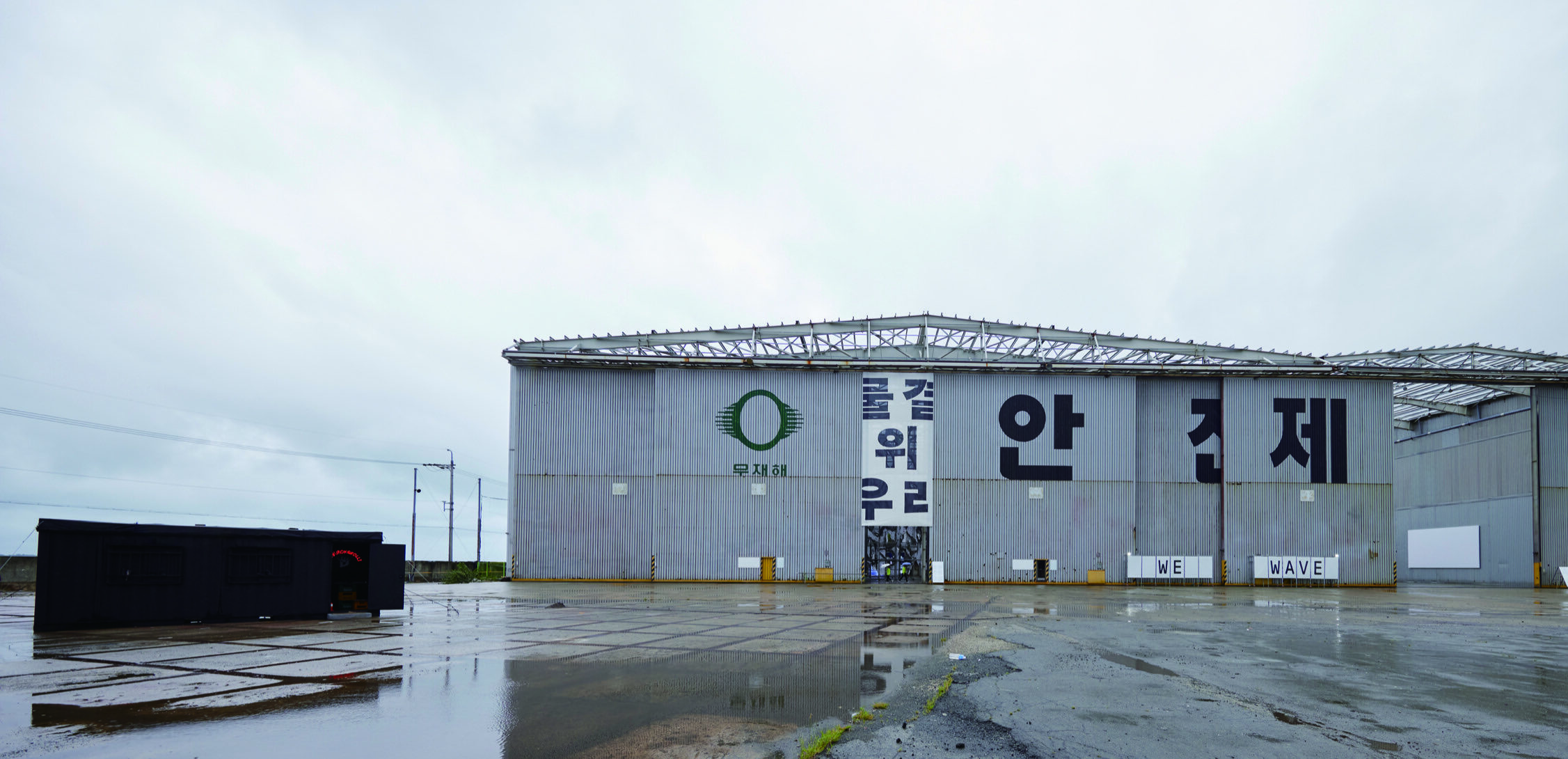
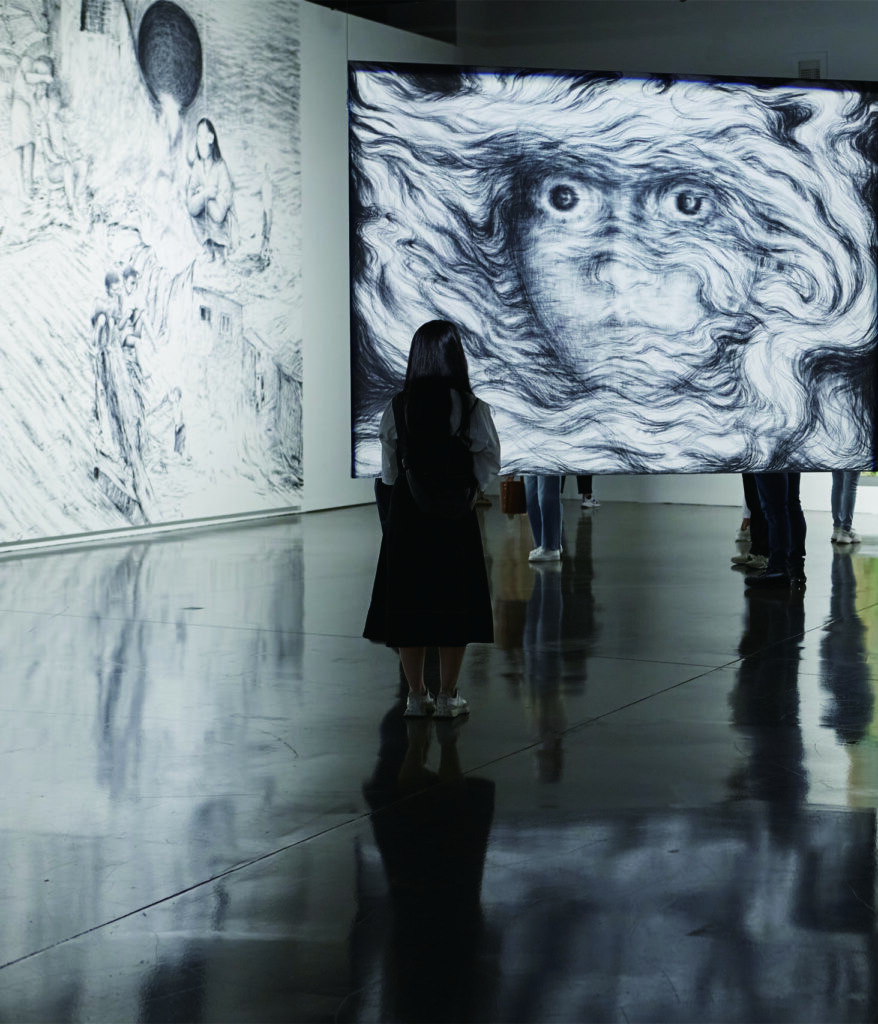
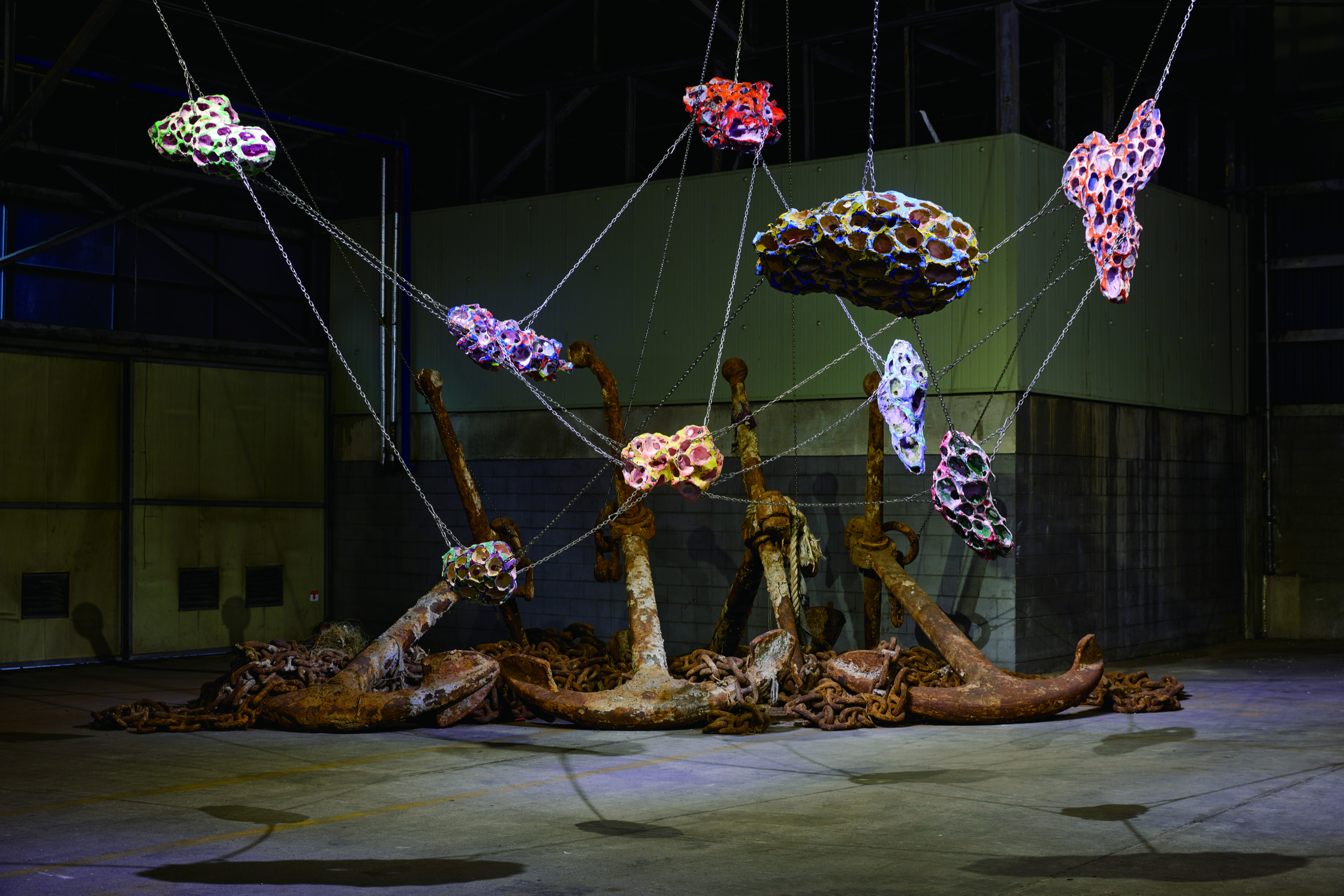
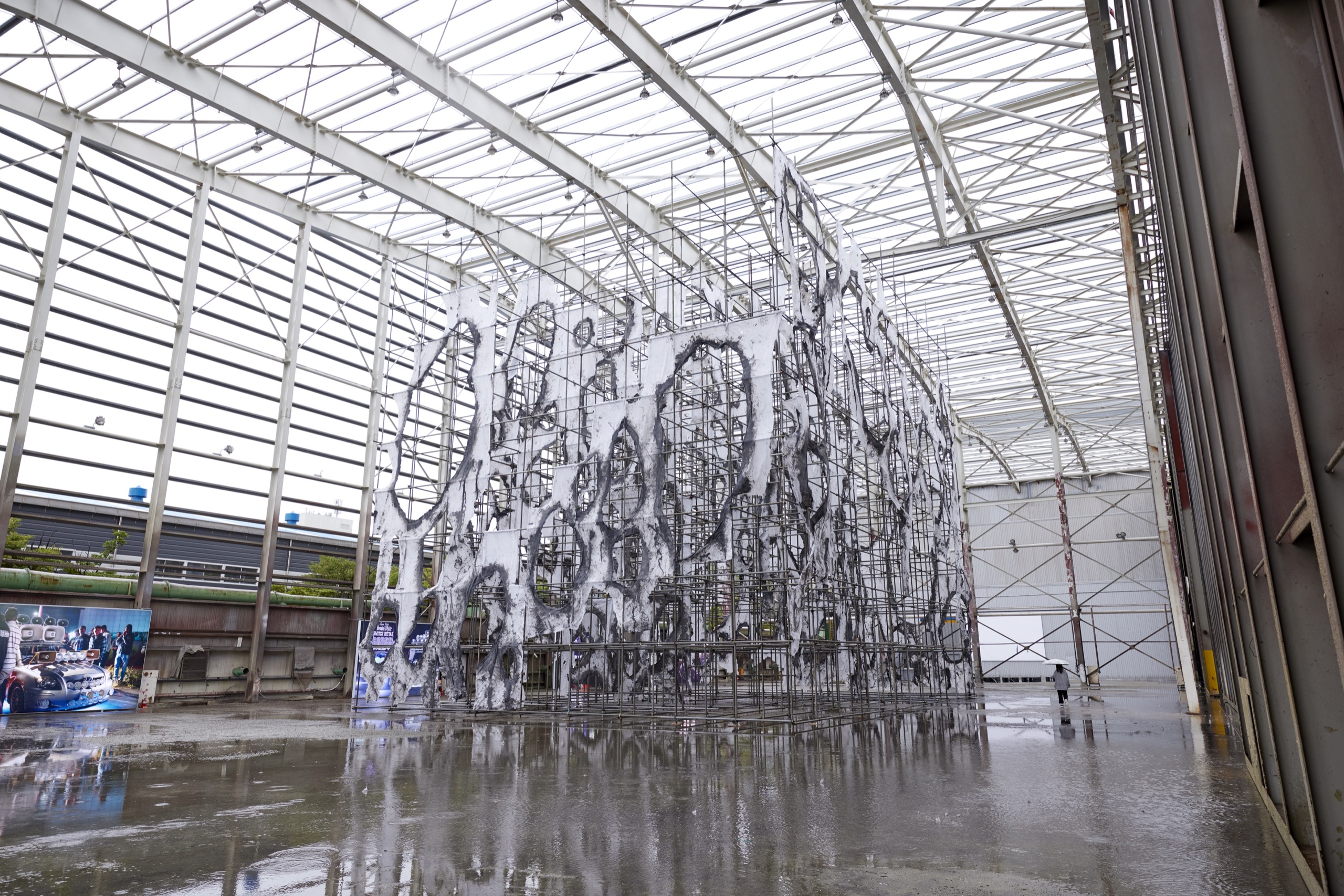
부산현대미술관, 부산항 제1부두, 영도, 초량은 각각 공간의 성격도, 그곳에 쌓인 시간도 달랐습니다. 그래서 하나의 ‘부산’으로 묶기보다 각 장소가 가진 조건을 전시에 반영하는 것이 중요했습니다. 특히 부산항 제1부두는 이주와 개항을 통해 형성된 부산의 근대사를 품고 있다는 점에서 전시의 방향과 잘 맞았습니다. 2021년 12월 처음 공간을 본 뒤 설치 전까지 제1부두 창고를 여러 차례 오가며 규모를 익혔고, 각기 다른 크기와 용도를 지닌 장소들을 선택해 전시의 ‘물결’을 공간적으로 보여주고자 했습니다. 부산항 제1부두의 거대한 창고에서는 파키스탄 가다니의 선박 해체장을 담은 히라 나비의 영상을 큰 화면으로 선보였고, 영도 송강중공업 폐공장에서는 이미래의 대형 설치가 건물의 골조와 맞물려 보이도록 구성했습니다. 제가 다루는 전시는 물질과 공간을 재료로 하고, 체험을 통해 이루어지는 매체입니다. 부산에서는 언덕과 바다 같은 자연 지형을 전시로 번역하고자 했기 때문에, 직접 이동하며 거리와 풍경을 몸으로 익히는 시간이 필요했습니다. 자료만으로 장소를 이해하기보다 직접 보고 경험하면서 이해를 쌓아가는 과정이 중요했다고 생각합니다.
How did those ideas shape the way you selected and organized the exhibition spaces?
The Museum of Contemporary Art Busan, Pier 1 of Busan Port, Yeongdo, and Choryang each had its own character and historical layers. Rather than folding them into a single idea of ‘Busan,’ it was important to let the conditions of each place shape the exhibition. Pier 1, in particular, aligned closely with the exhibition because it carries traces of Busan’s modern history, formed through migration and the opening of the port. After first visiting the site in December 2021, I returned to the Pier 1 warehouses many times before installation, gradually developing a physical sense of their scale. By choosing spaces with different dimensions and functions, I wanted to give the exhibition’s idea of the ‘wave’ a spatial form. In the vast warehouse at Pier 1, we presented Hira Nabi’s video of the shipbreaking yards in Gadani, Pakistan, on a large screen. At the former Songkang Heavy Industries factory in Yeongdo, Mire Lee’s large-scale installation was positioned to engage with the building’s exposed framework. I think of exhibitions as a medium made through material, space, and direct experience. In Busan, I wanted to translate the city’s natural terrain, including its hills and sea, into the exhibition. That meant spending time moving through the city and developing a bodily sense of its distances and landscapes. Rather than understanding a place through research materials alone, it was important to build that understanding through firsthand experience.
전시를 기획할 때 장소를 그렇게 오래 들여다보는 이유는 무엇인가요?
저는 전시를 하나의 발화라고 생각합니다. 어떤 이야기를 전시로 꺼낼 때에는 왜 그 이야기가 지금, 여기에서 필요한지를 먼저 묻게 됩니다. 같은 작품이라도 어디에 놓이고 누가 경험하느냐에 따라 보이는 방식이 달라질 수 있고요. 그래서 공간은 작품을 담는 배경이라기보다 전시가 말하는 방식을 결정하는 조건에 가깝습니다.
Why is it important for you to spend so much time with a place when planning an exhibition?
I think of an exhibition as a way of speaking. Whenever I bring a story into an exhibition, I first ask why that story needs to be told here and now. The same artwork can be seen differently depending on where it is placed and who encounters it. So for me, space is not simply a backdrop for the work, but one of the conditions that determines how an exhibition speaks.
잘 안다고 믿었던 장소를 다시 바라본 경험 이후, 지금도 자신의 관점을 굳히지 않기 위해 의식적으로 하는 일이 있나요?
현장조사를 하는 이유 자체가 제가 이미 알고 있는 것을 확인하기 위해서라기보다, 제가 모르는 것을 만나기 위해서라고 생각합니다. 물론 어떤 가설이나 관점은 필요하지만 정해진 답을 찾기 위한 조사는 흥미롭지 않은 것 같아요.
예상하지 못한 상황이나 이야기를 만나면 방향을 바꾸는 데 열려 있고, 오히려 그런 사건들이 일어나기를 바랍니다. 거주지를 옮기는 것도 하나의 방법입니다. 부산에서 서울로, 유학을 위해 해외로, 다시 한국으로 돌아왔다가 싱가포르로 옮긴 경험은 익숙한 장소와 거리를 만들고 시야의 반경을 넓혀줬습니다. 또 작가들과 같은 장소를 함께 걸으면 제가 보지 못한 것을 발견하게 됩니다. 그래서 하나의 주제나 대상을 한 방향으로 고정하지 않고, 계속 변화하는 것으로 보려고 합니다.
After revisiting a place you thought you knew well, is there anything you consciously do to keep your own perspective from becoming fixed?
I do field research not to confirm what I already know, but to encounter what I do not. Of course, some hypothesis or point of view is necessary, but research becomes less interesting to me when its purpose is simply to arrive at a predetermined answer.
When I come across an unexpected situation or story, I try to stay open to changing direction. In fact, I hope those moments happen. Relocating is one way to make room for that. Going from Busan to Seoul, then abroad to study, returning to Korea, and later moving to Singapore gave me distance from familiar places and widened my field of view. Walking through the same place with artists also helps me notice things I might otherwise miss. So I try not to fix a subject or theme in a single frame, but to see it as something continually changing.
그렇게 현장을 가까이에서 들여다볼수록 공식적인 기록과 그곳에 살아온 사람들의 기억이 서로 어긋나는 순간도 생길 것 같습니다. 그럴 때 하나의 이야기로 정리하기보다 그 간극을 남겨두는 이유는 무엇인가요?
미술이나 전시는 역사 서술과는 다릅니다. 공인된 역사를 기록하는 것이 아니라 누락된 것을 질문하거나, 보이지 않는 것을 드러내거나, 새로운 가정을 던지는 것에 가깝습니다. 저는 오히려 서로 다른 기억과 기록 사이의 간극을 보여주는 것이 흥미롭습니다.
The closer you look at a site, the more likely you are to encounter moments when official records and the memories of those who have lived there do not align. Why leave that gap open instead of resolving it into a single narrative?
Art and exhibitions are not the same as writing history. Rather than recording an official history, they can question what has been left out, bring the unseen into view, or offer new propositions. I am more interested in letting the gaps between different memories and records remain visible.
Chapter 02.
모르는 곳에서, 다시 처음부터
Chapter 02.
Starting Again on Unfamiliar Ground
익숙함이 사라진 자리에서 그는 다시 배우는 쪽을 택했습니다. 이미 알고 있다고 믿기보다, 모르는 상태에 오래 머무르며 이해의 전제를 하나씩 쌓아갔습니다.
Once the familiar fell away, she chose to learn from the beginning. Rather than assume she already knew, she stayed with not knowing, taking the time to build the context for understanding one piece at a time.
2022 부산비엔날레를 마친 뒤 2023년 싱가포르아트뮤지엄으로 자리를 옮겼습니다. 한국에서 오랫동안 활동한 뒤 새로운 지역을 선택하게 된 데에는 어떤 이유가 있었나요?
오히려 제가 이 지역을 충분히 알지 못한다는 사실이 싱가포르로 옮기는 데 중요한 이유가 됐습니다. 그 낯섦이 호기심을 불러일으켰고, 더 보고 배우고 싶다는 생각으로 이어졌습니다. 특히 싱가포르만 보는 것으로는 충분하지 않다고 생각했습니다. 말레이시아와 인도네시아를 비롯한 주변 지역까지 함께 살펴야 이곳을 조금 더 넓게 이해할 수 있다고 봤고, 그런 기회를 만들 수 있다는 점도 기대감을 불러일으켰습니다.
After the 2022 Busan Biennale, you joined Singapore Art Museum in 2023. After working in Korea for many years, what drew you to a new region?
The fact that I did not know the region well was actually one of the main reasons I wanted to move to Singapore. That unfamiliarity sparked my curiosity and made me want to see and learn more. I also felt that Singapore could not be understood in isolation. To understand it more broadly, I needed to look at the surrounding region as well, including Malaysia and Indonesia. The possibility of creating opportunities to do that was exciting in itself.
익숙한 기억과 언어가 없는 곳에서 처음부터 배운다는 것은 어떤 경험이었나요?
부산에서는 기억과 익숙한 언어가 있기 때문에 어떤 현상을 직관적으로 이해할 수 있는 부분이 있었습니다. 오랫동안 살아온 장소인 만큼 굳이 설명하지 않아도 자연스럽게 이해되는 것들이 있었던 것이죠. 하지만 싱가포르에서는 그런 기반이 없었습니다. 무엇을 이해하려고 해도 그 전에 알아야 할 전제부터 하나씩 쌓아나가야 했고, 그만큼 시간이 필요했습니다. 새로운 곳으로 옮겼을 때 필요한 적응의 시간이기도 했고요. 이미 익숙해진 방식과 판단이 있는 상태에서 다시 처음부터 배운다는 것이 편하지만은 않았습니다. 그래서 저는 그 경험을 ‘다시 어리숙해지는 일’이라고 생각했습니다. 불편하지만 동시에 신선했습니다. 익숙함이 사라지니 당연하게 받아들였던 것들도 다시 질문하게 됐으니까요.
What was it like to begin again in a place where you had neither familiar memories nor language to rely on?
In Busan, I had memories and a familiar language, so there were things I could grasp intuitively. Having lived there for so long, some things simply made sense without needing to be explained. In Singapore, I had none of that. Before I could make sense of what I was seeing, I had to build the necessary context one piece at a time, and that took time. It was also part of the adjustment that comes with moving somewhere new. Starting from scratch after settling into familiar habits and ways of judging was not always comfortable. I came to think of it as ‘letting myself become a novice again.’ It was uncomfortable, but also refreshing. Once familiarity fell away, even things I had taken for granted became open to question.
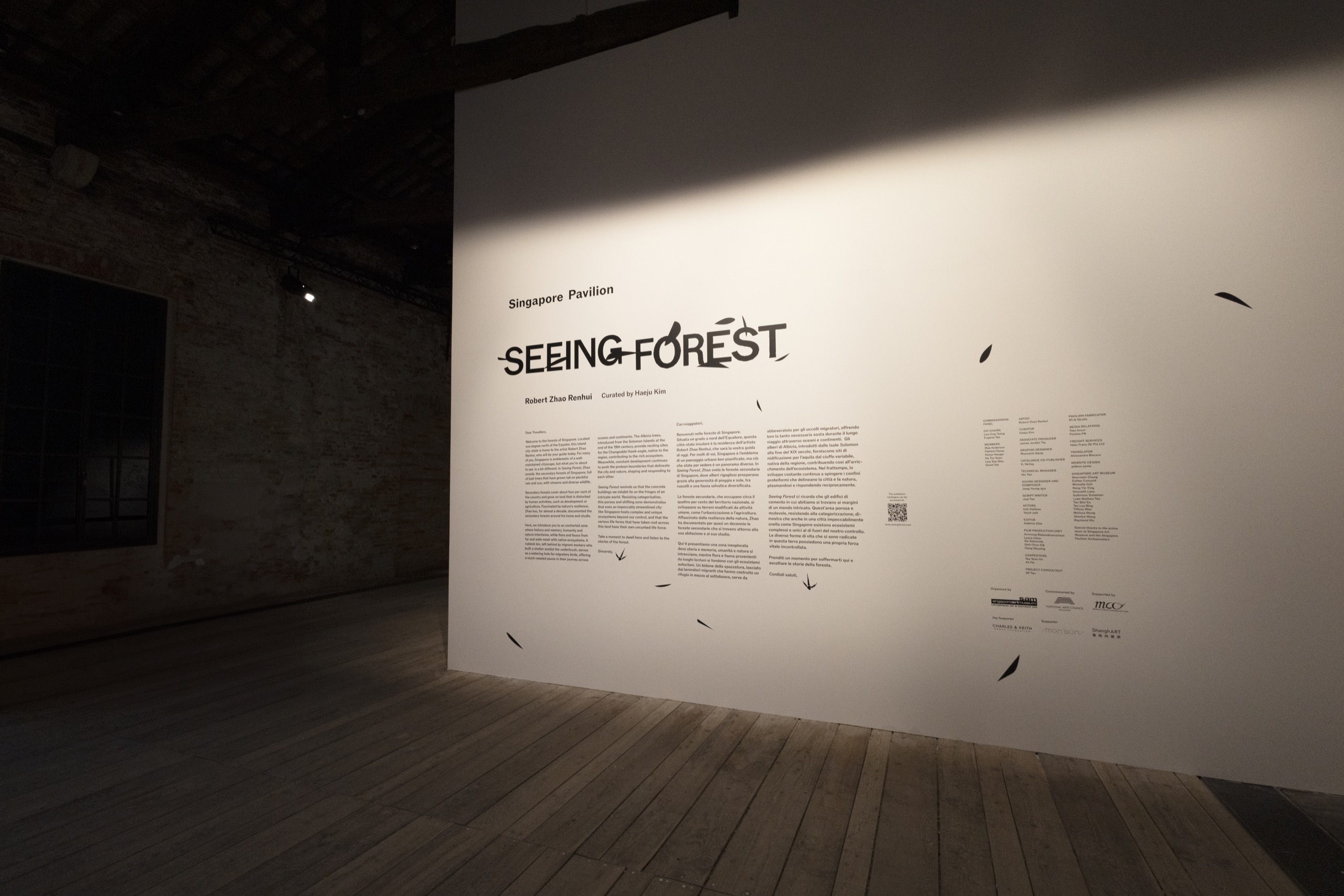
싱가포르아트뮤지엄에서 활동하며 로버트 자오 런후이 Robert Zhao Renhui와 함께 2024 베니스비엔날레 싱가포르관을 맡았습니다. 《Seeing Forest》는 어떻게 시작된 프로젝트인가요?
로버트 자오 런휘는 싱가포르의 이차림을 오랫동안 관찰하고 기록해온 작가입니다. 저 역시 싱가포르에서 생태와 환경, 공존에 대한 질문을 들여다보고 있었기 때문에 그의 작업과 맞닿는 지점이 있었습니다. 《Seeing Forest》는 작가의 오랜 관찰에서 출발해 인간과 자연의 관계를 더 넓게 바라보는 전시로 발전했습니다.
While working at Singapore Art Museum, you curated the Singapore Pavilion at the 2024 Venice Biennale with Robert Zhao Renhui. How did Seeing Forest begin?
Robert Zhao Renhui is an artist who has spent many years observing and documenting Singapore’s secondary forests. I was also exploring questions of ecology, environment, and coexistence in Singapore, so his work connected naturally with concerns I was already thinking about. Seeing Forest grew out of the artist’s long-term observation and developed into an exhibition that looked more broadly at the relationship between humans and nature.
《Seeing Forest》를 통해 ‘본다’는 행위에 대해 새롭게 생각하게 된 점이 있었나요?
생태적 태도로서 ‘본다’는 행위의 가치를 더 생각하게 됐습니다. 작가의 연구 대상인 싱가포르의 이차림은 인간의 개발과 개입 이후 다시 자라난 곳으로, 토착종과 외래종, 인간이 버린 것과 새롭게 자란 것이 함께 존재합니다. 자연만으로 이루어진 장소도, 인간의 흔적만 남은 장소도 아니었습니다. 인간의 역사와 계속 관계하면서 변화하는 곳이었고요. 그래서 숲 자체가 들려주는 이야기뿐 아니라, 자연을 이해하기 위해 필요한 오랜 관찰의 시간에 대해서도 생각하게 됐습니다. 빠르게 이해했다고 결론내리기보다 오래 보고, 변화하는 관계를 계속 바라보는 일이 중요했습니다.
Did Seeing Forest change the way you think about the act of ‘seeing’?
It made me think more deeply about seeing as an ecological practice. The secondary forests Robert studies in Singapore regrew after human development and intervention. Native and non- native species, things discarded by people, and new growth all exist together there. They are neither purely natural spaces nor places defined only by traces of human activity; they keep changing in relation to human history. That made me think not only about the stories the forest itself can tell, but also about the long attention required to understand nature. Rather than deciding too quickly that something has been understood, it felt important to keep looking and to stay attentive to relationships as they change.
그 오랜 관찰은 실제 전시에서는 어떻게 드러났나요?
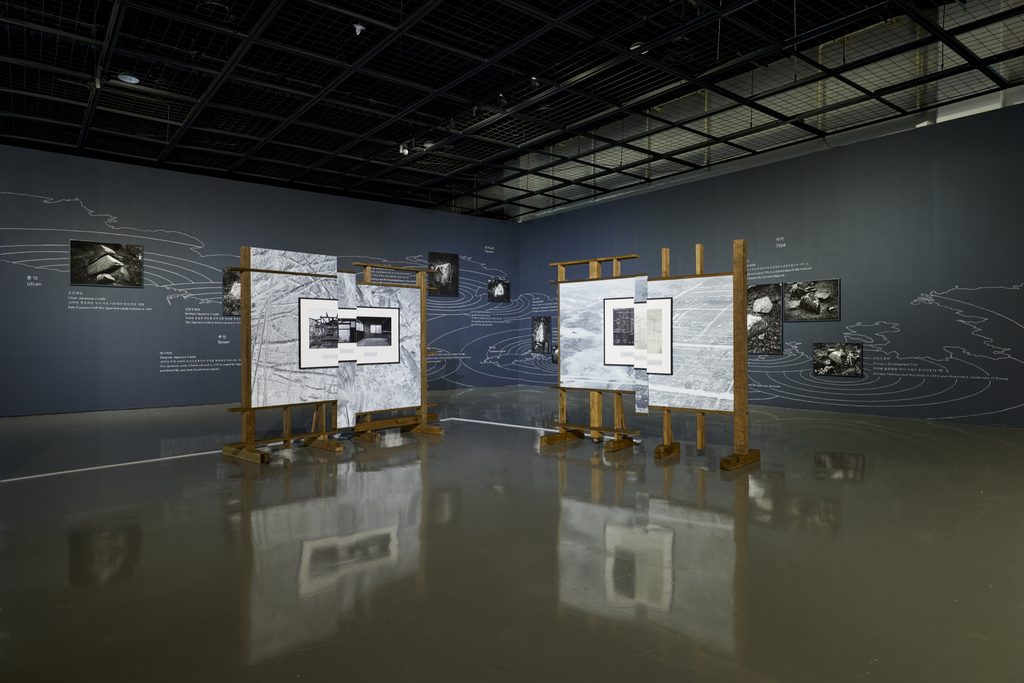
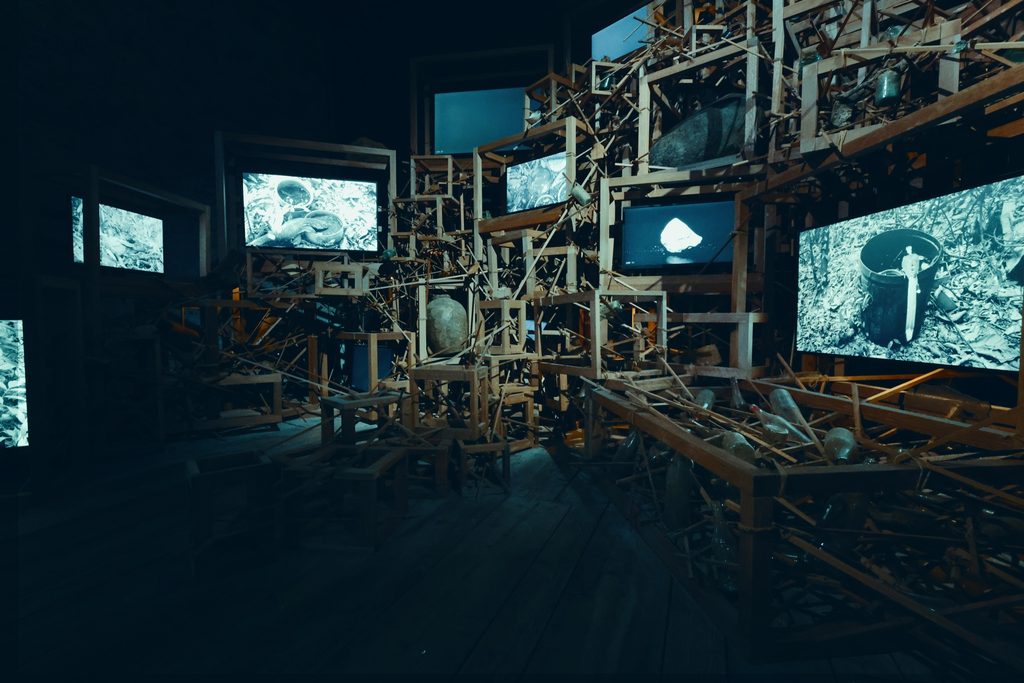
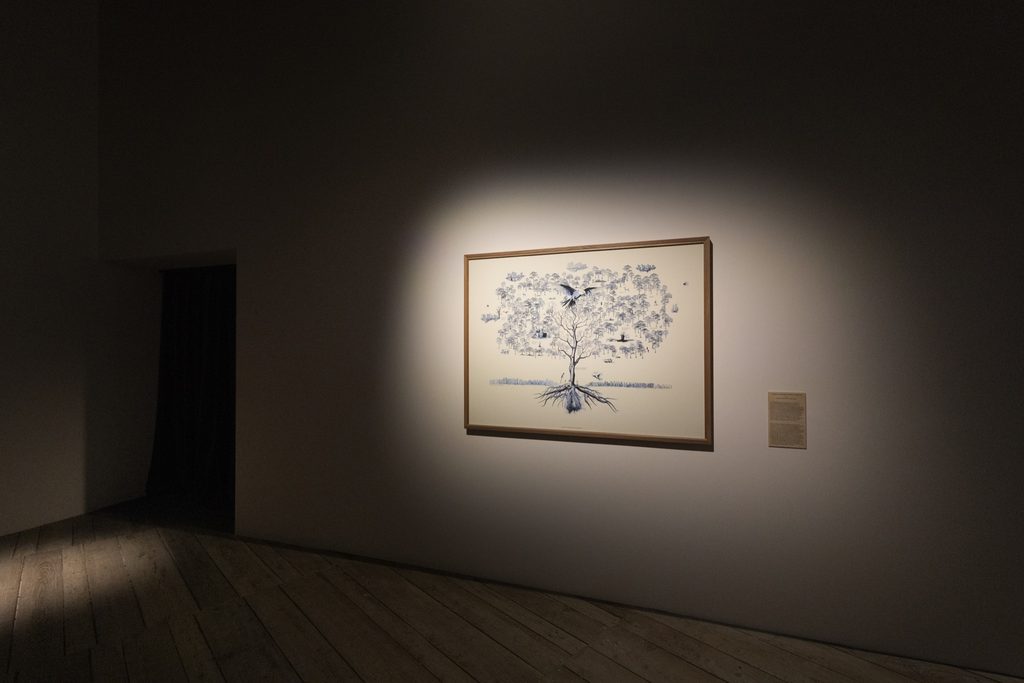
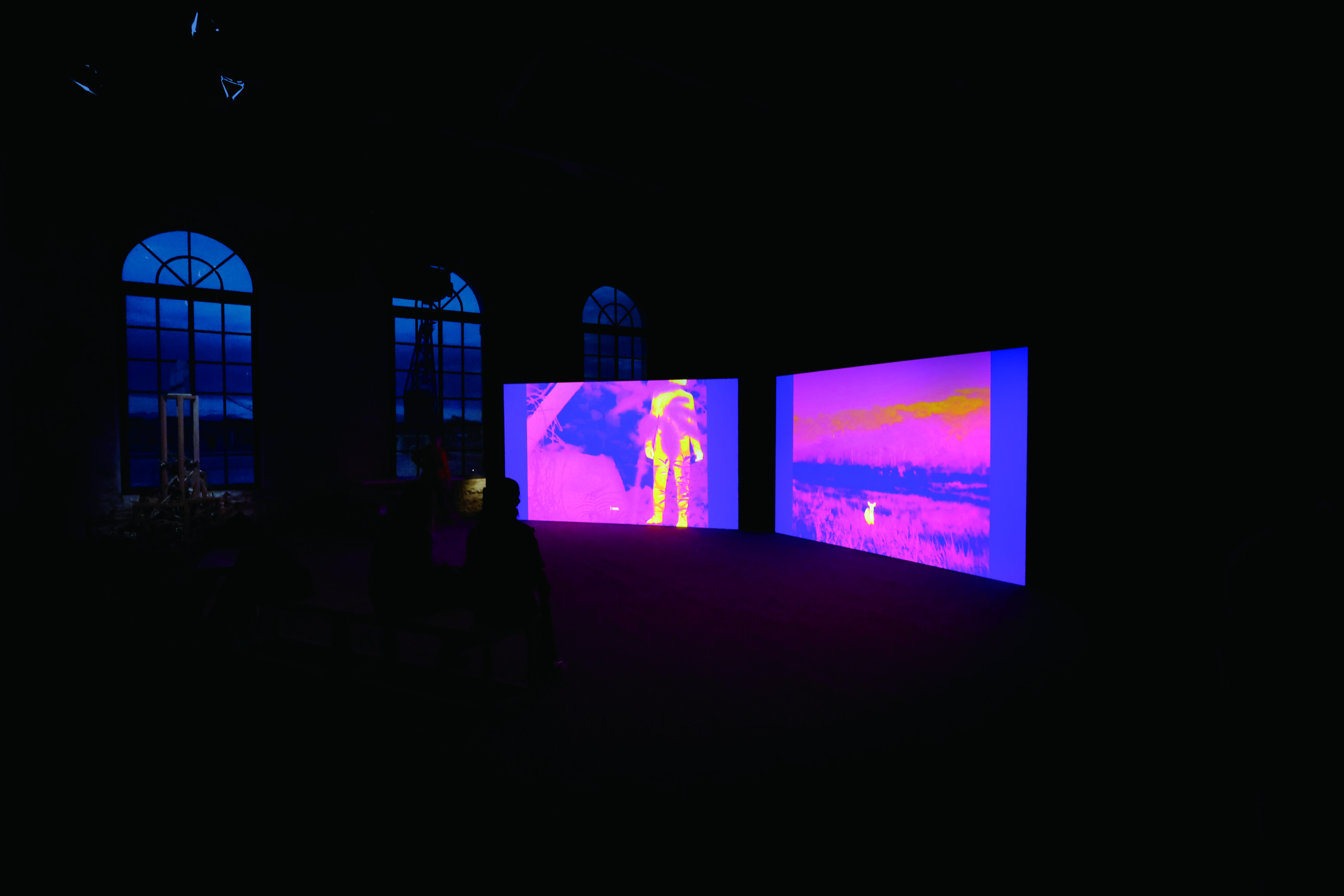
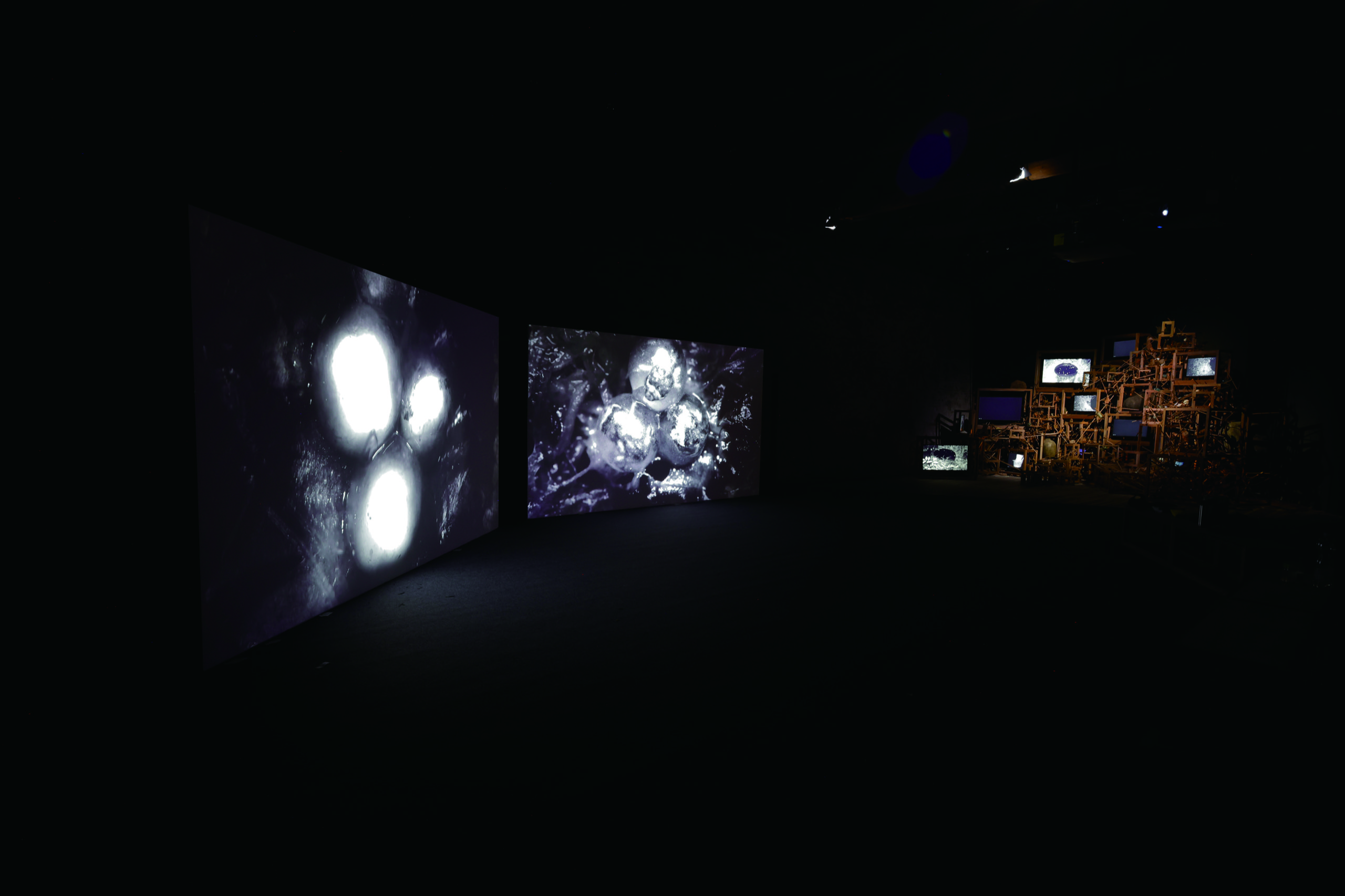
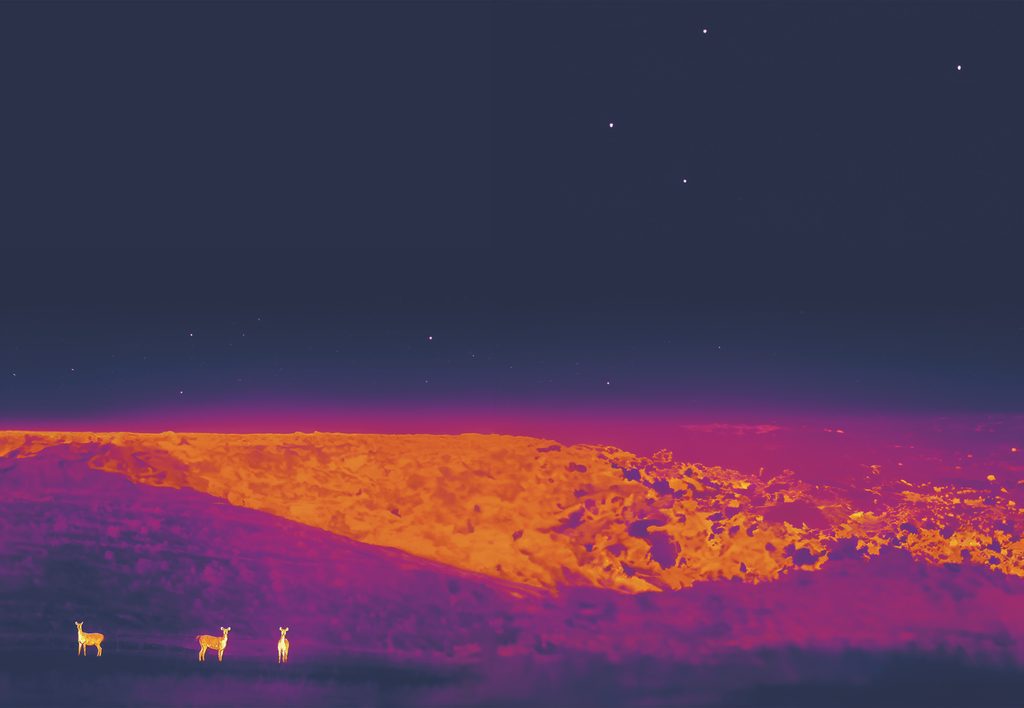
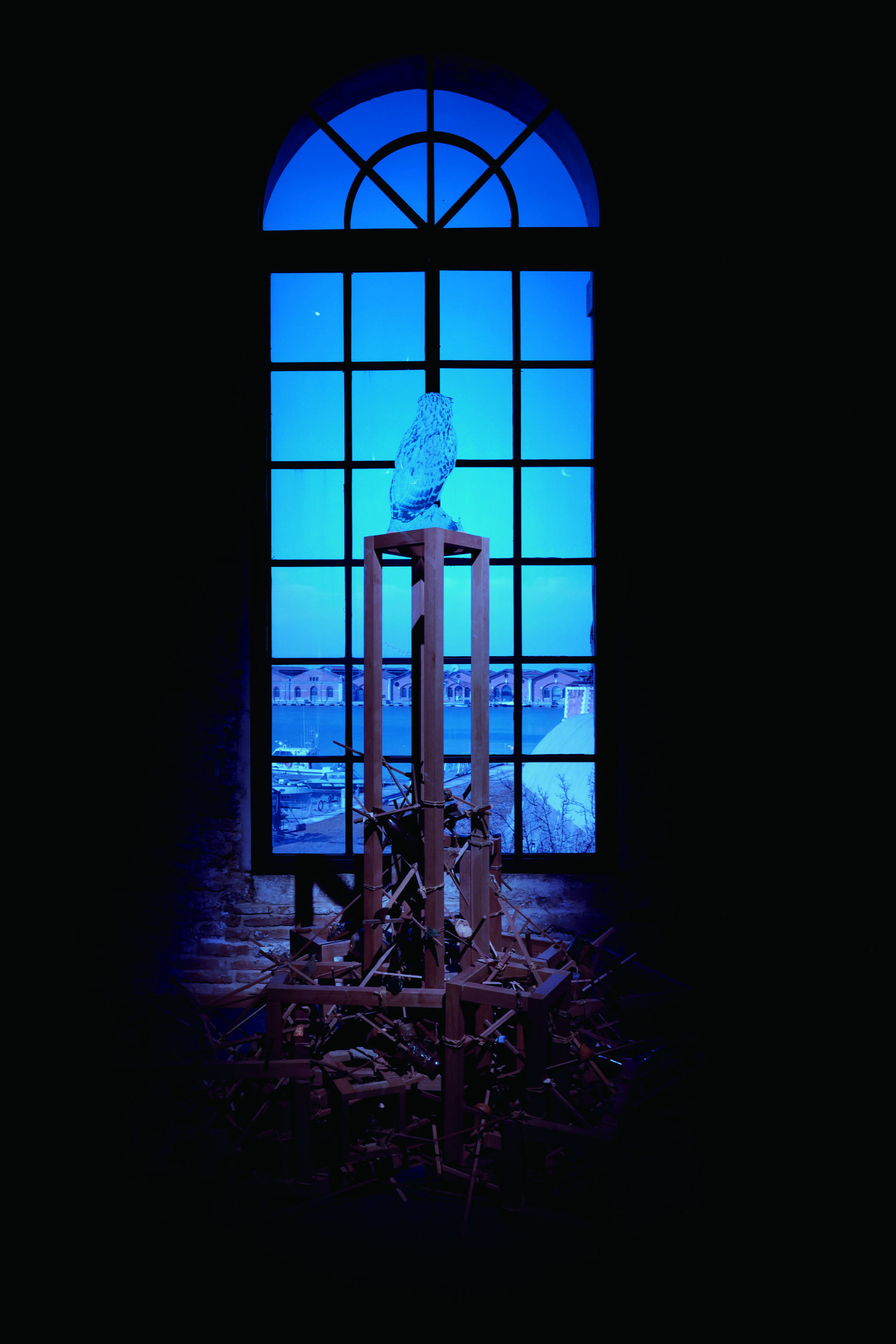
《The Owl, The Travellers and The Cement Drain》에는 버려진 텐트와 콘크리트 배수로, 영국 식민지 시대와 일본 점령기의 군사시설 흔적, 사람들이 남긴 물건 사이로 동물과 철새가 오갑니다. 《Trash Stratum》에서는 인간이 버린 쓰레기통을 다른 생명들이 물웅덩이처럼 이용하고요. 오랫동안 숲을 관찰하면서 보게 된 것은 자연과 인간의 흔적이 따로 존재하지 않는다는 점이었습니다. 서로 다른 시간과 존재가 한 장소 안에 겹쳐 있고, 그 관계도 계속 변하고 있었습니다. 그런 모습을 전시 안에서도 함께 보여주고자 했습니다.
How did that sustained observation find its way into the exhibition?
In The Owl, The Travellers and The Cement Drain, animals and migratory birds move among abandoned tents, concrete drains, traces of military structures from the British colonial era and the Japanese occupation, and objects left behind by people. In Trash Stratum, other forms of life use discarded trash bins like pools of water. Years of observing the forest made clear that nature and traces of human activity do not exist separately. Different times and forms of life overlap within the same place, and those relationships are always changing. We wanted the exhibition to hold those layers together as well.
한국 출신 큐레이터로서 싱가포르 작가와 싱가포르관을 기획하면서, ‘내가 어디까지 알고 있고, 어디까지 말할 수 있는가’도 더 의식하게 됐을 것 같습니다. 외부자의 위치는 어떻게 바라보나요?
어떤 이야기를 다룰 때에는 당사자의 시선뿐 아니라 외부자와 관찰자의 시선도 함께 제시되는 것이 유효하다고 생각합니다. 서로 다른 위치에서 바라본 이야기가 함께 놓일 때, 한 장소를 하나의 시선으로만 설명하지 않을 수 있으니까요. 그래서 《Seeing Forest》에서도 싱가포르라는 구체성을 지우지 않으면서, 어느 지역의 관객도 자신의 환경과 연결해 생각해 볼 수 있는 인간과 자연의 관계를 드러내고자 했습니다. 작가가 오랫동안 관찰하고 기록해온 방법 자체가 함께 전달되는 것도 중요했고요.
As a Korean curator working with a Singaporean artist on the Singapore Pavilion, you may have become more conscious of questions such as, ‘How much do I really know, and what am I in a position to say?’ How do you understand your position as an outsider?
When approaching a particular story, I think it can be valuable to place the perspectives of those directly involved alongside those of outsiders and observers. When stories seen from different positions are brought together, a place no longer has to be explained from a single point of view. That is why, in Seeing Forest, we wanted to retain the specificity of Singapore while also drawing out relationships between humans and nature that audiences anywhere could connect to their own environments. It was equally important to convey the artist’s way of observing and documenting the forest over time.
Chapter 03.
완성 이후에 시작되는 질문
Chapter 03.
The Questions That Begin After Completion
김해주에게 전시는 살아 있습니다.
한 번 완성됐다고 해서 그대로 멈추지 않습니다.
공간이 달라지면, 이미 만든 형식도 기꺼이 열어 봅니다.
완성에 머무르지 않고 새로운 가능성을 향해 다시 질문하는 태도. 우리는 그 선택에서 익숙한 성취에 머무르지 않는 용기를 발견합니다.For Kim Haeju, an exhibition is a living thing.
Completion does not mean standing still. When the setting changes, she is willing to reopen even a finished form.
To refuse to stop at completion,
and to keep asking what else might be possible.
In that choice, we see the courage to move beyond familiar achievements and pursue new possibilities.
《Seeing Forest》는 베니스비엔날레 이후 싱가포르로 돌아와 새롭게 구성됐습니다. 같은 전시를 그대로 옮기지 않고 작품의 규모와 구성을 바꾼 이유는 무엇이었나요?
저는 작품이나 전시를 하나의 ‘살아 있는 형식’으로 보고 있습니다. 때로는 퍼포먼스처럼 한시적인 매체로 이해하기도 하고요. 관객에 따라 달라지기도 합니다. 《Seeing Forest》는 싱가포르의 이차림이라는 구체적인 장소에서 시작한 전시입니다. 베니스에서는 그 이야기를 다른 지역의 관객에게 보여줬다면, 싱가포르로 돌아왔을 때에는 다시 그 출발점의 공간과 관객을 만나게 됐습니다. 그래서 베니스에서의 구성을 그대로 반복하기보다 새로운 공간의 규모와 동선, 관객이 작품을 경험하는 방식을 다시 살폈습니다. 《Trash Stratum》은 베니스의 12채널 영상에서 싱가포르에서는 15채널로 확장됐고, 깨진 유리병과 기록사진, 도자기 조각 등이 더해졌습니다. 《The Owl, The Travellers and The Cement Drain》의 사운드도 3채널에서 9채널로 확대됐고요.
같은 작품이라도 장소가 달라지면 작품과 공간, 관객 사이의 관계도 달라집니다. 이미 완성된 형식을 그대로 지키기보다, 새로운 장소에서 작업이 어떻게 다시 살아날 수 있는지를 보는 것이 중요했습니다. 전시가 다른 장소에서 새롭게 보일 때마다 또 다른 질문이 생기는 것도 그런 이유인 것 같습니다.
After the Venice Biennale, Seeing Forest was reconfigured for its return to Singapore. Why did you change the scale and composition of the works rather than recreate the exhibition as it was?
I think of artworks and exhibitions as ‘living forms.’ At times, I also think of them more like performance: temporary media that can shift with the audience. Seeing Forest began with a very specific place: Singapore’s secondary forests. In Venice, we presented that story to audiences from elsewhere. When the exhibition returned to Singapore, it returned to the place and audience where it had begun. Rather than repeat the Venice configuration, we reconsidered the scale of the new space, the circulation through it, and the way audiences would encounter the work. Trash Stratum expanded from a 12-channel video installation in Venice to 15 channels in Singapore, with broken glass bottles, archival photographs, and ceramic fragments added. The sound installation for The Owl, The Travellers and The Cement Drain also expanded from three channels to nine.
Even when the work itself remains the same, moving it to a different place reshapes the relationship between the work, the space, and the audience. What mattered was not preserving a finished form exactly as it was, but asking how the work could come alive again in a new setting. I think that is also why new questions emerge each time an exhibition takes on a different life in another place.
장소와 전시의 모습은 계속 달라지는데도, 오랫동안 되돌아오게 되는 질문이 있나요? 그리고 그 질문을 왜 계속 붙들고 있다고 생각하시나요?
어떻게 함께 살아갈 수 있을까 하는 질문입니다. 미술이, 그리고 전시가 공존의 여러 방식에 대한 하나의 제안이 될 수 있을까 생각합니다. 여기에는 사회 안에서 사람과 사람이 함께 살아가는 문제뿐 아니라 자연과 환경과의 공존도 포함됩니다. 이 질문이 제가 기획하는 모든 전시의 단일한 중심 주제인 것은 아니지만, 쉬운 답이 없기 때문에 계속 마음에 두게 되는 것 같습니다. 질문을 던지는 장소가 달라지고, 시간이 흐르고, 저 자신의 위치도 계속 달라지니까요. 같은 질문을 가지고 있어도 그때그때 유효한 제안은 달라질 수 있다고 생각합니다.
Even as places and exhibitions continue to change, is there a question you have found yourself returning to over the years? Why do you think it stays with you?
It is the question of how we can live together. I wonder whether art, and exhibitions, can offer a way of imagining different forms of coexistence. That includes not only how people live together within society, but also how we coexist with nature and the environment.
This is not the single central theme of every exhibition I curate, but I think it stays with me because there is no easy answer. The place from which the question is asked changes, time passes, and my own position shifts as well. Even when I return to the same question, what feels meaningful to propose can change with each context.
전시가 완성된 뒤에도 새로운 장소와 관객을 만나며 질문을 이어가는 태도는 ‘용기’와 어떻게 연결될까요?
계속 질문하는 것과 미지의 곳으로 뛰어드는 일은 비슷한 의미인 것 같습니다. 모르는 것을 마주할 때 질문이 생기니까요.
제가 하는 일이 어떤 하나의 답을 구하고 있는 것 같지는 않습니다. 주어진 상황, 그 장소와 그 시간에 유효한 제안들을 만들고, 이를 통해 일시적인 대화를 시도하고 있다고 생각합니다.
How does this impulse to keep questioning, even as an exhibition encounters new places and audiences after it is complete, connect with the idea of ‘courage’?
To me, continuing to ask questions and throwing yourself into the unknown feel closely related. Questions arise when we encounter what we do not know. I do not think my work is about searching for a single answer. I try to make proposals that make sense for a given situation, place, and moment, and through them create a temporary space for dialogue.
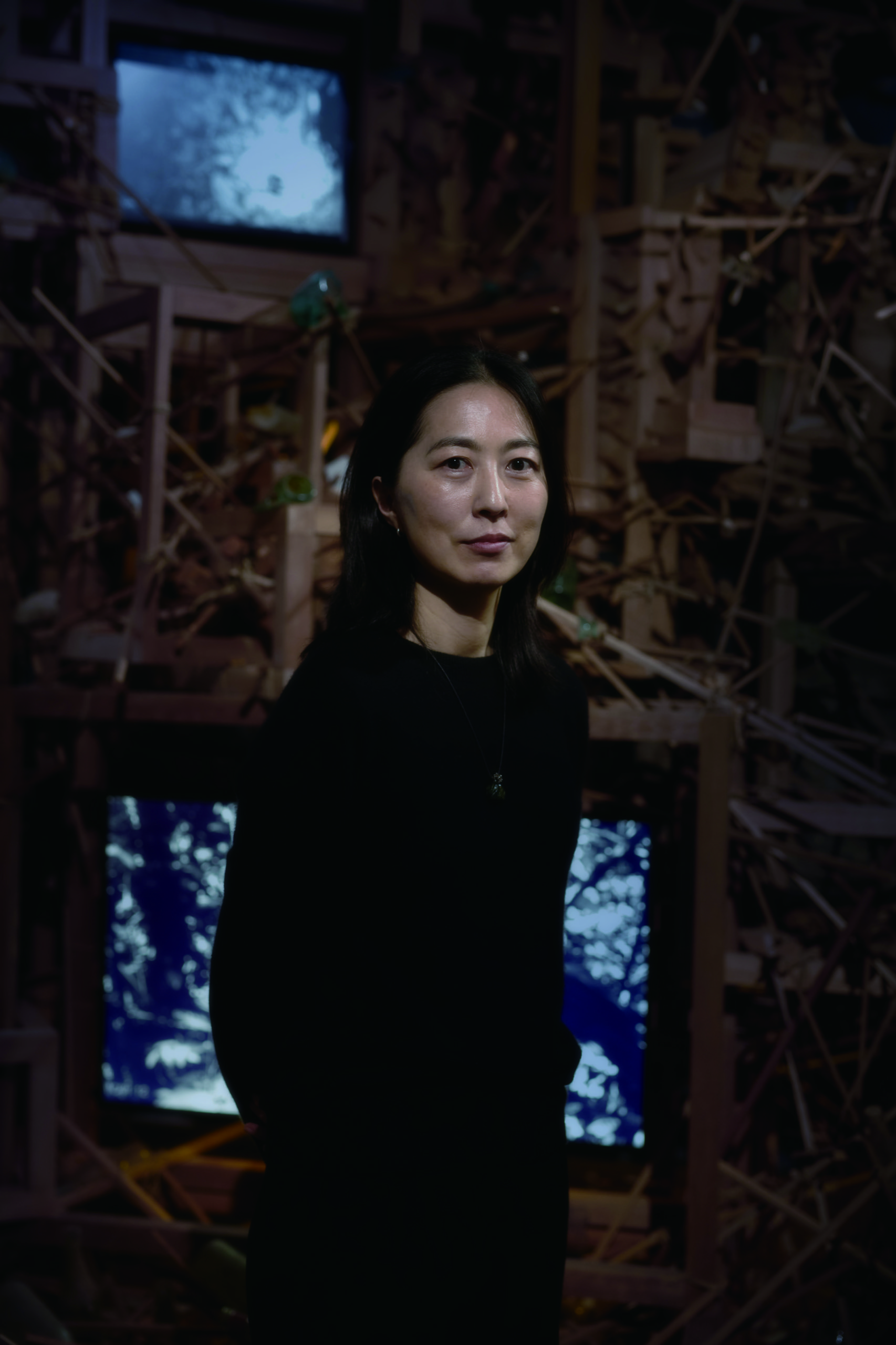
큐레이터 김해주
큐레이터 김해주는 장소와 역사, 이주와 공존, 생태를 중심으로 전시와 프로젝트를 기획해왔다. 프랑스 파리8대학에서 조형예술을, 파리1대학(팡테옹 소르본)에서 문화학을 공부했다. 백남준아트센터와 국립극단을 거쳐 2017년부터 2021년까지 아트선재센터 부관장으로 일했다. 2022 부산비엔날레 《물결 위 우리》의 전시감독을 맡았으며, 현재 싱가포르아트뮤지엄(Singapore Art Museum) 수석 큐레이터 겸 레지던시 총괄로 재직 중이다. 로버트 자오 런후이와 함께 2024 베니스비엔날레 싱가포르관 《Seeing Forest》를 기획했고, 같은 해 국립대만미술관의 2024 아시아 아트 비엔날레(Asian Art Biennial)를 공동 큐레이팅했다.
KIM HAEJU
Curator Kim Haeju has organized exhibitions and projects centered on place and history, migration and coexistence, and ecology. She studied Fine Arts at Université Paris 8 and Cultural Studies at Université Paris 1 Panthéon-Sorbonne. After working at the Nam June Paik Art Center and the National Theater Company of Korea, she served as Deputy Director of Art Sonje Center from 2017 to 2021. She was Artistic Director of the 2022 Busan Biennale, We, on the Rising Wave, and is currently Senior Curator and Head of Residencies at Singapore Art Museum. With Robert Zhao Renhui, she curated Seeing Forest, the Singapore Pavilion at the 2024 Venice Biennale, and in the same year co-curated the 2024 Asian Art Biennial at the National Taiwan Museum of Fine Arts.
Epilogue
김해주의 큐레이팅을 관통하는 질문은 분명합니다. ‘안다고 믿는 것을 어떻게 다시 볼 것인가?’ 그는 익숙한 확신을 현장에 세워 검토하고, 그때그때의 조건에 맞는 제안을 새로 만듭니다. 익숙한 관점에 기대기보다 오래 보고, 다른 관계가 드러날 때까지 해석을 열어둡니다. 그에게 큐레이팅은 이미 알고 있는 것을 확인하는 일이 아니라, 아직 보지 못한 것을 만나기 위해 자신이 선 자리를 계속 점검하는 과정에 가깝습니다. 장소가 달라지면 질문의 모양도 달라지고, 그 변화 속에서 자신이 무엇을 보고 있는지도 다시 살피게 됩니다. 김해주의 용기는 확신을 지키는 데 있지 않습니다. 익숙해진 순간에도 다시 낯선 곳으로 걸어갈 수 있는 데 있습니다.
The question running through Kim Haeju’s curatorial practice is clear: How can we look again at what we believe we know? She tests familiar assumptions against the reality of a place, then makes new proposals in response to the conditions at hand. Rather than relying on familiar ways of seeing, she looks longer and keeps interpretation open until other relationships begin to surface. For Kim, curating is less about confirming what she already knows than repeatedly checking where she stands so that she can encounter what she has yet to see. As the place changes, so does the question; in that shift, she also reconsiders what she is seeing and from where. Kim Haeju’s courage lies not in holding fast to certainty, but in choosing the unfamiliar again just as the familiar begins to settle in.