경계에서, 잊힌 흔적이 피어오르다 – 제인 진 카이젠
At the Boundary, Forgotten Traces Rise - Jane Jin Kaisen
Localler
새롭게 떠오르는 문화를 발견해 융합해 나가는 ‘문화의 선구자 Culture Vanguard’ 역시 기아 디자인 크리에이티브 철학의 문화적 특징 중 하나입니다. 기아디자인매거진은 Localler라는 메뉴를 통해 ‘문화의 선구자 Culture Vanguard’라는 타이틀로 한국에서 살고 있는 현지 외국인, 외국에서 살고 있는 현지 한국인들의 경계 없는 스토리를 보여줍니다.
Localler
As a Culture Vanguard, who discovers and integrates emerging culture, is another feature of Kia Design’s creative philosophy. In the Localler menu, Kia Design Magazine presents stories about foreigners living in Korea, as well as Koreans living abroad, under the title ‘Culture Vanguard’.
제주 설화 속 닿을 수 없는 섬, 이어도. 이 이름은 하나의 장소라기보다, 오랜 시간 제주에 축적된 기억과 감각이 응축된 지점을 가리킵니다. 검은 현무암 해안, 해녀들이 바다로 나가던 자리, 의례의 움직임과 바다의 흔적은 서로 겹쳐지며 제주의 시간을 드러냅니다. 사라진 듯 보였던 기억과 말해지지 못한 이야기들은 층위처럼 포개지고, 그 안에서 과거와 현재가 동시에 호흡합니다.
제인 진 카이젠은 이러한 시간의 결을 따라 이어도를 다시 바라봅니다. 그녀에게 이어도는 설화 속에 머무는 이름이 아니라, 오래된 기억과 지금의 삶, 구전으로 전해져 온 이야기들이 교차하는 자리입니다. 이처럼 서로 다른 시간과 경험이 맞닿는 지점에서, 헤리티지는 고정된 과거가 아닌 지금의 삶 속에서 형성되고 다시 읽히는 과정으로 자리합니다.
제인 진 카이젠은 과거를 그대로 복원하려 하지 않습니다. 대신 제주에 남은 기억과 흔적을 오늘의 삶 안에서 다시 읽고, 말해지지 못했던 시간에 의미를 부여하는 방식에 주목합니다. 이러한 접근 속에서 헤리티지는 특정한 형태로 고정된 결과물이 아니라, 여러 시간과 관계 속에서 축적되고 갱신되는 살아 있는 흐름으로 드러납니다.
제주와 이어도, 여성의 삶과 공동체의 기억을 가로지르며, 그 안에서 헤리티지가 어떻게 형성되고 이어지는지 《기아 디자인 매거진》 Vol.17 Localler에서 살펴봅니다.In Jeju folklore, Ieodo is an unreachable island. Yet the name is less a single place than a charged point where Jeju’s memories and sensory traces have gathered over time. Black basalt coasts, the places where haenyeo set out to sea, ritual movements, and marks left by the ocean overlap to reveal the island’s layered time. Memories once thought to have vanished, and stories that remained unspoken, settle in layers where past and present breathe together.
Jane Jin Kaisen returns to Ieodo through these layers of time. For her, Ieodo is not simply a name preserved in folklore, but a site where old memories, present-day life, and orally transmitted stories converge. At this meeting point of different times and experiences, heritage is not a fixed past. It becomes an ongoing process, continually formed and reread through lived experience.
Jane Jin Kaisen does not try to restore the past exactly as it was. Instead, she attends to the memories and traces that remain in Jeju, reading them through the present and giving voice to histories that have long remained unspoken. In this approach, heritage is not a fixed outcome or a single form.
It appears as a living current, accumulating and renewing itself across different layers of time and relationship.
Through Jeju and Ieodo, women’s lives, and communal memory, Kia Design Magazine Vol. 17 Localler examines how heritage is formed, sustained, and carried forward.
- 섬의 시간을 다시 바라보다
- 여성의 삶 속에 이어진 제주의 시간
- 안팎의 경계에서 바라보는 사람
- Seeing the Island’s Time Anew
- Jeju’s Time Carried Through Women’s Lives
- Looking from the Boundary
Between Inside and Outside
Editor’s Note
중심과 경계 사이에는 하나의 이야기로 귀결되지 않는 시간이 있습니다. 무수한 기억과 기록, 전해져 온 이야기와 개인의 경험이 서로 얽히고설키며 그 시간의 결을 만듭니다. 제인 진 카이젠은 그 결 사이에 놓인 목소리들을 조심스럽게 따라갑니다. 그 과정에서 서로 다른 시간들이 어떻게 이어지고 남아 있는지를 드러냅니다.
제주와 덴마크를 오가며 형성된 삶의 위치, 기록과 구전, 개인의 서사와 공동체의 기억은 때로는 어긋나고, 때로는 서로를 비추며 작품 안에서 각자의 자리를 만들어갑니다. 바다의 흔적과 의례의 움직임, 해녀들이 바다를 오가며 쌓아 온 삶의 시간 속에서 오래된 기억은 오늘의 자리에서 다시 읽히고, 새로운 의미와 관계를 얻으며, 그 안에서 헤리티지는 현재의 삶 속으로 다시 이어집니다. 그렇게 남아 있는 것들 앞에서, 우리는 다시 질문하게 됩니다. 지금 우리에게 이어지고 있는 것은 무엇인가.
Editor’s Note
Between the center and the boundary lies a time that cannot be reduced to a single story. Countless memories and records, inherited stories and personal experiences intertwine to create its texture. Jane Jin Kaisen carefully follows the voices held within those layers, revealing how different times endure, connect, and remain.
Her position between Jeju and Denmark, together with records and oral histories, personal narratives and communal memories, sometimes diverges and sometimes reflects back across the work, each finding its own place. Through traces of the sea, ritual movements, and the years accumulated by haenyeo as they moved between sea and village, old memories are read anew in the present, gaining new meanings and relationships. From there, heritage continues into contemporary life. Standing before what remains, we are led to ask again: What is being passed down to us now?
Chapter 01.
섬의 시간을 다시 바라보다
Chapter 01.
Seeing the Island’s Time Anew
장소를 이해하는 일은 눈앞의 풍경 너머,
그 안에 남아 있는 시간을 읽는 일입니다.
그녀에게 제주는 단순한 무대가 아닌,
오래된 기억과 삶의 방식이 이어져 온 장소입니다.
조류의 흐름과 달의 주기, 현무암의 결은
그녀의 작업 안에서 제주의 시간을 형성합니다.To understand a place is to read beyond the visible landscape, toward the time that remains within it.
For Kaisen, Jeju is not simply a setting.
It is a place where old memories and ways of living have persisted.
The flow of currents, the cycles of the moon, and the texture of basalt shape the sense of time that runs through her work.
Q. 제주는 단순한 지리적 장소를 넘어, 오래된 시간과 기억이 함께 놓인 곳처럼 보입니다. 작가님에게 제주는 어떤 의미인가요?
저는 널리 알려진 모습 너머에 더 깊은 시간을 품고 있는 장소들에 이끌려왔습니다. 제주는 오래된 삶의 방식과 역사적 기억이 함께 남아 있는 곳입니다. 섬이라는 위치 또한 세계를 바라보는 다른 시각을 만들어냅니다. 2001년 친가족과 재회한 이후 반복적으로 방문하면서, 제게 이곳은 개인적인 기억과 제주의 역사적 시간이 함께 맞물리는 장소가 되었습니다. 이곳에서는 서로 다른 시간과 경험들이 하나의 장면 안에서 서로를 비춥니다. 이러한 시간 속에서 제주의 헤리티지는 하나의 과거로 고정되지 않고, 오래 이어져 온 삶과 관계 속에서 계속 의미를 얻습니다.
Q. Beyond its geography, Jeju seems to hold long-standing layers of time and memory. What does Jeju mean to you?
I have always been drawn to places that hold a deeper sense of time beyond their widely known images. Jeju is a place where old ways of life and historical memories remain.
Its position as an island also opens another way of seeing the world. Since reuniting with my birth family in 2001 and returning again and again, Jeju has become where my own memories meet the island’s historical layers. Here, different times and experiences illuminate one another in a single frame. Jeju’s heritage, as I see it, is not fixed as one past. It continues to take on meaning through ways of life and relationships that have endured.
Q. 그런 관점이 실제 작업 방식에도 영향을 주었나요?
조류의 흐름이나 달의 주기, 계절의 변화는 단순한 자연 현상이 아니라 작업 안에서 시간의 감각과 구조를 만드는 요소가 됩니다. 제주에서 이어져 온 삶의 방식과 자연과의 관계는 특정한 형식이나 대상에만 머무르지 않고, 해녀들의 삶, 공동체의 기억, 의례의 반복 속에 남아 있습니다.
이런 요소들은 리서치부터 촬영, 편집과 사운드에 이르기까지 작업 전반을 구성하는 기본적인 구조가 됩니다. 오래 이어져 온 삶과 관계는 하나의 형식만으로 다 담기 어렵기 때문이죠. 이 과정에서 제주의 켜켜이 쌓인 시간들이 계속 드러나게 됩니다.
Q. Did that perspective also shape the way you work?
The flow of currents, the cycles of the moon, and seasonal shifts are not merely natural phenomena. In the work, they become elements that create both a sense of time and a structural rhythm. The ways of life and relationships with nature that have continued in Jeju do not belong only to a specific form or object. They are held in the lives of haenyeo, in communal memory, and in the repetition of rituals.
These elements form the underlying structure of the entire process, from research to filming, editing, and sound. Enduring ways of life and relationships cannot be contained within a single form. Through this process, the many layers of Jeju’s accumulated time continue to surface.
Q. 그 흐름이 《이어도》 연작으로 이어진 것 같습니다. 어떤 방식으로 풀어내셨나요?
익숙한 이미지로 소비되는 제주가 아니라, 그 안에 오래 축적된 시간과 기억을 다시 바라보고 싶었어요. 이번 작업에서는 하나의 이야기를 따라가기보다 관계와 경험, 의례와 퍼포먼스가 만나는 자리를 탐색했습니다. 다큐멘터리적 방식에서 출발했지만, 이번에는 조금 더 신화적이고 한 줄로 설명되지 않는 구조로 접근했습니다. 그 안에서 과거의 흔적들이 하나의 이야기로 정리되기보다, 서로 다른 목소리와 장면을 통해 현재 안에 다시 나타나도록 구성했습니다.
Q. That flow seems to have led to the Ieodo series. How did you approach it?
I wanted to look at Jeju again, not as a familiar image to be consumed, but as a place where time and memory have been accumulating for a long while. In this work, I was less interested in following a single story than in exploring the sites where relationships and experiences, rituals and performance meet. Although the work began from a documentary impulse, I moved toward a more mythic structure that resists being summarized in one line. Within it, traces of the past are not arranged into one narrative. Instead, they reappear in the present through different voices and scenes.
Q. 《이어도》는 일곱 편으로 구성된 연작입니다. 각각의 작품은 어떤 관계를 이루며 함께 놓이나요?
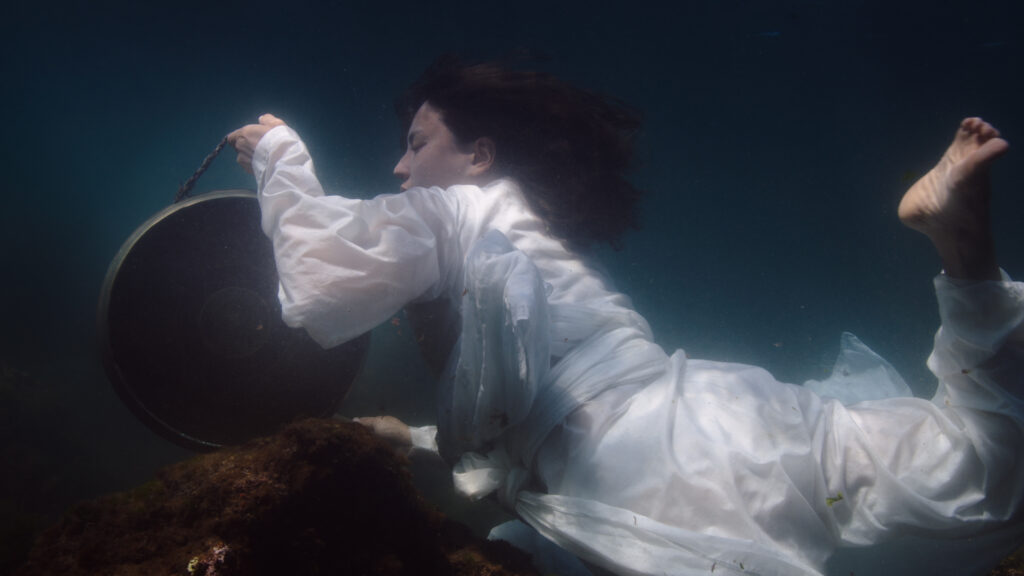
각 작품은 독립된 하나의 세계이면서도, 동시에 서로를 비추는 구조를 가집니다. 저는 하나의 기억을 단일한 서사로 정리하기보다, 서로 다른 시간과 목소리가 함께 놓일 때 생겨나는 관계를 보여주고 싶었습니다. 〈할망〉에서는 70~80대 해녀들이 현무암 바위 위에서 소창을 접고 매만지고, 〈잔해〉에서는 바다 밑 수중 영상 위로 오래된 기록과 의례의 목소리가 겹쳐집니다. 〈포털〉과 〈핵〉은 제주의 조간대와 동굴 속으로 들어가며, 자연과 기억, 의례가 만나는 또 다른 장면을 만듭니다. 이 작품들은 따로 볼 수도 있지만, 함께 놓였을 때 비로소 더 넓은 윤곽을 드러냅니다. 일곱 편이 함께 펼쳐질 때, 제주의 헤리티지는 하나의 과거가 아니라 장소와 사람, 자연과 의례가 오랜 시간 맺어 온 관계 속에서 오늘의 의미를 얻습니다.
Q. Ieodo is a seven-part series. How do the individual works relate to one another?
Each work is an independent world, while also reflecting the others. Rather than turning a single memory into a unified narrative, I wanted to show the relationships that emerge when different times and voices are placed together. In Halmang, haenyeo in their seventies and eighties fold and smooth sochang cloth on basalt rocks. In Remnants, old records and ritual voices overlap with underwater footage. Portal and Nucleus move into Jeju’s intertidal zones and caves, creating another scene where nature, memory, and ritual meet. The works can be viewed separately, but together they reveal a larger outline. When all seven unfold as a series, Jeju’s heritage gains meaning not as one past, but through the long-standing relationships among place, people, nature, and ritual.
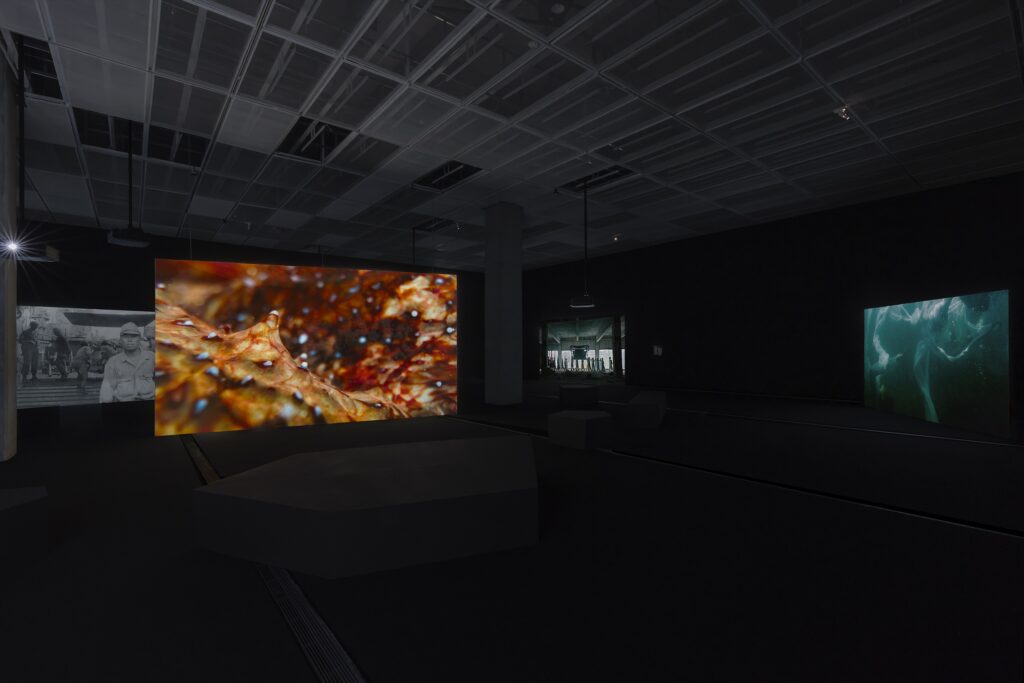
Exhibition view: National Museum of Modern and Contemporary Art Korea, Korea Artist Prize, 2024.
Photo: CJY Art Studio for MMCA
Q. 하나의 서사로 정리하지 않는 구조가 인상적입니다. 관객은 이 작업을 어떤 방식으로 경험하길 바라셨나요?
관객이 하나의 이야기만을 따라가기보다, 이미지와 소리 사이를 오가며 작품을 경험하길 바랐습니다. 《이어도》에서 기억은 한 방향으로 정리되지 않습니다. 어떤 기억은 장면으로 남고, 어떤 기억은 목소리나 의례, 장소의 감각을 통해 다가옵니다. 이 구조는 제 개인적인 경험과도 연결되어 있습니다. 제주에서 태어나 덴마크에서 자랐고, 다시 제주와 한국을 오가며 작업해 온 저의 위치는 하나의 시선만으로 설명되기 어렵습니다. 가까움과 거리감, 개인의 기억과 역사적 시간이 함께 놓인 자리에서 저는 제주를 다시 바라보게 되었습니다.
그래서 《이어도》 역시 하나의 결론으로 향하기보다, 서로 다른 장면과 목소리가 관객 안에서 천천히 이어질 수 있도록 열어두고 싶었습니다. 그 안에서 헤리티지는 완성된 답으로 주어지기보다, 기억과 장소, 사람과 의례가 만나는 과정 속에서 오늘의 의미를 얻습니다.
Q. The structure is striking in that it does not resolve into a single narrative. How did you want viewers to experience the work?
I wanted viewers to experience the work by moving between images and sounds, rather than following a single story. In Ieodo, memory does not proceed in one direction. Some memories remain as scenes, while others reach us through voices, rituals, or the feeling of a place.
This structure is also connected to my own experience. Born in Jeju, raised in Denmark, and working while moving again between Jeju and Korea, I occupy a position that cannot be explained from a single viewpoint. From a place where proximity and distance, personal memory and historical time coexist, I came to look at Jeju anew.
I also wanted Ieodo to remain open, so that different scenes and voices could slowly connect within each viewer rather than move toward a single conclusion. In that process, heritage is not offered as a definitive answer. It takes on meaning through encounters among memory, place, people, and ritual.
Q. ‘이어도’라는 제목도 그런 구조와 닿아 있는 것 같습니다.
이어도*는 제주의 오래된 설화 속에 등장하는 섬입니다. 어디에도 명확히 위치하지 않지만, 다양한 의미와 감각을 동시에 불러옵니다. 하나의 정의로 정리되기보다 기억과 그리움, 희망이 얽히고설킨 이름에 가깝습니다. 저는 그 여러 갈래의 감정과 기억을 제주라는 구체적인 장소와 연결해 보고 싶었습니다. 이어도는 과거에 머무는 이름이 아니라, 지금도 제주를 다시 바라보게 하는 이미지라고 생각해요. 이처럼 남아 있는 기억과 감각 속에서, 헤리티지는 고정되지 않고 오늘의 삶과 관계 속에서 다시 읽히고 이어집니다.
* 이어도: 제주 설화와 구전 속에 등장하는 상상의 섬으로, 명확한 위치보다 그리움과 희망, 바다 너머의 세계를 상징하는 이름입니다.
Q. The title Ieodo seems to resonate with that structure as well.
Ieodo* is an island that appears in old Jeju folklore. It is not clearly located anywhere, yet it evokes many meanings and sensations at once. Rather than being defined in a single way, it is a name where memory, longing, and hope are intertwined. I wanted to connect those many strands of feeling and memory to the specific place of Jeju. I see Ieodo not as a name that belongs only to the past, but as an image that continues to invite us to look at Jeju anew. Within the memories and sensations that remain, heritage is not fixed. It is reread and carried forward through life and relationships in the present.
* Ieodo: A mythical island in Jeju folklore and oral tradition, less a fixed location than a name that evokes longing, hope, and a world beyond the sea.
Chapter 02.
여성의 삶 속에 이어진 제주의 시간
Chapter 02.
Jeju’s Time Carried Through Women’s Lives
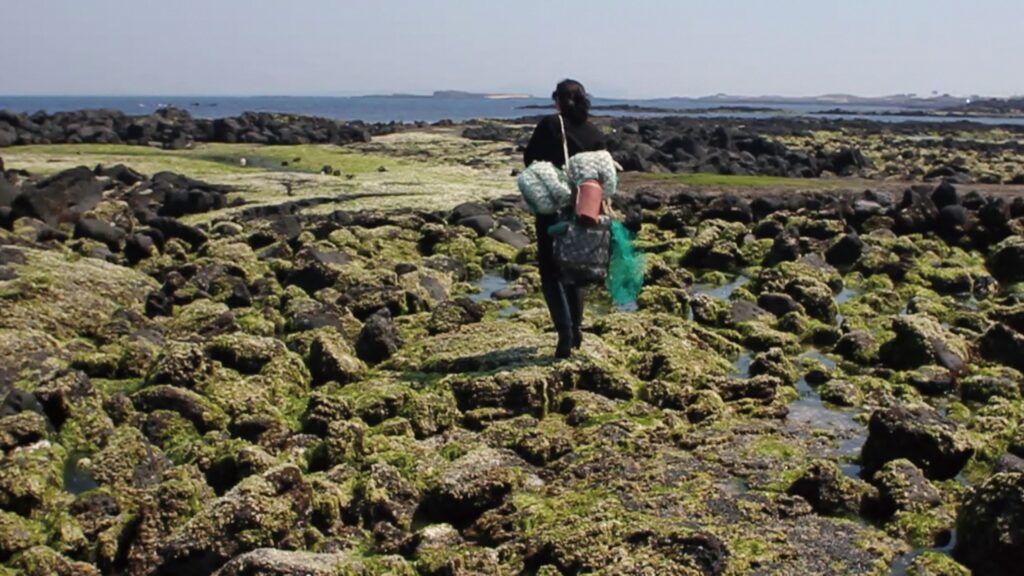
바다를 건너고 마을을 지켜 온 제주의 여성들.
그들의 삶에는 노동과 공동체, 신화와 의례의 시간이 함께 흐릅니다.
제인 진 카이젠은 그 삶의 결을 따라, 제주의 기억이 오늘까지 이어지는 방식을 바라봅니다.Jeju’s women have crossed the sea and sustained their villages.
Their lives carry the time of labor and community,
myth and ritual.
Following the grain of those lives,
Jane Jin Kaisen traces how Jeju’s memories continue into the present.
Q. 《이어도》에서 제주 여성과 의례, 기억이 중심에 놓여 있습니다. 어떤 과정에서 이러한 흐름이 만들어졌나요?
처음부터 특정한 주제를 설정하고 시작한 작업은 아니었습니다. 제주의 시간을 따라가다 보니 자연스럽게 여성들의 삶과 공동체의 기억에 닿게 되었습니다. 그 안에서 삶과 의례, 퍼포먼스는 따로 떨어져 있지 않고 하나의 경험으로 이어집니다. 저는 그 경계에 가까운 지점, 서로 다른 삶의 방식과 기억이 만나는 자리를 따라가고 싶었습니다.
Q. 해녀, 할망, 여신, 어머니의 기억이 반복해서 등장합니다. 이들을 통해 시간을 바라본다는 것은 어떤 의미인가요?
해녀* 문화는 빠르게 변화하고 있지만, 여전히 제주의 시간을 이해하는 중요한 단서입니다. 제게 중요한 것은 해녀를 하나의 상징으로 바라보는 것이 아니라, 그 안에 이어져 온 삶의 방식과 관계를 함께 들여다보는 일입니다. 이 여성들은 특정한 이미지로 고정되지 않습니다. 바다와 마을을 오가며 공동체를 지켜 온 존재이자, 변화의 시간을 몸으로 겪어 온 주체입니다. 물질의 기술과 기억은 세대를 거쳐 전해졌고, 그 과정에서 해녀들의 삶은 자연과 인간, 개인과 공동체가 어떻게 함께 살아왔는지를 보여줍니다.
그들의 경험 속에는 노동과 기억, 생태계와 공동체의 시간이 함께 남아 있습니다. 그 안에서 헤리티지는 과거의 장면이 아니라, 지금도 이어지는 삶의 방식으로 읽힙니다.
* 해녀: 산소 장비 없이 바다에 들어가 해산물을 채취해 온 제주 여성 잠수 노동자를 가리키며, 노동과 생태 지식, 공동체의 삶을 함께 이어 온 존재입니다.
Q. In Ieodo, Jeju women, rituals, and memory are central. How did this direction take shape?
The work did not begin with a specific theme in mind. As I followed Jeju’s layers of time,
I naturally arrived at women’s lives and communal memory. Within them, life, ritual, and performance are not separate. They are joined as one experience. I wanted to follow that liminal place where different ways of life and memories meet.
Q. Haenyeo, halmang, goddesses, and memories of mothers appear repeatedly. What does it mean to look at time through them?
Haenyeo* culture is changing quickly, yet it remains an important key to understanding Jeju’s time. What matters to me is not to see haenyeo as a single symbol, but to look closely at the ways of life and relationships carried within them. These women are not fixed as a particular image. Moving between sea and village, they have sustained their communities and embodied periods of change. The skills and memories of muljil have been passed down through generations, and through that process, the lives of haenyeo show how nature and humans, individuals and communities, have lived together.
Their experiences hold together labor and memory, ecosystem and community. Here, heritage is not read as a scene from the past, but as a way of life that continues in the present.
* Haenyeo: Women divers of Jeju who harvest seafood without breathing equipment, carrying labor, ecological knowledge, and communal ways of life across generations.
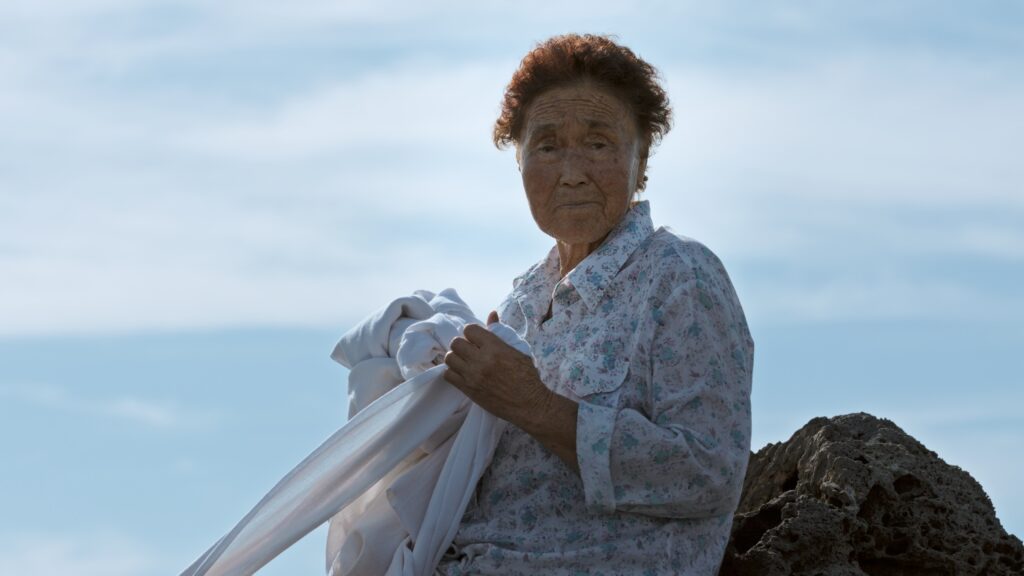
2023, single channel film
Q. ‘할망’이라는 단어도 그런 층위를 담고 있는 것처럼 보입니다.
할망*은 단순히 할머니를 뜻하는 말이 아닙니다. 연장자 여성에 대한 존칭이자, 제주 신화 속 여신을 부르는 이름이기도 합니다. 그 안에는 개인의 기억, 공동체의 역사, 신화와 오늘의 삶이 함께 담겨 있습니다. 〈할망〉 작업이 이루어진 장소 역시 그런 시간이 남아 있는 자리였습니다. 하나의 단어 안에서도 제주의 삶과 믿음, 기억이 서로 얽혀 있음을 보여줍니다.
* 할망: 제주어로 연장자 여성을 높여 부르는 말이자, 제주 신화 속 여신을 가리키는 이름으로도 쓰입니다.
Q. The word Halmang also seems to carry those layers.
Halmang* does not simply mean grandmother. It is a respectful term for elder women, and also a name used for goddesses in Jeju mythology. The word holds personal memory, communal history, myth, and present-day life. The place where Halmang was created was also a site where such time remains. Even within a single word, Jeju’s life, beliefs, and memories are intertwined.
* Halmang: A Jeju term of respect for elder women, also used to refer to goddesses in Jeju mythology.
Q. 제주의 전통 의례가 작업 안에서 중요한 언어로 등장합니다. 과거의 형식이 아니라 오늘의 표현으로 다룬 이유가 있나요?
제주의 의례는 단순한 형식이 아니라, 오랜 시간 공동체의 기억을 이어 온 방식에 가깝습니다. 소리와 움직임, 반복은 과거에 머무르지 않고 영상과 퍼포먼스 안에서 오늘의 언어로 옮겨질 수 있습니다. 저는 그것을 과거의 재현으로 다루기보다, 지금의 시간과 만나는 살아 있는 표현으로 바라보고자 했습니다. 그 과정에서 의례는 오래된 전통이면서도, 현재에도 작동하는 하나의 언어가 됩니다.
Q. Jeju’s traditional rituals appear as an important language in the work. Why did you approach them not as forms from the past, but as expressions of the present?
Jeju’s rituals are not merely formal traditions. They are a way of carrying communal memory across generations. Sound, movement, and repetition do not remain in the past. In video and performance, they can be translated into a language of the present. Rather than treating them as reenactments, I wanted to see them as living expressions that meet the time we inhabit now. Through this process, ritual becomes both an old tradition and a language that still speaks.
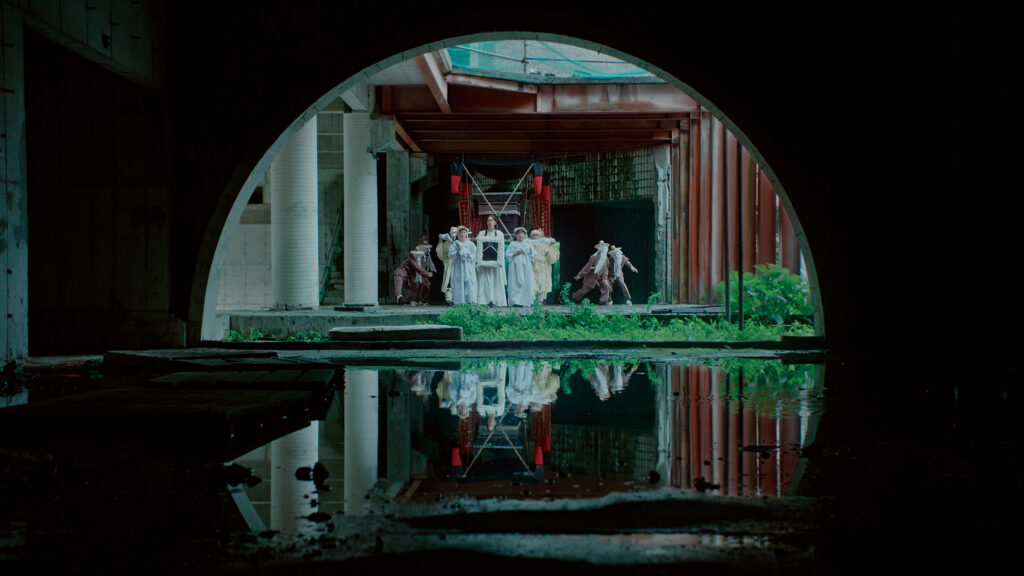
2022, Single channel film
Q. 바다의 흔적, 기록, 의례의 목소리가 한 화면에 겹치는 장면도 그런 맥락인가요?
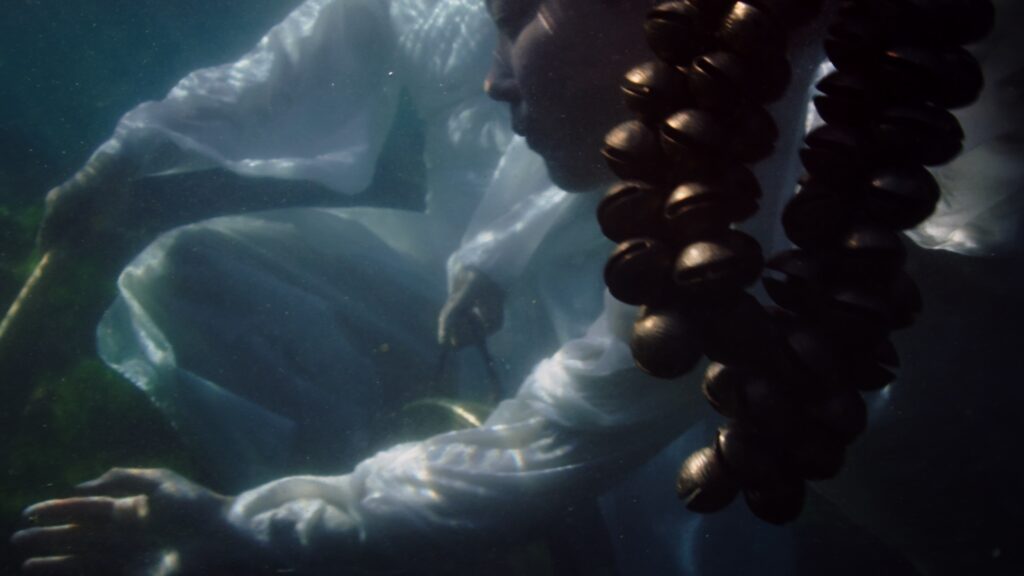
〈잔해〉에서는 수중 영상과 기록, 의례의 목소리가 한 화면 안에 놓입니다. 바다 아래에 남은 흔적과 오래된 기록, 의례의 목소리는 서로를 비추며 말해지지 못한 기억을 불러냅니다. 기억은 하나의 이야기로만 정리되지 않습니다. 때로는 기록으로, 때로는 목소리로, 때로는 바다에 남은 흔적으로 오늘의 자리까지 이어집니다. 그렇게 남아 있는 것들 사이에서 헤리티지는 보존된 형태가 아니라, 현재의 삶 속에서 다시 의미를 얻는 기억의 과정이 됩니다.
Q. Does the scene where traces of the sea, records, and ritual voices overlap on a single screen belong to the same context?
In Remnants, underwater footage, records, and ritual voices are brought together on a single screen. Traces left beneath the sea, old records, and ritual voices reflect one another, calling forth memories that have remained unspoken. Memory does not take shape as one story alone.
At times it reaches the present as a record, at times as a voice, and at times as a trace left in the sea. Among these remains, heritage becomes not a preserved form, but a process of memory that takes on meaning within life today.
Chapter 03.
안팎의 경계에서 바라보는 사람
Chapter 03.
Looking from the Boundary Between Inside and Outside
여러 문화와 장소 사이를 오가며 형성된 위치.
그 위치는 거리감이면서 동시에,
세상을 조금 다르게 바라보게 하는 시선이 되기도 합니다.
그렇게 그녀는 오랫동안 축적된 시간과 기억을
오늘의 이야기로 이어갑니다.A position shaped by movement between different cultures and places.
That position creates distance, but it also becomes a way of seeing the world differently.
From there, she carries long-accumulated time and memory into stories of the present.
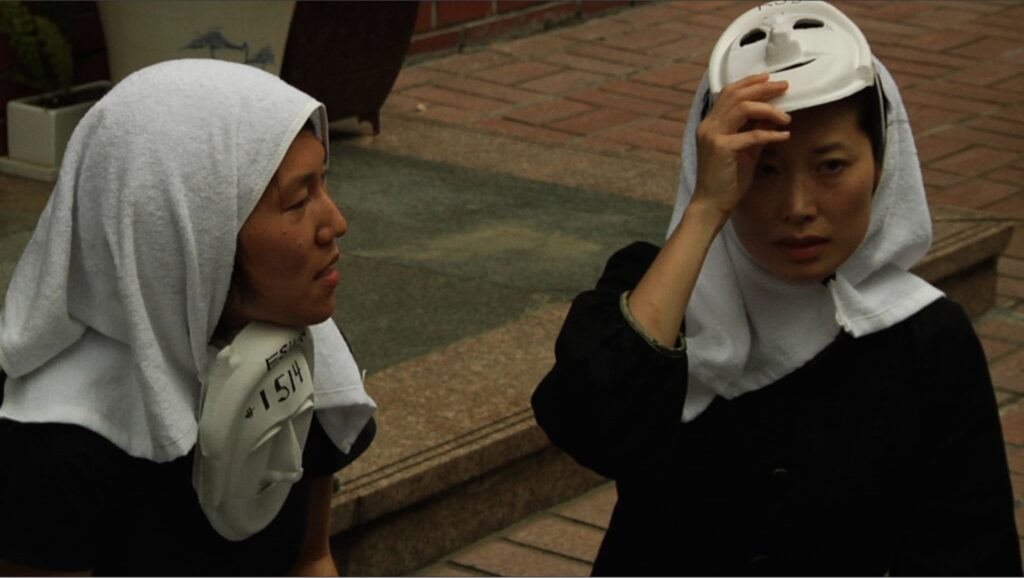
Film still, 2010. HD video 16:9, single channel. b&w. Jane Jin Kaisen & Guston Sondin-Kung
Q. 제주에서 태어나 덴마크로 입양되었고, 다시 제주와 한국을 오가며 작업해 왔습니다. 이 경계의 위치는 어떤 시선을 가능하게 했나요?
서로 다른 문화와 장소를 지나온 경험은 하나의 시선만으로 세계를 바라보지 않게 했습니다. 저는 그 사이에서 오랫동안 축적된 시간과 기억을 바라봅니다. 제주와 덴마크, 가까움과 거리감, 개인의 기억과 역사적 시간이 함께 놓인 자리에서 작업을 시작하게 됩니다.
Q. You were born in Jeju, adopted to Denmark, and have continued to work between Jeju and Korea. What kind of perspective did this position at the boundary open up?
Moving through different cultures and places has kept me from seeing the world through a single viewpoint. From that in-between place, I look at time and memory accumulated over many years. My work begins where Jeju and Denmark, proximity and distance, personal memory and historical time intersect.
Q. 서로 다른 장소의 경험을 동시에 가진다는 감각은 어떤 것인가요?
한 장소에 오래 머물며 가까움을 느끼지만, 동시에 다른 장소에서의 경험도 함께 남아 있습니다. 그 차이는 단순한 거리의 문제가 아니라, 서로 다른 삶의 방식과 시간이 몸에 남는 일에 가깝습니다. 그래서 저는 하나의 방향에서만 현실을 보기보다, 여러 자리에서 생겨나는 관계를 함께 바라보게 되었습니다.
Q. What does it feel like to carry experiences of different places at the same time?
One can stay in one place for a long time and feel close to it, while experiences from another place also remain. That difference is not simply a matter of distance. It is closer to different ways of life and different layers of time becoming embedded in the body. That is why I came to look not from one direction only, but at relationships that emerge from many positions.
Q. 오랜 시간 제주와 한국의 역사를 다뤄 오면서, 작가님은 헤리티지를 어떤 관점으로 바라보게 되었나요?
저에게 헤리티지는 과거의 형태를 그대로 간직하는 일이 아닙니다. 그 안에 쌓인 시간과 기억을 오늘의 자리에서 다시 마주하고, 지금의 삶과 어떤 관계를 맺는지 살피는 일에 가깝습니다. 제주에서 이어져 온 의례와 해녀 문화, 자연과 맺어 온 관계는 과거의 흔적에 머물지 않습니다. 오늘의 삶 안에서 다시 의미를 얻고, 다음 시간으로 이어집니다.
Q. Having worked with the histories of Jeju and Korea over many years, how have you come to understand heritage?
For me, heritage is not about preserving the forms of the past exactly as they were. It is closer to revisiting the time and memory held within them from the perspective of the present, and asking how they relate to life now. Jeju rituals, haenyeo culture, and relationships with nature do not remain as traces of the past. They take on meaning again within life today and continue forward.
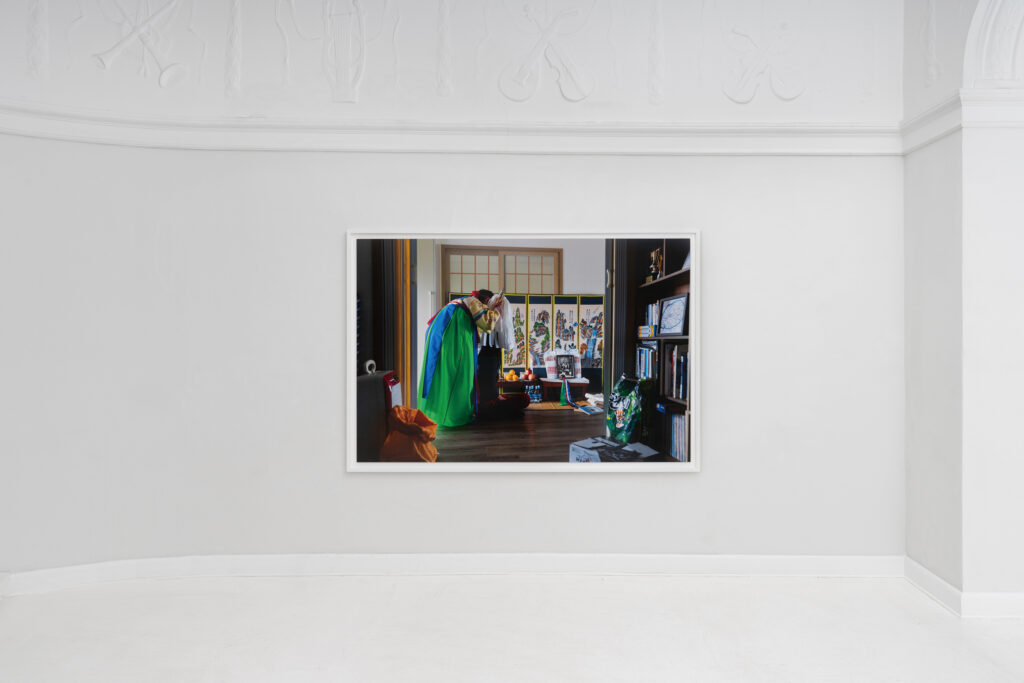
2017, Color photograph, 148 x 221,8 cm, Framed
Q. 경계에 선 자리에서, 헤리티지가 다시 살아난다는 것은 어떤 의미인가요?
저는 역사와 기억을 이미 끝난 것으로 보지 않습니다. 그것은 사라지는 대신 다른 방식으로 돌아오고, 새로운 관계 속에서 다시 의미를 얻습니다. 제주 의례나 해녀 문화 역시 하나의 전통으로만 남아 있는 것이 아니라, 그 안에 담긴 세계관과 자연을 대하는 태도, 공동체의 삶을 다시 바라보게 합니다. 무엇이 계속되고, 무엇이 달라졌는지를 살피는 일. 그 과정에서 헤리티지는 과거를 보존하는 데 그치지 않고, 오늘의 삶과 다시 연결되는 힘이 됩니다.
Q. From a position at the boundary, what does it mean for heritage to come alive again?
I do not see history and memory as things already concluded. Instead of disappearing, they return in different ways and take on meaning again within new relationships. Jeju rituals and haenyeo culture are not simply traditions. They allow us to look again at the worldview they carry, their attitude toward nature, and the life of the community. It is a way of examining what continues and what has changed. In that process, heritage does not stop at preserving the past. It becomes a force that reconnects with life today.
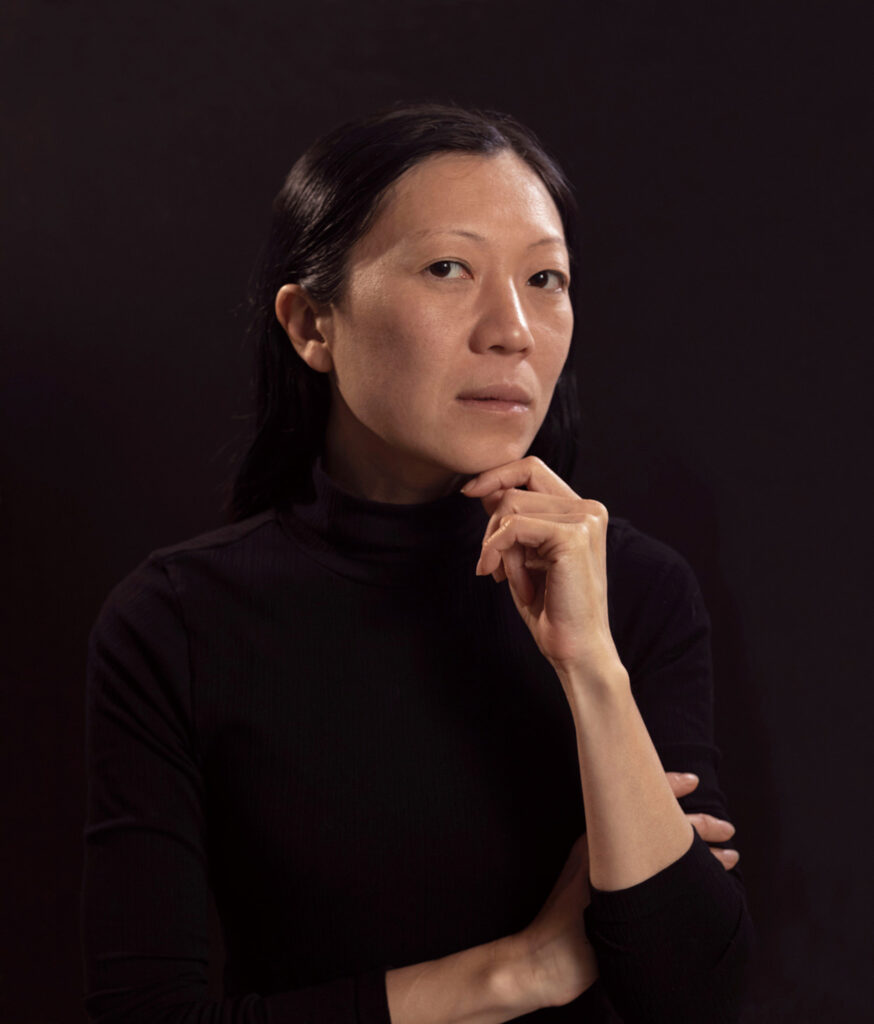
제인 진 카이젠
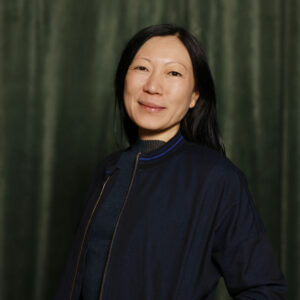
제주에서 태어나 덴마크로 입양되었다. 코펜하겐을 기반으로 활동하며 덴마크 왕립예술학교 미디어아트 스쿨 교수로 재직 중이다. 영화, 영상 설치, 퍼포먼스, 텍스트를 아우르며 기억, 이주, 경계, 여성의 이야기, 헤리티지와 역사적 기억이 오늘의 시간 안에서 다시 읽히는 방식을 탐구해 왔다. 2019년 제58회 베니스 비엔날레 한국관 대표 작가로 참여했으며, 영상 설치 《이별의 공동체》로 덴마크 국제미술비평가협회(AICA) 2020년 올해의 전시상을 수상했다. 2022년부터 2024년까지 제작된 7편의 영화 연작 《이어도》는 2024 국립현대미술관 한국작가상 전시에서 몰입형 설치로 선보였으며, 2025년 제13회 서울미디어시티비엔날레, 제13회 베를린 비엔날레에 참여했다. 2026년 10월부터는 에스토니아 카이 아트센터에서 《이어도》 유럽 첫 전시가 예정되어 있다.
Jane Jin Kaisen
Born in Jeju and adopted to Denmark, Jane Jin Kaisen is based in Copenhagen, where she serves as a professor at the School of Media Arts at the Royal Danish Academy of Fine Arts. Working across film, video installation, performance, and text, she has explored memory, migration, boundaries, women’s stories, heritage, and the ways historical memory is reread in the present. In 2019, she represented the Korean Pavilion at the 58th Venice Biennale, and received the 2020 Exhibition of the Year Award from the Danish section of the International Association of Art Critics, AICA, for her video installation Community of Parting. Her seven-part film series Ieodo, produced from 2022 to 2024, was presented as an immersive installation at the Korea Artist Prize exhibition at the National Museum of Modern and Contemporary Art, Korea, in 2024. It was also included in the 13th Seoul Mediacity Biennale and the 13th Berlin Biennale in 2025. Beginning in October 2026, Ieodo is scheduled to be shown in its first European exhibition at Kai Art Center in Estonia.
Epilogue
제인 진 카이젠의 작업을 따라가다 보면, 경계라는 단어를 다시 생각하게 됩니다. 지도 위에 명확히 표시되지 않는 섬 이어도처럼, 그녀의 작업 역시 하나의 범주로 쉽게 묶이지 않습니다. 제주 신화와 동시대 미술, 개인의 기억과 공동체의 역사, 특정한 장소성과 보편적인 감각은 그녀의 화면 안에서 서로를 비춥니다.
그녀는 변화 속에 놓인 것들을 과거의 자리에 고정하지 않습니다. 대신 그것들이 오늘의 삶과 어떤 관계를 맺고, 어떤 의미로 이어지는지를 따라갑니다. 그 질문은 형식뿐 아니라, 헤리티지를 다루는 방식으로도 이어집니다.
영화와 영상 설치, 퍼포먼스와 의례, 아카이브와 삶의 언어를 오가며 하나의 방식으로는 담기 어려운 시간과 기억을 펼쳐 보입니다. 이 과정에서 헤리티지는 과거에 머무는 형태가 아닙니다. 남아 있는 것들, 반복해서 떠오르는 것들, 그리고 다시 관계를 맺게 되는 순간들 사이에서 헤리티지는 오늘의 의미를 얻습니다. 그것은 고정된 의미가 아니라, 기억과 삶의 관계 속에서 계속 이어지며 다시 만들어지는 힘에 가깝습니다.
Epilogue
Following Jane Jin Kaisen’s work, we are prompted to reconsider the word boundary. Like Ieodo, an island not clearly marked on a map, her work is not easily contained within a single category. Jeju myth and contemporary art, personal memory and communal history, a specific sense of place and a broader human resonance illuminate one another within her images.
She does not fix what is changing back into the realm of the past. Instead, she follows the relationships it forms with life today, and the meanings it carries forward. That question extends not only to form, but also to the way we approach heritage.
Moving across film and video installation, performance and ritual, archives and the language of life, she unfolds time and memory that cannot be contained in a single medium. In this process, heritage is not a form that remains in the past. Amid what remains, what repeatedly resurfaces, and the moments when new relationships are formed, heritage takes on meaning today. It is not a fixed meaning, but a force that continues and is remade through the relationship between memory and life.