다시 읽힐 때 살아나는 것들
Things That Come Alive When Re-read
Boiling Pot
Boiling Pot에는 기아 디자인 크리에이티브 철학 ‘오퍼짓 유나이티드(Opposites United)’가 뜻하는 상반된 개념의 창의적 융합을 바탕으로 정립된 문화적 특징들이 용광로 속 한데 어우러져 녹아든 것과 같은, 정제되고 순도 높은 문화의 스토리를 다루고 있습니다. ‘공간’, ‘환경’, ‘예술’ 등의 사회·문화적 현상을 OU 관점에서 조명하여, 크리에이티브 철학을 새롭게 통찰할 수 있습니다.
Boiling Pot
Boiling Pot features stories of pure, refined cultures born from the creative fusion of opposites, embodying the essence of Kia Design’s creative philosophy, ‘Opposites United’. The social and cultural projects are examined from this perspective and offer readers new creative insights.
헤리티지는 오래되었다는 사실만으로 완성되지 않습니다.
시간은 대상에 깊이를 더하지만, 그 시간이 오늘의 조건 속에서 다시 해석되지 않는다면 과거는 하나의 정지된 이미지로 남습니다.
중요한 것은 원형을 얼마나 충실히 보존했는가가 아니라,
그 안에 축적된 태도와 구조를 지금의 시선으로 어떻게 다시 꺼내는가에 있습니다. 오래된 형식은 때로 거의 변하지 않은 모습으로 남아 자신의 힘을 증명하고, 어떤 순간에는 익숙한 비율과 재료, 표면과 쓰임을 새롭게 조율하며 전혀 다른 현재를 얻습니다. 보존은 시간을 붙드는 방식이고, 재해석은 그 시간을 다시 흐르게 하는 방식입니다.
《기아 디자인 매거진》 Vol.17 ‘Boiling Pot’은 이 두 태도 사이에서 헤리티지가 어떻게 오늘의 언어가 되는지를 따라갑니다.Heritage is not defined by age alone. Time adds depth, but without being reinterpreted in the present, it remains a static image of the past.
What matters is not how faithfully the original form has been preserved, but how the attitudes and structures embedded within it are re-read through a contemporary lens. Old forms sometimes remain almost unchanged, proving their enduring power, while at other times, they achieve a completely different present by recomposing familiar proportions, materials, surfaces, and functions.
Preservation holds time in place, while reinterpretation allows that time to flow again.
In Boiling Pot, Kia Design Magazine Vol. 17 follows how heritage becomes a language of the present, navigating the space between preservation and reinterpretation.
Editor’s Note
왜 우리는 오래된 것 앞에서 잠시 멈춰 서게 될까요. 낡은 물건이나 오래된 형태 때문만은 아닐 것입니다. 그 안에는 한 시대가 남긴 태도와 선택, 그리고 시간이 지나도 쉽게 사라지지 않는 어떤 질서가 숨어 있습니다.
헤리티지를 떠올릴 때 가장 먼저 생각나는 것은 ‘보존’입니다. 원형을 지키고, 처음의 모습을 훼손하지 않으며, 시간의 흔적을 가능한 한 온전하게 남기는 일입니다. 하지만 오래된 것을 그대로 남겨두는 것만으로 헤리티지가 오늘의 언어가 되는 것은 아닙니다. 때로는 다시 읽고, 덜어내고, 다른 자리로 옮겨놓는 과정을 통해 과거는 비로소 현재와 만납니다.
1982년 처음 등장한 뉴발란스 990은 자신의 형태를 급격히 바꾸기보다 조금씩 정교해지는 방식을 택했습니다. 보테가 베네타의 인트레치아토는 가죽을 엮는 오래된 기술을 유지하면서도, 비율과 표면을 바꾸며 전혀 다른 표정을 얻었습니다. 자전거에서 시작한 기아의 이동 역시 자동차와 전기차, PBV로 이어지며 시대마다 다른 형태로 확장되어왔습니다. 서로 다른 영역에 놓인 이야기들이지만, 그 안에는 과거를 그대로 반복하지 않고 오늘의 방식으로 다시 읽으려는 태도가 흐릅니다.
결국 헤리티지는 과거가 오래되었다는 사실만으로 완성되지 않으며, 무엇을 남기고 무엇을 바꾸며 어떤 언어로 다시 현재에 불러낼 것인가에 따라 전혀 다른 의미를 갖게 됩니다.
Editor’s Note
Why do we pause when we encounter something old? It is not merely because ‘it is worn or old in form’. Rather, it is because it contains attitudes and choices left behind by an era, as well as a certain order that does not easily fade with the passage of time.
When we think of heritage, the first thing that comes to mind is preservation.
It means safeguarding the original form, avoiding damage to its initial state, and preserving the traces of time. However, simply preserving old things does not bring heritage into the language of today. Sometimes, it takes a process of reinterpreting, paring down, and repositioning for the past to enter the present with renewed force.
Launched in 1982, the New Balance 990 sneaker has evolved through gradual refinement rather than any drastic changes to its form. By contrast, Intrecciato by Bottega Veneta has taken on a completely different character by altering its proportions and surface texture while maintaining its age-old art of leather weaving. Kia’s movement, which began with bicycles, has expanded into cars, EVs, and PBVs, taking different forms with each era. Although these companies are in different industries, they share an approach of reinterpreting their heritage instead of simply repeating it.
Ultimately, heritage is not complete simply because something has been handed down from the past; it is about what is preserved, what is changed, and in what language it has been brought back to the present.
- 헤리티지를 움직이게 하는 방식
- 보존에서 재해석으로
- 기아가 헤리티지를 읽는 방식
- Setting Heritage in Motion
- From Preservation to Reinterpretation
- How Kia Interprets Heritage
Chapter 01.
헤리티지를 움직이게 하는 방식
Chapter 01.
Setting Heritage in Motion
헤리티지는 단순히 오래된 것을 보존하는 일이 아닙니다. 물론 헤리티지라는 말을 떠올릴 때 우리는 먼저 원형의 보존, 시간의 축적, 변하지 않는 상징을 생각하게 됩니다. 그러나 오늘날 디자인과 패션, 브랜드의 영역에서 헤리티지는 과거에 고정된 유산이라기보다, 현재의 언어 속에서 계속 다시 읽히는 대상에 가깝습니다. 어떤 형식은 오랜 시간 지켜졌기 때문에 힘을 얻고, 또 어떤 형식은 새로운 맥락 안에 놓이는 순간 비로소 다시 살아납니다.
Heritage is not simply about preserving the old. When we think of the word ‘heritage,’ we tend to associate it with the preservation of original forms, the accumulation of time, and enduring symbols. Yet in contemporary design, fashion, and branding, heritage is less a legacy fixed in the past than something continually re-read through the language of the present. Some forms gain power through their continuity over time, while others come alive again when placed in a new context.
이 지점에서 헤리티지를 다루는 방식은 크게 두 갈래로 나누어 볼 수 있습니다. 하나는 보존으로, 원형을 지키고 변형을 줄이며 과거의 형태를 가능한 한 온전하게 유지하려는 태도입니다. 이는 오래된 브랜드가 자신의 정체성을 지키기 위해 반드시 필요한 방식이기도 합니다. 다만 보존이 과거를 붙드는 일에만 머물 때, 헤리티지는 현재와 만나지 못한 채 진열장 안의 유산으로 남게 됩니다.
Approaches to heritage can be broadly divided into two categories. One is preservation, an attitude that seeks to preserve the original form, minimize change, and maintain what has been carried over from the past. This approach remains essential for established brands in sustaining their identity. However, when preservation is reduced to holding onto the past, heritage risks becoming a relic in a display case, detached from the present.
다른 하나는 재해석으로, 과거의 형식을 그대로 복원하는 대신 그 안에 담긴 구조와 태도를 오늘의 언어로 다시 꺼내는 일입니다. 원형을 버리는 것이 아니라, 원형이 놓이는 자리와 그것을 바라보는 시선을 바꾸는 방식이라 할 수 있습니다. 오래된 것은 이때 비로소 현재와 관계를 맺고, 익숙했던 형식은 새로운 의미를 얻기 시작합니다.
The other is reinterpretation, which brings the structures and attitudes embedded in the past into the language of today. It focuses on changing the context in which heritage is placed and the perspective from which it is viewed. This allows the heritage to establish a new connection with the present, and familiar forms begin to take on new meaning.
보존이 과거를 지키는 일이라면, 재해석은 과거를 다시 움직이게 하는 일입니다. 이는 단순한 표현 방식의 차이가 아니라, 헤리티지가 현재 안에서 계속 작동할 수 있는지를 가르는 중요한 기준이 됩니다. 결국 헤리티지는 과거가 오래되었다는 사실만으로 완성되지 않습니다. 무엇을 남기고, 무엇을 바꾸며, 어떤 언어로 다시 현재에 불러낼 것인가에 따라 전혀 다른 의미를 갖게 됩니다.
While preservation is about safeguarding the past, reinterpretation is about setting the past in motion again. The difference between preservation and reinterpretation is a crucial criterion that determines whether heritage can continue to function within the present. Ultimately, heritage can lose relevance unless it is reinterpreted by deciding what is retained, what is changed, and through what language it is brought back into the present.
Chapter 02.
보존에서 재해석으로
Chapter 02.
From Preservation to Reinterpretation
헤리티지 재해석의 방식은 20세기를 거치며 패션과 산업, 디자인의 영역에서 점점 더 선명해졌습니다. 흥미로운 점은 재해석이 반드시 과거를 크게 부수거나 전혀 다른 모습으로 바꾸는 방식으로만 이루어지지 않는다는 데 있습니다. 오히려 어떤 브랜드들은 오래된 형식을 거의 그대로 유지하면서, 그 안의 구조와 완성도를 조금씩 갱신하는 방식으로 현재성을 획득해왔습니다. 말하자면 과거를 지우는 것이 아니라, 과거가 다시 말해질 수 있는 조건을 만드는 일에 가깝습니다.
The reinterpretation of heritage became increasingly visible throughout the 20th century across fashion, industry, and design. Interestingly, reinterpretation does not always involve drastically dismantling the original form or transforming it into something entirely different. Rather, some brands have achieved contemporaneity by retaining older forms almost intact while gradually refining their structure and level of precision. In this sense, it is not about erasing the past, but about creating the conditions through which it can be spoken again.
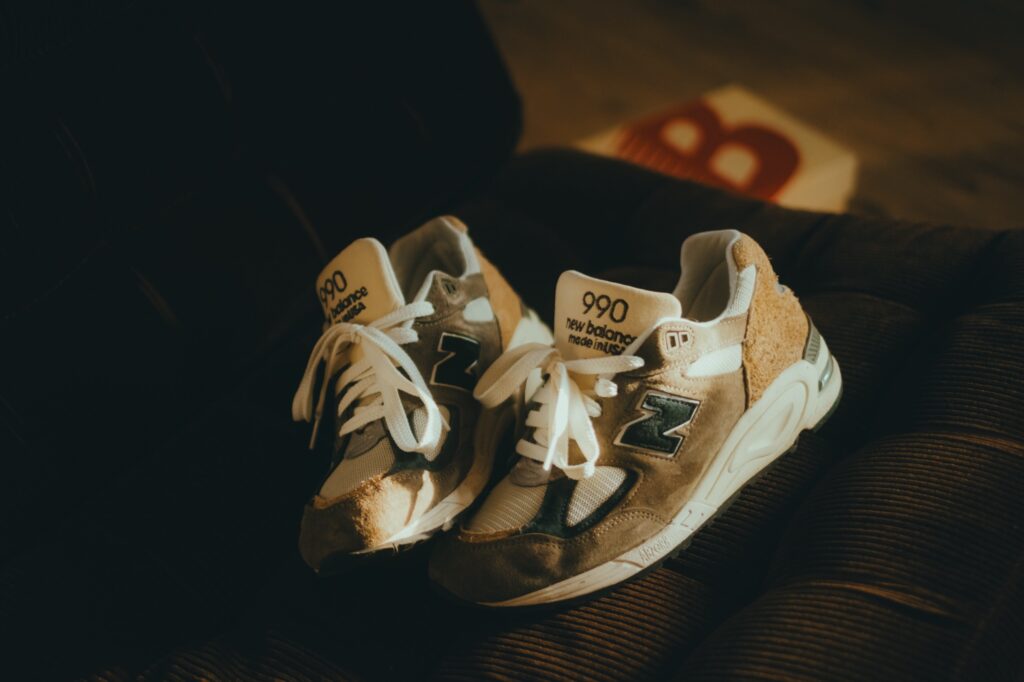
뉴발란스 990은 이러한 방식을 잘 보여주는 사례입니다. 1982년 처음 등장한 뉴발란스 990은 당시 운동화 시장에서 이례적인 100달러 가격으로 출시된 모델이었습니다. 높은 가격 자체가 목적은 아니었습니다. 뉴발란스가 내세운 것은 화려한 색이나 유명 선수의 이미지가 아니라, 가능한 한 완성도 높은 러닝화를 만들겠다는 태도와 미국 생산이라는 기준이었습니다.
The New Balance 990 is a compelling example of this approach. Launched in 1982 with a price tag of $100, it was unprecedented in the sneaker market at the time. What New Balance emphasized was not flashy colors or the image of a famous athlete, but a commitment to making the highest-quality running shoe possible in the USA.
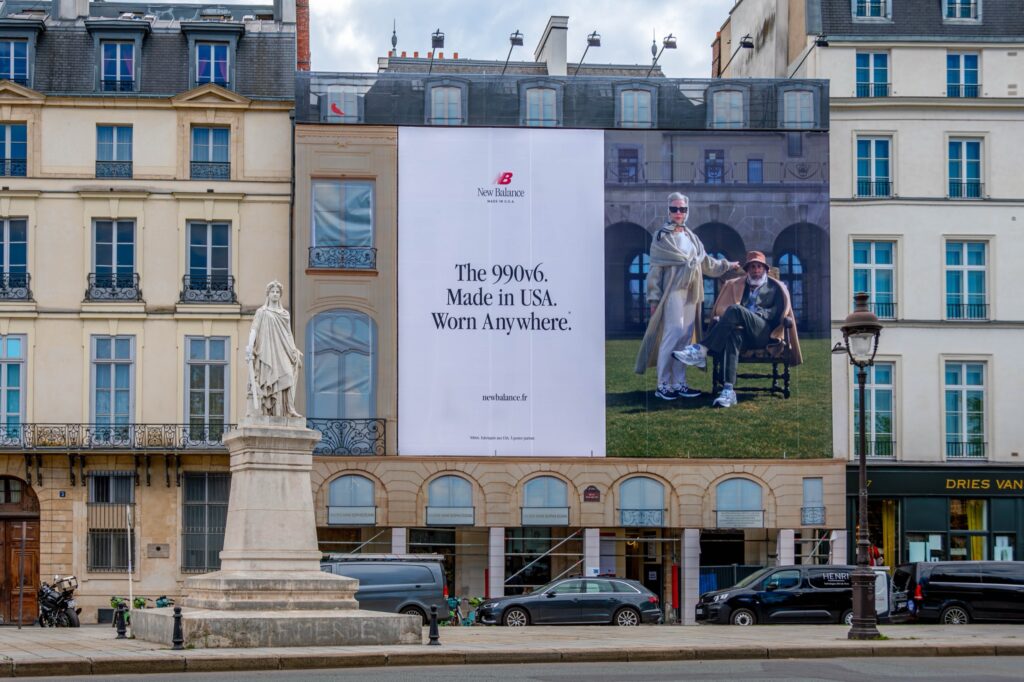
뉴발란스 990의 헤리티지는 급격한 변화가 아니라, 쉽게 바꾸지 않는 기준에서 만들어졌습니다. 40년이 넘는 시간 동안 여러 버전을 거쳐왔지만, 기본 형태를 급격히 뒤집지는 않았습니다. 대신 소재를 다듬고, 쿠셔닝을 개선하고, 구조의 정밀도를 높여왔습니다. 이 경우 재해석은 과거를 새것처럼 포장하는 일이 아니라, 이미 존재하는 형식 안에서 무엇을 더 정교하게 만들 수 있는지를 묻는 과정에 가깝습니다. 재발명이 아니라 정제에 가까운 셈입니다.
The heritage of the New Balance 990 lies in standards that have resisted change. Over more than four decades and multiple iterations, its fundamental form has never been radically altered. Instead, the brand has continuously refined its materials, improved its cushioning, and enhanced its structural precision.
In this case, reinterpretation is not about changing the appearance but rather about asking what can be further refined within an existing form, which is closer to refinement than reinvention.
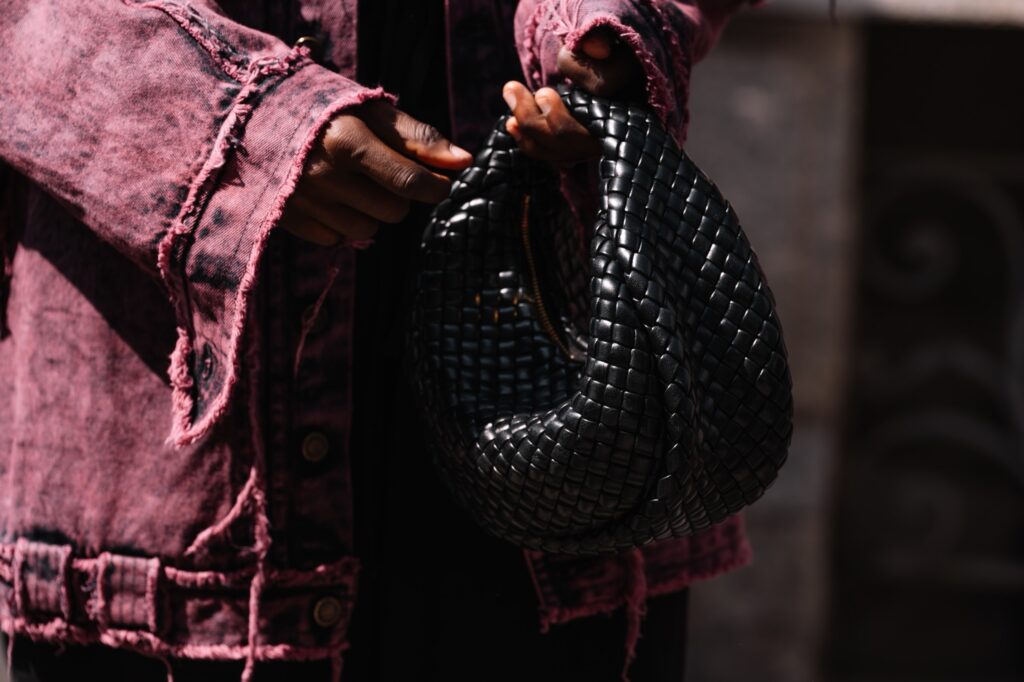
보테가 베네타의 인트레치아토Intrecciato 역시 비슷한 질문에 다른 방식으로 답합니다. 인트레치아토는 가죽을 가늘게 자른 뒤 엮어 표면을 만드는 보테가 베네타의 대표적인 우븐 레더 기법입니다. 로고를 크게 드러내지 않아도 짜임 자체가 브랜드를 알아보게 하는 시각적 언어가 되었고, 이는 보테가 베네타가 말해온 절제된 럭셔리의 감각과도 맞닿아 있습니다. 가죽의 폭은 더 굵어지고, 짜임은 더 크게 드러났으며, 형태와 색은 한층 분명해졌습니다. 기술은 그대로였지만 그것이 드러나는 방식은 달라진 것입니다.
Bottega Veneta’s Intrecciato takes a different approach. Intrecciato is Bottega Veneta’s signature woven leather technique, which creates a surface by cutting leather into thin strips and weaving them together. The weave itself has become a visual language that identifies the brand, aligning with Bottega Veneta’s long-standing identity of understated luxury. Over time, the leather strips have become wider, the weave more prominent, and the forms and colors more distinct, changing how the traditional technique is expressed.
뉴발란스 990과 보테가 베네타의 인트레치아토는 서로 다른 영역에 놓여 있지만, 헤리티지를 과거의 원형으로만 다루지 않았다는 점에서 닮아 있습니다. 뉴발란스는 형태를 크게 흔들지 않은 채 소재와 쿠셔닝, 구조의 정밀도를 갱신했고, 보테가 베네타는 오래된 엮음의 기술을 유지하면서도 그것이 놓이는 비율과 스케일을 새롭게 조율했습니다. 결국 두 브랜드가 보여주는 것은 헤리티지가 과거를 새것처럼 꾸미는 일이 아니라, 이미 존재하던 형식 안에서 오늘의 가능성을 다시 발견하는 과정이라는 점입니다.
While the New Balance 990 and Bottega Veneta’s Intrecciato technique belong to different markets, they share a common approach: neither treats heritage merely as an original form to be preserved. New Balance refined its materials, cushioning, and structural precision without fundamentally altering its form, while Bottega Veneta preserved its traditional weaving technique, recalibrating its proportions and scale. What both brands demonstrate is that heritage is not about dressing up the past to make it appear new, but rather a process of discovering what existing forms can still make possible today.
Chapter 03.
기아가 헤리티지를 읽는 방식
Chapter 03.
How Kia Interprets Heritage
뉴발란스와 보테가 베네타가 오래된 형식과 기술을 현재의 언어로 다시 조율했다면, 기아는 자신이 지나온 시간을 ‘이동’이라는 관점에서 다시 읽어냅니다. 하나의 고정된 형태나 상징을 복원하는 대신, 시대마다 다른 제품 속에 이어져온 방향을 오늘의 브랜드 언어로 꺼내는 방식입니다.
While New Balance and Bottega Veneta have successfully reinterpreted traditional forms and techniques in a contemporary context, Kia reinterprets its heritage through the lens of ‘mobility’. Rather than restoring a fixed form or symbol, Kia draws upon the direction that has been carried through its products over time, translating it into the language of the present.
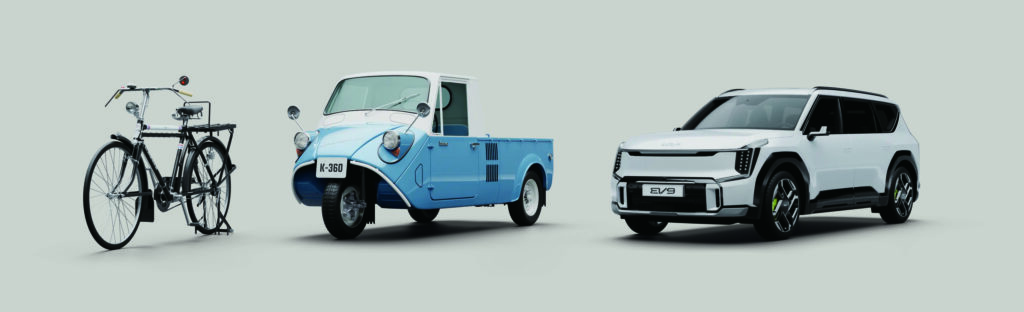
기아는 자전거 부품 제조로 출발해 오토바이, 삼륜차, 승용차, 전기차로 제품의 형태를 바꿔왔지만, 그 변화의 중심에는 더 멀리 나아가고 생활의 반경을 넓히려는 공통된 방향이 있었습니다. 시대마다 제품의 모습은 달라졌지만, 이동을 통해 일상의 가능성을 확장하려는 태도는 계속 이어졌습니다. 기아가 자신의 헤리티지를 ‘이동’이라는 언어로 다시 읽는 이유도 여기에 있습니다.
Kia began with bicycle components and evolved through motorcycles, three-wheelers, passenger vehicles, and electric cars. Yet across these shifts in form, there has been a consistent direction: to move further and expand the scope of everyday life. While the form of its products has changed with each era, this underlying attitude continues to extend the possibilities of daily life through movement. This is why Kia understands its heritage through the language of movement.
이 방향이 하나의 언어로 정리되기 시작한 것은 2000년대 중반이었습니다. 기아는 디자인 경영을 통해 제품과 기술, 생활의 현장 속에 축적되어 온 이동의 의미를 시각적으로 드러내기 시작했습니다. 직선을 중심으로 한 간결한 형태, 불필요한 요소를 덜어내고 구조를 드러내는 태도는 단순한 스타일 변화가 아니었습니다. 흩어져 있던 기아의 시간을 하나의 디자인 원칙으로 다시 묶어내는 과정이었습니다.
In the mid-2000s, Kia’s design direction began to take shape as a unified language with the launch of the ‘Design Management’ initiative. Through its design-focused management, Kia began to visually express the meaning of mobility that had accumulated within its products, technologies, and customers’ daily lives. The use of clean, straight lines and the removal of unnecessary elements to reveal structure were not merely stylistic shifts. It was a process of weaving Kia’s scattered heritage back together under a coherent brand design language.
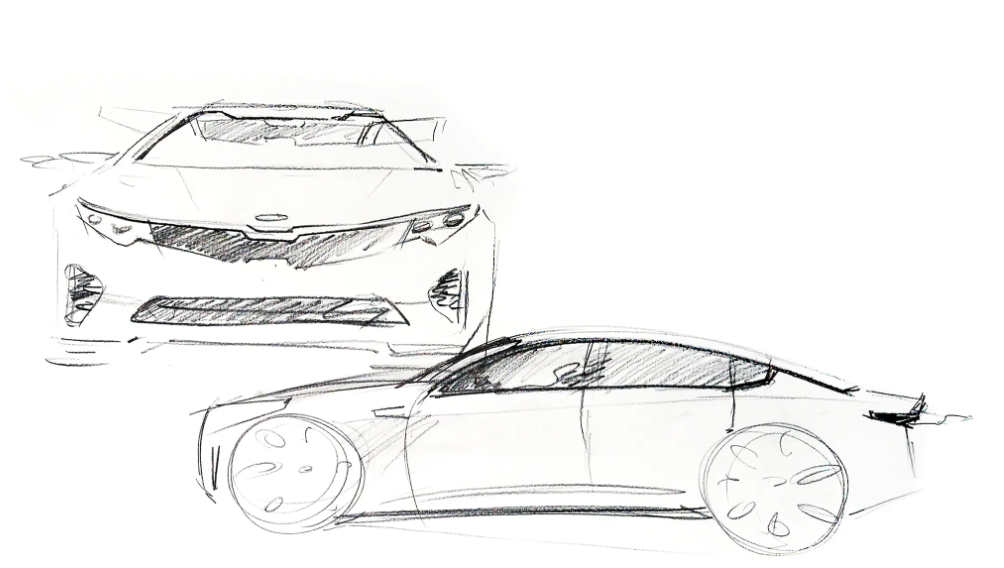
그 변화는 구체적인 형태로도 나타났습니다. 다양한 모델에 흩어져 있던 인상이 하나의 얼굴로 묶이며, 기아가 어떤 브랜드로 기억될 수 있는지가 시각적으로 정리되었습니다. 이 시기 세계 디자인 무대에서 주목받은 모델들 역시 같은 흐름 안에 있습니다. 특정한 과거의 형태를 복원하는 대신, 기아가 지향해온 실용성과 개성을 동시대의 조형으로 보여준 사례들이었습니다.
Over time, the distinct design elements scattered across various Kia vehicle models were unified into a coherent design language, visually defining how Kia could be remembered as a brand. The models that gained recognition on the global design stage during this period emerged from the same direction. Rather than restoring specific design elements from the past, these models expressed the practicality and individuality Kia had always pursued in product design.
이후 전동화 라인업으로 이어지면서 새로운 비례와 표면, 전동화 시대에 맞는 구조가 더해지며 기아의 디자인 언어가 확장되었습니다. 전기차 전용 플랫폼이 만든 넓어진 실내 공간과 새로운 사용 경험은 이동을 단순한 기능이 아니라 삶의 방식으로 바라보는 태도와 연결됩니다. 이 변화 역시 과거와의 단절이라기보다, 생활의 반경을 넓혀온 기아의 방향이 전동화 시대의 조건 속에서 다시 드러난 결과에 가깝습니다.
As Kia moved into its electrified lineup, its design language expanded, embracing new proportions, surfaces, and structures suited to the era of electrification. The wider interior made possible by the dedicated EV platform, along with new modes of user experience, reflects an attitude that sees mobility not merely as a function, but as a way of living. This shift does not mark a break from the past. Rather, it reveals Kia’s long-standing direction once again, now expressed through the conditions of the electrified era.
2021년, 기아는 사명에서 ‘자동차’를 지우고 ‘Movement that inspires’라는 슬로건을 선언했습니다. 이 변화는 단절이 아니라, 오래 이어져 온 방향이 보다 명확한 브랜드 언어로 드러난 순간이었습니다. 이동은 더 이상 자동차라는 제품의 기능에만 머물지 않고, 사람의 일상과 경험을 확장하는 태도로 정리되었습니다.
In 2021, Kia removed “Motors” from its name and introduced the slogan, ‘Movement that inspires.’ This change was not a break from the past but a moment when a long-standing direction was more clearly expressed through its own brand language. Movement was no longer confined to the function of the automobile, but came to describe an attitude that expands everyday experiences and opens up new possibilities.
기아의 헤리티지는 새롭게 만들어진 것이 아니라, 자전거에서 시작된 이동의 의미가 시대에 따라 다른 형태로 번역되며 이어져 온 과정입니다. 그 시간은 오늘날 디자인을 통해 다시 읽히고 있습니다. 제품을 넘어 경험으로, 소유를 넘어 이동의 방식으로 확장되며, 기아는 자신의 헤리티지를 현재의 언어로 계속 움직이게 하고 있습니다.
Kia’s heritage is not something newly created, but a continuous process in which the meaning of movement, first shaped through bicycles, has been translated into different forms over time.
That history is now being re-read through design. Moving beyond products toward experiences, and beyond ownership toward new ways of moving, Kia continues to keep its heritage in motion through the language of the present.
Epilogue
헤리티지는 오래된 것을 그대로 보관하는 일이 아닙니다. 시간 속에 남아 있던 형식과 기술, 태도와 방향이 오늘의 조건과 만나 다시 작동하기 시작하는 과정에 가깝습니다. 뉴발란스 990과 보테가 베네타의 인트레치아토가 보여준 것도, 과거를 지우지 않은 채 현재의 언어 안에서 다시 쓰이게 만드는 방식이었습니다.
기아 역시 자신의 시간을 ‘이동’이라는 관점에서 다시 읽어왔습니다. 특정한 형태를 복원하기보다, 시대마다 이어져 온 감각을 오늘의 디자인 언어로 드러내는 길을 선택한 것입니다. 결국 헤리티지는 이미 완성된 과거에 머무르지 않습니다. 그것은 끊임없이 다시 읽히고, 다른 조건 속에서 새로운 방향을 얻으며 이어집니다. 그리고 어떤 것은 형태로 남고, 어떤 것은 태도로 이어집니다.
기아의 경우, 그 흐름은 하나의 말로 정리됩니다. 움직임입니다. 헤리티지는 그렇게 다시 움직이기 시작할 때, 비로소 현재가 됩니다.
Epilogue
Heritage is not about preserving the old as it is. Rather, it is a process in which forms, technologies, attitudes, and directions carried through time meet the conditions of the present and begin to act again.
What the New Balance 990 and Bottega Veneta’s Intrecciato demonstrate is not the erasure of the past, but the way it can be rewritten within the language of the present.
Kia, too, has been reading its own history through the lens of ‘movement.’ Rather than restoring specific forms, it has chosen to express the identity it has carried through time in today’s design language. Heritage does not remain in a completed past. It is continually re-read, gaining new directions as it encounters different conditions. Some things remain as forms, while others continue as attitudes. For Kia, that flow can be summed up in one word: movement. Heritage becomes present only when it begins to move again.