음악이라는 방대한 세계에서Amidst the Boundless World of Music
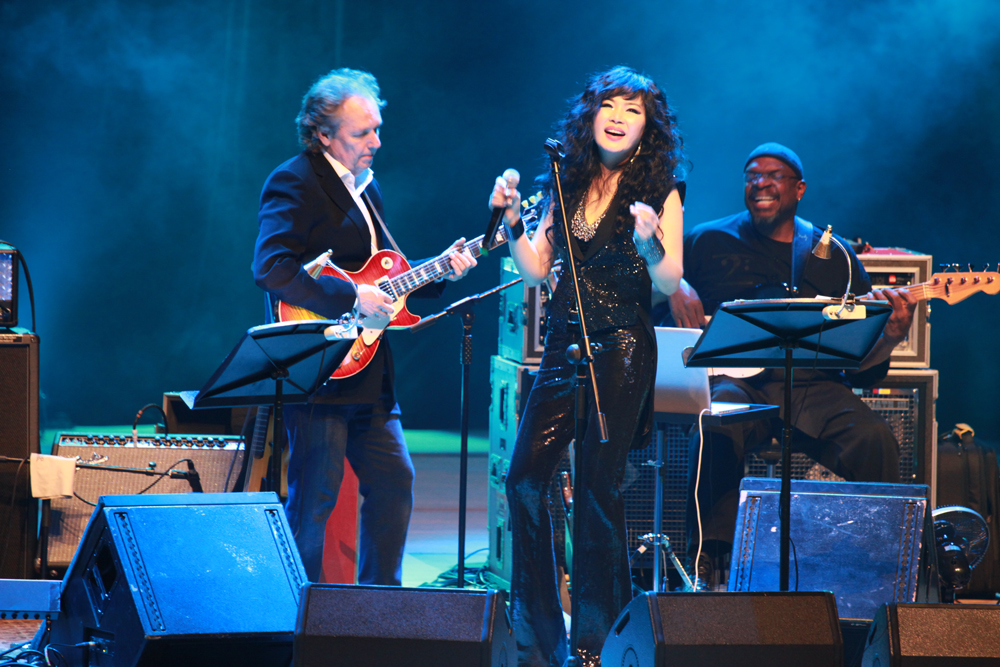
아시아 최고의 재즈 보컬리스트로 꼽히는 웅산은 재즈에 국한하지 않고 폭넓은 장르를 오갔다. 대학 시절에는 헤비메탈을 했고, 재즈 뮤지션으로 데뷔한 후에도 다양한 장르를 소화하며 매번 대중의 기대치를 넘어섰다. 그동안 리 릿나워Lee Ritenour, 나단 이스트Nathan East, 존 비슬리John Beasley 등 세계적인 뮤지션과도 협연했다. 1집 발매 이후 20년 만인 지난해 발표한 정규 10집 〈Who Stole the Skies〉는 그의 독창성과 실험정신이 돋보이는 앨범이다. 대부분의 곡을 작사, 작곡했고 프로듀싱까지 맡은 이번 앨범에서 웅산은 우리 전통음악과 재즈의 융합을 시도했다. 진지하게 국악에 접근하며 판소리를 사사하고, 국악기를 사용하지 않은 재즈 사운드에 한국적 정서를 담아냈다. 재즈평론가 남무성은 ‘전 트랙에 걸쳐 독창성과 예술성으로 빛나는 역작’이라고 표현했다. ‘~한 뮤지션’이라는 틀에 가두지 않고 스스로 반전을 만들어온 웅산은 재즈 음악이 주는 메시지인 자유로움을 음악적 행보로 보여주고 있다.
WoongSan, widely considered one of Asia’s top jazz vocalists, has never been limited solely to jazz but has in fact worked in a wide variety of musical genres. In college, she played heavy metal. Even after her debut as a jazz musician, she played various genres, exceeding people’s expectations every time. She has also performed with world-class musicians, such as Lee Ritenour, Nathan East, and John Beasley. Her 10th studio album, Who Stole the Skies, released last year and 20 years after the release of her first album, highlights her originality and experimental spirit. On this album, for which she wrote the lyrics as well as composed and produced most of the songs, WoongSan attempted to fuse traditional Korean music with jazz. By approaching traditional Korean music in a very serious way, she not only studied pansori but also incorporated Korean emotions into her jazz sounds without using any Korean traditional instruments. Jazz critic Nam Moo Sung described the album as “a masterpiece that shines with originality and artistry throughout all the tracks.” WoongSan has shaken things up on her own—and all without being trapped in the mold of how others define her as a musician. Today, she is showing everyone her sense of freedom—a defining message of jazz music—through her most recent activities.
About the Interviewee
웅산은 1996년 재즈클럽 신에 데뷔하여 2003년 1집 앨범을 발매했다. 일본 ‘빌보드 라이브’와 일본 최고의 재즈 명예의 전당 ‘블루노트’에 초청받은 최초의 한국인이다. 2008년 한국대중음악상 최우수 재즈&크로스오버 노래상 2관왕, 2010년 일본 《스윙 저널》 ‘골드디스크’에 한국인 최초로 선정됐다. 2008년과 2015년에는 리더스폴에서 선정한 베스트 보컬로 뽑혔고, 2021년 대한민국 대중문화예술상 국무총리 표창을 받았다. 현재 사단법인 한국재즈협회 제3대 회장이다.
WoongSan made her debut in the jazz club scene in 1996, releasing her first album in 2003. She is the first Korean to be invited to Japanese Billboard Live and Blue Note Tokyo, two of Japan’s most noteworthy jazz venues. She won the Best Jazz & Crossover Song Award/Album Award at the Korean Music Awards in 2008, and was the first Korean award winner of the Golden Disc from Japanese notable jazz magazine Swing Journal in 2010. She was also selected as the Best Vocalist by Reader’s Poll magazine in 2008 and 2015. Later, she received a Prime Minister’s commendation at the Korean Popular Culture and Arts Awards in 2021. Currently, she is the third chairperson of the Korea Jazz Association.
Q1.
2022년 가을, 4년 만에 정규 10집 앨범을 발표하셨어요. 팬데믹이 길어지면서 관객을 만나는 시간이 줄어들기도 했는데, 그동안 어떻게 보내셨나요?
Q1.
In the fall of 2022, you released your 10th studio album—and first in four years. With the prolonged pandemic and the severely curtailed time seeing audiences in person, how have you been spending your time?
팬데믹이 장기화되면서 누구든 슬럼프를 겪을 만한 시기였지만, 저는 공부하면서 시간을 보냈어요. 그동안 국악과 월드 뮤직에 관심이 생겨서 상명대학교에서 박사 과정을 시작했죠. 한국재즈협회 회장을 맡으면서 여러 가지 일을 추진하기도 했고요. 대신 창작 활동이 더디어지면서 정규 앨범을 내놓기까지 오랜 시간이 걸렸던 것 같아요.
This has been a time when anyone could experience a slump due to the prolonged pandemic, but I spent my time studying. Along the way, I became interested in traditional Korean music and world music, so I started a Ph.D. at Sangmyung University. As chairperson of the Korea Jazz Association, I also spent time carrying out a whole bunch of other projects. It took a while for me to release a studio album because of some slow creative activities on my own part.
Q2.
오래 고민한 만큼 많은 변화를 느낄 수 있는 앨범이었어요. 특히 국악과 접목한 재즈를 선보였다는 점이 특징인데요. 우리 전통음악의 어떤 매력에 빠지셨나요?
Q2.
It is easy to feel how many changes you have put into this album, especially when it comes to how much thought you have clearly invested in it. In particular, it features jazz combined with traditional Korean music. What kind of appeal does traditional Korean music hold for you?
사실 20여 년 전에 김덕수, 안숙선 선생님과 협연하는 등 국악과 재즈를 함께 선보일 기회는 많았어요. 그때는 재즈 뮤지션으로 참여해 제가 할 수 있는 걸 했는데, 5~6년 전부터는 국악, 특히 판소리에 심취하게 되었죠. 사람들은 잘 모르겠지만 사실 저는 슬럼프가 꽤 자주 와요. 음악적으로 한계에 부딪혔다는 생각이 들거나 정체하고 있다는 답답함을 느낄 때, 또는 새로운 경험을 하기 어려울 때도 고비가 찾아오죠. 그럴 때마다 저는 새로운 음악을 찾거나 공부하면서 극복해 나갑니다. 이번에는 재즈와는 다른, 하지만 한국인으로서 가장 나다울 수 있는 국악에서 새로움을 찾아보려고 했어요. 어느 날 안숙선 선생님이 하셨던 구음 시나위 1)를 듣는데 저도 할 수 있을 것 같다는 생각이 들더군요. 매일 산책하면서 흥얼거리고 따라 했어요. 국악에 빠져 공부하고 판소리 통성(通聲) 2)을 하는 과정에서 답답함이 해소되는 기분을 느꼈습니다. 1년 정도 매일 아침 사랑가를 불렀고 그다음에는 적벽가, 심청가 등을 하나씩 배웠죠.
Actually, more than 20 years ago, I had quite a few opportunities to showcase traditional Korean music and jazz together, like when I collaborated with a couple of truly great musicians, Kim Duk-soo and Ahn Sook-sun. Back then, I took part as a jazz musician and did what I could, but from five to six years ago, I became immersed in traditional music, especially pansori. Not many people know this, but I actually go into artistic slumps quite often. When I feel like I’m faced with limits musically, when I feel frustrated with being stagnant, when it’s hard to have a new experience—that’s when the slump comes. Whenever that happens, I overcome it by looking for new music or studying something new. This time around, I tried to find something new in gugak (traditional Korean music) that’s different from jazz but can support my identity as a Korean at the same time. One day while listening to the Gueum sinawi 1) by Ahn Sook-sun, I thought to myself, I can do this. I hummed along and emulated her every day while out for a walk. I felt relieved in the process of studying gugak and singing pansori using tongseong 2). For about a year, I sang Sarangga every morning, and then I eventually learned other pieces, including Jeokbyeokga and Simcheongga, one after the other.
Q3.
이번 앨범에 국악기가 등장하진 않지만, 창법으로 꺾는소리를 구사하는 등 목소리만으로 색다른 음악을 들려주셨어요. 재즈 보컬리스트로서 굉장히 큰 도전이었을 것 같아요.
Q3.
Without any traditional Korean musical instruments on this album, you presented this unique music through nothing more than your voice, like when you used one-of-a-kind grace notes as part of your singing style. This must have been a huge challenge as a jazz vocalist.
저는 국악의 역사를 함께 공부했어요. 판소리와 민요, 정가 3)가 어떻게 다른 소리를 내는지 연구했고, 대가들을 실제로 뵈면서 배웠어요. 정가는 강권순 선생님에게 사사하고 판소리는 국립창극단의 김준수 씨에게 배웠죠. 저는 기본적으로 목을 쓰는 사람이라서 목청이 가는 길만 깨우치면 음악적 도구로 활용할 수 있을 거란 자신감이 있었어요. 또한 소리 자체에 관심이 있었기 때문에 국악 외에도 인도의 라가 음악이나 몽골의 전통음악인 흐미를 시도해보기도 했고요. 물론 전문적인 소리꾼에겐 제 소리가 부족하게 들리겠지만, 겸허히 받아들일 수 있어요. 저는 판소리꾼이 아니라 제가 잘할 수 있는 길을 찾아서 제 음악에 녹여내는 거니까요. 하지만 이질감이 들지 않으려면 그저 며칠 흉내 내기로는 불가능하기 때문에 목이 다치지 않을 정도로 차근차근 연습하는 과정을 거쳤어요.
I also studied the history of gugak. I learned how pansori, minyo (folk songs), and jeongga 3) (classical vocal music of Korea) make different sounds, and I did this by meeting a few masters in person. I learned jeongga from Master Kang Kwon-Soon and studied pansori under Kim Jun-su of the National Changgeuk Company of Korea. Basically, I’m a professional vocalist, so I was confident that I could use traditional music as a musical element for myself if I learned how to properly vocalize those sounds. What’s more is that because I was interested in the sound itself, in addition to gugak I also tried ragas (Indian classical music) and khoomei (a type of throat singing in Mongolia). Of course, my voice may not sound strong enough to be a professional singer of traditional music, but I can humbly accept that fact. I’m not a pansori master, but I’ve found a good way to deal with traditional music and blend it into my own music. However, as it was impossible to create natural sounds by imitating traditional music over the course of only a few days, I went through the process of practicing it step by step while being careful not to hurt my vocal chords.
Q4.
재즈 전에는 헤비메탈을 하신 경험도 있죠. 본격적으로 재즈를 하시면서도 블루스 앨범이나 한국의 대중가요를 재해석한 앨범을 내셨고요. 음악에 경계를 두지 않고 넘나들 수 있는 원동력은 무엇일까요?
Q4.
Before becoming a jazz singer, you played heavy metal. Even while you were playing jazz in earnest, you released a blues album and an album that reinterpreted Korean pop songs. What is the driving force for your singing across different musical genres?
그건 재즈가 준 선물이에요. 재즈는 늘 ‘Why not?’ 같은 기분 좋은 반문이 가능한 음악이에요. 대가 앞에서 공연하거나 혹은 함께 공연할 때 ‘내가 이런 걸 해도 될까?’ 의심이 든다면 바로 ‘Why not?’이라고 질문합니다. 인생에 정답이 없다고 말하는 것처럼 재즈는 하고 싶은 만큼 하고, 가고 싶은 만큼 가보라는 메시지를 줍니다. 그래서 재즈의 가장 큰 틀을 자유라고 하는 거죠. 그런데 자유는 음악적 수련을 통해서 도구를 얻어냈을 때 누릴 수 있는 거예요. 그 과정이 힘들고 변화가 불편할 수는 있지만 이를 기꺼이 받아들이는 자세가 필요하죠.
It’s a gift from jazz, as jazz is a genre of music that can always make you cheerfully ask yourself Why not? When I perform in front of a master or together with other musicians, I’ll ask myself, Can I do this? But then I immediately say to myself, Why not? Just like saying there’s no right answer in life, jazz tells you to do as much as you want and go as far as you like. That’s why they say the biggest framework to jazz is freedom. That said, freedom is something you can enjoy when you gain the necessary tools through musical training. The process can be difficult and the changes can be uncomfortable, but you need to be willing to accept this process and its changes.
Q5.
록과 재즈가 만난 퓨전 재즈가 재즈의 새로운 부흥을 이끌었던 일이 떠오르네요. 다른 장르와의 융합이 재즈 대중화에 도움이 되지 않을까 생각도 드는데요. 실제 그렇게 느끼시나요?
Q5.
From what I remember, fusion jazz, which is a combination of rock and jazz, led to a new revival of jazz. It seems to me that fusion with other genres will help popularize jazz. Do you also feel that way?
그렇게 될 것 같아요. 마일스 데이비스Miles Davis가 악평을 들으면서도 로커들과 함께 퓨전 재즈로 음악적 혁명을 일으킨 것처럼, 국악과 재즈를 접목한 음악도 좋은 반응을 얻고 있어요. 산사에서 음악회를 한 적이 있는데 70~80대 어르신들이 정말 즐겁게 감상하셨어요. 재즈라는 음악이나 웅산을 모르더라도, 앞으로 공연할 때마다 이런 음악을 좋아하는 분이 더욱더 늘어날 거라고 생각해요. 그리고 특히 해외 관객이 많이 좋아하고 인정해줍니다. 제가 굳이 한국에서 왔다고 말하지 않아도, 너무나 특별한 한국 재즈라는 이야기를 들어요. 국악기를 포함한 재즈도 좋겠지만, 우리나라 음악을 이해한 재즈 뮤지션이 연주하는 국악적 재즈, 혹은 재즈적 국악은 그 자체로 다른 뉘앙스를 가지고 있어요. 판소리의 창을 노래에 섞는 식으로 자연스럽게 재즈에 녹여내면 굳이 태극기를 달지 않아도 이게 K웨이브이고 K재즈라는 걸 자연스럽게 느낄 수 있을 거예요.
I think that’s going to happen. Just as Miles Davis started a musical revolution with fusion jazz alongside rock musicians—and faced some bad reviews for it at first—music that combines traditional Korean music and jazz is now receiving a favorable response as well. I once played a concert at a Buddhist temple in the mountains, and elderly people in their 70s and 80s really enjoyed it. Even if they don’t know what jazz is or who WoongSan is, I think there will be more and more people who like this kind of music every time I perform it. I think that’s especially true with foreign audiences, who seem to really like my music. Even if I don’t say that I’m from Korea, I hear that it’s a very special kind of Korean jazz. For me, jazz that includes traditional Korean musical instrument(s) is great, but gugak-style jazz or jazz-style gugak played by jazz musicians who understand Korean music has a different nuance to it. If you naturally meld a song from pansori into jazz by mixing it with your song, you’ll feel that this is K-wave and K-jazz without having to label it as something clearly Korean.
Q6.
작곡에 참여해 하고 싶은 음악을 하면서, 재즈 뮤지션으로 스탠더드 곡을 부르기도 하고, 기존의 아름다운 곡을 편곡해 발표하기도 하세요. 한쪽에 치우치지 않게 균형을 꾸준히 유지하는 비결이 있을까요?
Q6.
You participate in composing music and in playing whatever it is you want to play, sing standard songs as a jazz musician, and sometimes do covers of beautiful songs. Is there a secret to consistently striking a balance so that you don’t lean on one side more than another?
음악은 참으로 방대한 세계예요. 재즈라는 카테고리에만 스스로 가둔다면 ‘과연 진정한 뮤지션이라고 할 수 있을까’하는 생각이 들어요. 단순히 연주만 하는 사람은 플레이어예요. 거기서 더 연마하면 전체적인 음악을 읽을 수 있는 뮤지션이 되고, 더 나아가 창작자로 활동할 수 있죠. 연주자, 뮤지션, 창작자로서 계속 좋은 활동을 할 수 있도록 세 가지 작업의 균형을 잘 맞추는 일은 제게 아주 중요해요. 앞으로도 이에 대한 균형감은 계속 인생의 화두가 될 거 같아요.
Music is such a boundless world. And yet I wonder if it’s possible to say that I’m a true musician if I confine myself only to the category of jazz. If you simply play music, then you’re merely a person who plays music. If you go past that point, however, you can become a musician who can read the whole of music, and even work as a creator of music. It’s very important for me to strike a balance between the three practices so that I can continue to carry out memorable activities as a player, musician, and creator. I think this sense of balance will continue to be an important part of my life.
Q7.
대학교에서 강의하실 때 한 학기 커리큘럼에 다양한 음악 장르와 뮤지컬 연기, 시 낭송까지 포함시킨다고 들었어요. 평소 제자들에게 강조하는 건 무엇인가요?
Q7.
I heard that you include various music genres, musical acting, and even poetry recitation in your curriculum for one semester when you teach at university. What do you usually emphasize to your students?
다양한 경험을 하면서 자신이 어떤 소리를 낼 수 있는 사람인지 찾는 노력은 꼭 필요하다고 생각해요. 저는 재즈라는 음악을 가르치지만, 재즈를 하라고 말하진 않아요. 뮤지컬 연기를 하든, 시 낭송을 하든, 학생들이 하고자 하는 음악에 분명 도움이 될 테니, 그 문을 열어주는 역할을 맡으려 하죠. 학기를 마칠 때쯤이면 새로운 경험을 통해 또 다른 자신을 찾을 수 있어서 좋았다는 이야기를 듣곤 합니다. 저는 2004~2005년 뮤지컬을 하면서 무대에서 얼마나 더 자유로워질 수 있는지, 음악으로 드라마를 표현하는 게 얼마나 중요한지 깨닫게 됐어요. 또 라디오 DJ나 진행을 맡으면서 소통의 중요성도 인식했죠. 학생들에게 여러 가지를 강조하는 이유는 제 경험에서 비롯된 것이기도 합니다.
I think it’s necessary to try and discover what kind of sound you can make while having any number of experiences. I teach jazz music, but I don’t tell students to perform jazz. Whether you’re acting in a musical or reciting a poem, such an experience will definitely help a student with the music they want to perform, so I try to play the role of the person who opens the door for them. By the end of a semester, I often hear from my students that it was good to find another self through new experiences. While doing musicals in 2004 and 2005, I realized how much freer I could become on stage and how important it is to express dramas with music. I also recognized the importance of communication when I worked as a radio DJ and host. Emphasizing countless things to students is also based on my own experiences.
Q8.
최근 ‘그린재즈무브먼트Green Jazz Movement’ 활동이 인상 깊어요. 그리고 보니 이번 앨범의 타이틀인 ‘Who Stole the Skies’에도 환경 메시지가 담겨 있네요.
Q8.
You recently joined the Green Jazz Movement, which I find quite impressive. And it turns out that the title of this album, Who Stole the Skies, also has an environmental message to it.
환경 문제가 정말 심각하잖아요. 뮤지션으로서 할 수 있는 일을 해보자는 마음으로 그린재즈무브먼트를 시작했어요. 보컬리스트 11명에 함께하는 뮤지션 9명까지 총 20명이 모였죠. 보컬리스트가 노래를 통해 하고 싶은 이야기를 하면서 매월 2~3곡씩 발매하는데 오는 4월에는 11명의 음악이 모두 공개될 것 같아요. 지금까지 박라온 씨의 ‘북극곰에게 냉장고를 보내야겠어’, 김민희 씨의 ‘모든 게 사라진 그 날’ 같은 좋은 곡들이 나왔어요. 각자의 목소리로 환경에 대해 이야기하며 사람들의 인식을 확장하는 게 목표이고, 앞으로도 이 프로젝트가 당연히 지속되어야 한다고 생각합니다. 지난 연말 노들섬에서 공연을 했는데요. 참 감동적이고 보람찼어요. 어떤 날은 걱정 때문에 잠이 안 오기도 했는데, 이제 이렇게 제가 할 수 있는 행동으로 실천하며 주변 사람을 설득하기도 해요. 올해 서울재즈페스타에서도 그린재즈무브먼트의 공연을 통해해 더 많은 사람에게 환경 문제를 알리고 인식을 확장하는 시간을 마련할 예정이에요.
The environmental problem is really serious. I started the Green Jazz Movement with the intention to do what I can as a musician. I brought a total of 20 people together, 11 vocalists and nine accompanying musicians. The vocalists are releasing two to three songs every month while conveying what they want to say through the songs, and I think all 11 songs will be released by April. So far, great songs such as Park Raon’s “I Need to Send a Refrigerator to a Polar Bear” and Kim Minhee’s “The Day Everything Disappeared” have been released. The goal is to expand people’s awareness by having singers talk about the environment in their own voices, and I think this project should continue. We performed on Nodeulseom Island in the Hangang River last year, and it was really touching and rewarding. There were some days I couldn’t sleep because of environmental concerns, but now I try to persuade people around me by practicing what I can do. This year’s Seoul Jazz Festa will also provide time to promote environmental issues to more people and expand awareness through the Green Jazz Movement performance.
Q9.
현재 한국재즈협회 회장을 맡아 다양한 활동을 하고 계시죠. 작년에는 4월 30일 ‘세계 재즈의 날’을 맞아 풍성한 공연을 선보였는데요. 올해 계획은 어떤가요?
Q9.
You are currently the Korea Jazz Association chairperson and are engaged in various activities. Last year, jazz musicians staged a lot of performances for International Jazz Day on April 30. What are your plans for this year?
올해도 4월 28일부터 30일까지 사흘간 노들섬에서 서울재즈페스타를 개최해요. 전야제에는 1990년대 한국 재즈를 이끌었던 서울재즈쿼텟의 상징적인 무대가 포문을 열 예정이고 작년에 함께했던 뮤지션과 새로운 뮤지션이 더해져 다양한 프로그램을 준비하고 있어요. 한국재즈협회에서 준비하는 만큼 오직 한국의 재즈 뮤지션으로 구성한 공연이라는 점을 강조하고 싶어요. 게다가 모두 무료 공연입니다! 한국 재즈 뮤지션의 위상을 높이고 후배 뮤지션의 등용문이 될 수 있는 자리죠. 강재훈, 전송이 등 탁월한 실력의 젊은 뮤지션이 대중에 더 널리 알려지면 좋겠어요. 재즈 음악이 주는 여러 가지 메시지가 있는데요. 저는 도전과 자유로움, 배려, 사랑, 존중을 배웠어요. 80대와 20대 뮤지션이 나이를 초월해 한 무대에서 어떻게 서로를 배려하고 존중하며 음악을 만들어가는지 눈앞에서 직접 보면 재즈 음악의 매력을 한껏 느낄 수 있을 거예요.
This year, the Seoul Jazz Festa will be held on Nodeulseom Island for three days, from April 28 to 30. On the eve of the festival, the wonderful stage of the Seoul Jazz Quartet, which led Korean jazz in the 1990s, will be held, and a lot of different programs are being organized with musicians who took part last year as well as some new musicians joining for the first time. As the Korea Jazz Association prepares for this, I’d like to emphasize that performances are composed only of Korean jazz musicians. Plus, they’re all free of charge! It’s somewhere the profiles of Korean jazz musicians are raised, and potentially serves as a gateway to success for younger musicians. I hope outstanding young musicians such as Jaehun Kang and Song Yi Jeon will become more widely known through this event. There are any number of messages derived from jazz music. I learned not only how to rise to a challenge but also about freedom, consideration, love, and respect. You’re able to feel the allure of jazz music to the fullest when you see how, right in front of your eyes, musicians from their 20s to 80s transcend their age and create music while caring for and respecting each other on a single stage.

Q10.
웅산이란 이름이 법명이고 출가하셨던 적이 있다는 사실은 널리 알려져 있어요. “내게 음악은 수행”이라고 말씀하셨는데, 어떤 의미인가요?
Q10.
Some people will already know that your stage name, WoongSan, comes from Buddhism and that you were once a Buddhist nun. You once said, “Music is my self-cultivation.” What exactly does that mean?
저는 과거 실제로 수행자가 되려고 했고, 지금은 또 다른 방법으로 세상이 조금 더 아름다워질 수 있도록 수행하고 있다고 믿어요. 그래서 게으름을 경계하려고 합니다. 뮤지션으로서 스스로를 연마하는 일을 게을리하지 않고, 한 사람의 인간으로서 세상을 위해 무엇을 할 수 있을지 찾아보고 고민하기 때문에 저는 늘 수행자예요. 선물 같은 인생을 잘 보내면서 조금이라도 제가 나눌 수 있는 것을 사람들과 함께하고 싶어요.
I tried to be a practitioner of Buddhist dharma, and today I now believe I’m cultivating myself in another way to make the world a little more beautiful. That’s why I try to be very wary of laziness. I’m always a practitioner because I try not to neglect cultivating myself as a musician; I look for and think deeply about what I can do for others as a human being in this world. I want to spend life like a gift the best I can and share even the very little I have with other people.
1) 전라도 진도 지방 특유의 소리로 악기를 입으로 흉내 내는 노래.
2) 판소리 창법 중 뱃속에서 바로 위로 뽑아내는 목소리.
3) 전통음악에서 가곡, 가사, 시조를 부르는 노래.
1) The unique music of Jindo, Jeollanam-do, it is a song that mimics a musical instrument with a person’s mouth.
2) One of the different singing methods of pansori, this is a singing method where the voice is drawn directly from one’s stomach.
3) Classical vocal music of Korea, it is separated into gagok, gasa, and sijo.