오래된 것에서 발견하는 새로움이라는 감각A Sense of Novelty Found in Old Things
그는 일찍이 ‘춤 잘 추고 지적 호기심 많은 젊은 무용인’으로 무용계의 주목을 받았다. 이후 끊임없는 호기심과 거침없는 추진력으로 무용은 물론, 연극, 뮤지컬, 영화, 시각예술, 사진, 패션 분야의 다양한 예술가와 협업하며 새로운 예술 언어와 경험을 탐색해 왔다. 무용이라는 시간 예술을 통해 이미 존재하는 오래된 것에서 새로운 경험을 발견하는 그의 이야기를 들어보자.
Jinyeob Cha drew the attention of the dance community earlier in her career as a talented, intellectually curious young dancer. Since then—and through constant curiosity and a relentless drive—she has explored new artistic languages and experiences by collaborating with a number of different artists in the fields of theater, musicals, film, visual arts, photography, and fashion, as well as dance. Let’s listen to her story of discovering new experiences in old things—those things which have already existed—through the art of dance, and how the art of time plays into that.
About the Interviewee
차진엽은 한국예술종합학교 무용원에서 학부 과정을 마치고 영국 런던 컨템포러리 댄스 스쿨에서 석사 학위를 따며 현대무용을 공부했다. 이후 영국 호페쉬 쉑터Hofesh Shechter, 네덜란드 갈릴리Galili, 한국의 LDP 무용단 등 국내외 무용 신scene에서 활발하게 활동했다. 2001년 한국무용협회 주최 〈젊은 안무가 창작공연〉에서 ‘최우수 안무가상’을 시작으로 한국 무용계에서 안무가로 자리매김하였으며, 2014년 문화체육관광부 장관 표창으로 ‘오늘의 젊은 예술가상’을 수상했다. 2014년 인천 장애인아시아경기대회와 2018년 평창동계올림픽의 개·폐회식 안무 감독을 맡았다. 현재 2012년 창단한 아티스트 그룹 ‘콜렉티브 에이Collective A’의 예술감독으로 활동 중이다.
Jinyeob Cha studied contemporary dance at the School of Dance, Korea National University of Arts before receiving a master’s degree at London Contemporary Dance School. Cha has worked with many companies internationally, including Hofesh Shechter Company (UK), Galili Dance Company (Netherlands), and the Korean dance company LDP. Early in her career, she was the recipient of the Best Choreographer Award in 2001 at the Korea Dance Association’s Young Choreographers’ Creative Performance. After establishing herself as a noted choreographer in the Korean dance community, Cha then won the Young Artist Award in 2014, with a commendation from the Minister of Culture, Sports and Tourism. She went on to serve as the choreographer for the opening and closing ceremonies of the Incheon 2014 Asian Para Games and the 2018 Pyeongchang Winter Olympics. She is currently working as an artistic director of the artist group Collective A, which she founded in 2012.
Q1.
클래식 발레로 춤을 시작하고 고등학교 2학년 때 현대무용으로 전공을 바꿨다고 들었어요. 특별한 계기가 있을까요?
Q1.
I heard that you started as a classical ballet dancer and changed your major to contemporary dance in your second year of high school. Was there a particular reason?
사실 제가 배운 춤의 시작은 일곱 살, 동네 에어로빅 학원이었어요. 그때만 해도 동네에 발레를 체계적으로 가르치는 곳이 없었거든요. 이후, 아홉 살에 국가대표를 목표로 리듬체조 훈련을 하기 시작했고, 발레 동작을 제대로 배우려고 발레 학원을 찾아갔다 발레에 정착하게 된 거죠. 예고에 입학하고, 경쟁과 비교를 경험하면서 내적인 충돌이 많아지자 발레가 전혀 즐겁지 않았어요. 그러다 부전공으로 현대무용을 접하면서 새로운 자극을 받았죠. 마냥 춤을 좋아했던 어린 시절의 열정이 피어나는 것 같았어요. 춤을 다시 순수하게 즐길 수 있었어요. 그래서 현대무용으로 전과했는데, 오히려 그 후에 발레가 다시 좋아지더라고요. (웃음) 하지만 그때의 결심을 후회해 본 적은 없어요. 제 기질과 성향이 현대무용을 만나면서 터져 나온 것 같아요.
Actually, I began to learn dance when I was seven years old at a local aerobics academy. Back then, there was no place where ballet was taught professionally in my neighborhood. Later, at the age of nine, I began training in rhythmic gymnastics for Korea’s national team, went to a ballet academy to learn how to dance ballet in a proper fashion, and finally settled on ballet. After starting at an art high school and experiencing so much competition and comparison, a lot of internal conflicts arose within me. At that time, ballet was no fun for me at all. But then I became inspired by contemporary dance and took it as a minor in school. It seemed as if I had regained the passion I felt in my childhood and I loved dancing all over again. I was able to purely enjoy dancing again. That’s when I transferred over to contemporary dance. After that, however, I came to love ballet again. (Laughs) Nonetheless, I’ve never regretted my decision to choose contemporary dance. I think my temperament and tendency were fully expressed when I began contemporary dance in earnest.
Q2.
서양 전통무용인 클래식 발레를 하다가 발레에 반대하며 탄생한 현대무용으로 전환할 때, 낯설고 이질적인 지점을 체감했을 것 같아요. 이러한 지점이 진엽 님 안에서 어떻게 수렴되었는지 궁금합니다.
Q2.
You were learning classical ballet, a traditional Western dance, when you switched to contemporary dance, which came about by opposing ballet. I can’t help thinking that there must have been a lot of things unfamiliar to you and disparate aspects from your previous experiences. I wonder how this all converged within you.
처음엔 힘들었어요. 클래식 발레를 출 때는 몸을 꽉 조이는 코르셋에 몸을 끼워 넣어야 해요. 제 몸은 그에 맞게 정렬이 잘 돼야 하고요. 반면 현대무용은 코르셋을 풀고 제약 없이 움직이는데요. 발레를 훈련한 제 몸이 예전 상황을 기억하고 있는 거예요. 마음과는 다르게 제 몸이 관성에서 벗어나지 못해서 자유롭지 않더라고요. 그래서 아주 다양한 방식으로 혹독하게 몸을 실험하고 해체하려고 노력했어요. 이제 이러한 시간이 쌓이고 몸이 노화하면서 몸이 정렬되는 느낌이 들어요. 흐트러뜨렸던 몸이 다시 정돈되면서, 더 편안하게 코르셋 안에 있는 기분이랄까요. 해방을 만끽하고 돌아오니 자유로워졌어요. 일탈하지 않고서는 못 느꼈던 자유죠. 발레를 췄던 경험 덕분에 지금도 춤을 계속 출 수 있다고 생각해요.
It was hard at first. When you perform classical ballet, you have to put yourself into a tight corset, so my body needs to be aligned accordingly. Alternatively, contemporary dance moves without restrictions by loosening the corset. My body, which was trained in ballet, remembers the old way. Unlike my mind, my body couldn’t escape from this dead-weight inertia, so I didn’t feel very free. As a result, I tried to intensely experiment and analyze my body in many different ways. Now, as time has passed and my body has aged, I feel that it is more aligned than in the past. It feels more comfortable inside the corset, as my “disorganized” body has become more “reorganized.” When I came back after enjoying this sense of liberation, I felt free. It’s a freedom that I couldn’t have felt without deviating. I think I can continue to dance now thanks to my experience with ballet.
Q3.
올해 4월 국립무용단과 협업해 〈몽유도원무〉라는 작품을 무대에 올렸습니다. 조선시대 화가인 안견의 그림 〈몽유도원도〉를 모티프로 한국 전통춤사위를 평생 몸에 익힌 무용수들과 동시대 춤 작업을 하셨어요. 평소에 함께 하던 무용수와는 신체 언어를 다르게 사용하는 분들과 협업하면서 인상 깊었던 지점이 무엇이었나요?
Q3.
In April this year, you collaborated with the National Dance Company to stage a work titled Dream Journey to the Peach Blossom Dance. You worked on contemporary dance with dancers who had learned Korean traditional dance moves throughout their lives and under the motif of the painting Dream Journey to the Peach Blossom Land by the Joseon Dynasty artist Ahn Gyeon. What was the most impressive aspect of collaborating with people who use body language differently from the dancers you usually work with?
제가 설명하지 않아도 이미 제가 원하는 것을 가지고 있는 몸들이라 흥미롭고 즐거웠어요. 한국 춤을 추는 무용수가 지닌 섬세함과 미묘한 몸짓이 이번 작품에서 중요한 지점이었고, 제가 늘 시도해 보고 싶었던 일이었어요. 특히 그들의 태도, 프로 의식이 가장 인상적이었어요. 직업 무용수는 자칫 매일 루틴하게 보내며 매너리즘에 빠질 수 있는데요. 제 작품에 출연했던 분들은 자기 것을 비워놓고, 낯섦에 도전하며, 새로운 것을 받아들이는데 마음을 활짝 열었어요. 제가 요구하는 것과 저의 현대무용 메소드가 한국 춤 무용수의 춤사위와 만나자 만족스러운 결과가 나왔습니다. 한국무용과 현대무용은 장르 상으로 나뉘어 있지만, 몸이라는 공통분모를 통해 몸짓을 발견하는 일이잖아요. 그래서 작업을 하는 과정에서 함께 온전히 몰입할 수 있었어요.
It was interesting and fun because their bodies could already do what I wanted them to do without me having to explain anything. The delicate, subtle gestures of these Korean dancers were important aspects in this work, and it was something I always wanted to try. In particular, their attitude and professionalism were both very impressive. Professional dancers can fall into certain predictable mannerisms by spending every day in a routine way. The dancers who performed in my production opened their hearts to rid themselves of their own ways of doing things, to challenge unfamiliarity, and to accept something new. When my demands and my contemporary dance methods met the dance moves of traditional Korean dancers, I was happy with the final result. Korean dance and contemporary dance are divided into different genres, but both are about finding meaningful gestures through the common denominator of the body. That’s how I was able to fully immerse myself in the process of collaboration.
Q4.
시간 예술인 무용은 그 특성상 매번 다른 시간과 공간에서 관객에게 공연을 선보이게 됩니다. 작품을 준비하면서 어떤 지점을 고민하시나요?
Q4.
By its very nature, dance, which draws on the art of time, presents its art form to audiences at different times and in different spaces with each performance. What are you concerned about while preparing for upcoming performances?
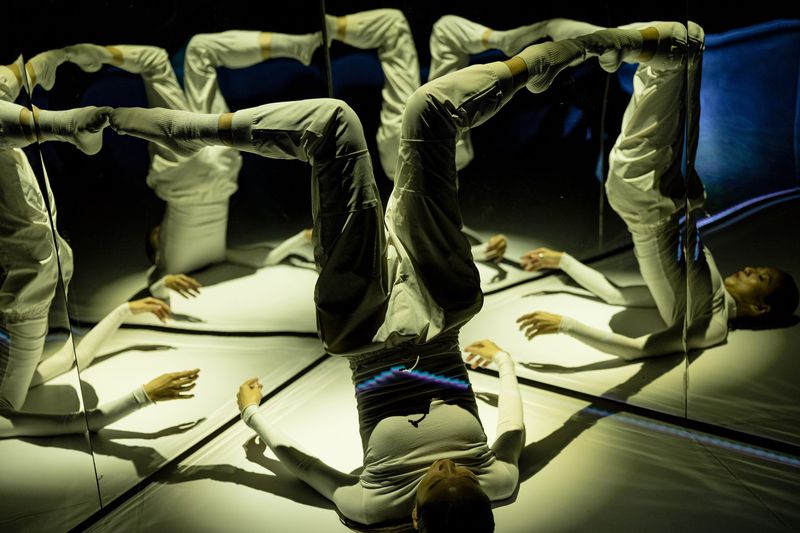
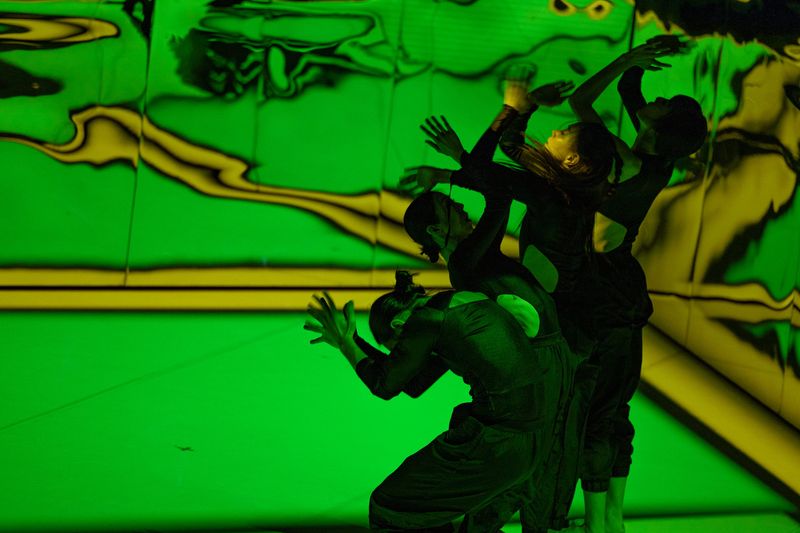
제 작품을 통해 관객분들이 어떤 경험을 할 수 있는지가 초창기부터 지금까지 저의 가장 큰 고민이에요. 2012년 작품에서 ‘댄스 익스피리언스Dance Experience’라는 표현을 썼는데요. 공연 예술을 바라볼 때 시각, 청각적인 감각 외에도 어떻게 하면 다양한 감각으로 경험하도록 도울 수 있을까 늘 생각해요. 무대라는 공간과 작품을 통해 관객이 몸으로 사유하는 경험을 선사하고 싶습니다.
beginning of my career straight through to the present. I used the expression “Dance Experience” in my 2012 performance. When looking at performing art, I always think about how to help people experience it with senses other than the visual and auditory ones. Through the space of the stage and the production itself, I want to present the audience with an experience whereby they think with their bodies.
Q5.
세월이 흐르면 관객의 양상도 변화를 겪습니다. 혹시 이런 변화를 체감할 때가 있나요?
Q5.
As the years go by, the patterns of audiences also change. Do you ever actually feel this change?
관객이 공연 한 번 보고 끝내는 것이 아니라 자기가 보았던 이야기에 관심을 두고 지켜보고 있다는 걸 느끼고 기뻤던 적이 있어요. 소셜 미디어를 통해 적극적으로 남기는 리뷰를 통해 저도 몰랐던 걸 알아채기도 하고요. 오늘날의 관객은 공연이 열리는 순간뿐 아니라, 공연 전후로 상호작용하면서 단순한 관람자가 아니라 작품에 적극적으로 개입하고 동참하는 존재가 된 듯 해요.
There was a time when I was happy to feel that the audience was continuously interested in the story of the performance they saw, and not simply limited to watching the performance once. Nowadays, I also notice things I didn’t know through other people’s reviews on social media. Today’s audiences don’t tend to remain simple viewers. Instead, they seem to be actively intervening and participating in the work by interacting with the art of the performance before and after the performance itself.
Q6.
2020년부터 〈원형하는 몸〉 시리즈를 작업하고 계세요. 삶과 죽음이라는 생성과 소멸 속에서 몸을 화두로 ‘나’를 돌아보는 작업인데요. 제목이 왜 원형인가요?
Q6.
You’ve been working on the Round series since 2020. It must be a challenging task to look back on “me” with the body as a topic in the creation and extinction or life and death process. Why did you adopt the title Round?
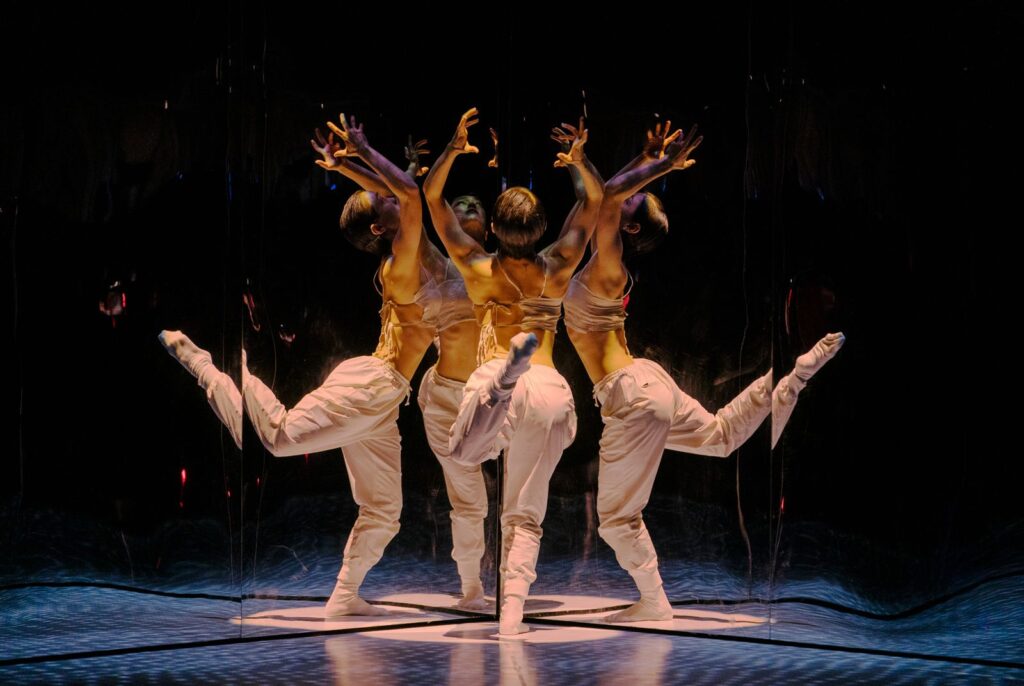
원형이라는 단어가 가진 의미는 중의적이에요. 형태로서의 ‘원형’이기도 하고, 본질을 나타내는 ‘원형’이기도 합니다. 여태껏 제가 시도한 작업에는 이를 관통하는 지점이 있더라고요. 그렇게 처음부터 지금까지 고민하던 것과 더불어 앞으로 나아갈 방향, 탐구하고 싶은 주제를 살펴보니 ‘원형’이 나왔습니다. 그래서 원형이라는 단어를 타이틀로 삼았어요. 원통형의 공간을 실제로 구현하려고 했는데, 우여곡절 끝에 거울을 사용해 360도 원형 공간을 만들었답니다.
The word “round” has two aspects to it. It represents both a round form and a round nature. There is the round aspect throughout works I have tried to present up to now. When I looked at what I have been concerned about from the beginning to the present, my future direction and the topic I want to explore, I came upon the word “round.” I subsequently used the word as the title. We tried to actually create a cylindrical space, but after a lot of trial and error, we used a mirror to create a 360-degree round space.
Q7.
예술감독을 맡은 아티스트 그룹, 콜렉티브 에이와 함께하며 설치미술, 영상, 사진, 의상, 음악, 사운드 아트, 그래픽 디자인 등 다양한 장르의 협업뿐 아니라 새롭고 다양한 매체와 미디어를 작업에 적극적으로 활용하고 있어요. 서로 다른 분야의 작업자와 소통하며 끊임없이 새로움을 추구하려면 엄청난 에너지가 필요한데 에너지의 균형을 어떻게 유지하시나요? 작가님의 소통 방식도 궁금합니다.
With the artist group Collective A, where you are the artistic director, you actively utilize new and diverse media in your work as well as collaborate with a wide variety of genres, such as installation art, video, photography, costumes, music, sound art, and graphic design. When you need a lot of energy to communicate with people working in different fields and are constantly pursuing newness, how do you balance the energy you put into everything? I’m also curious about the way you communicate all that you have to say.
에너지가 참 많이 들죠. (웃음) 에너지를 소비하는 관계, 에너지를 받는 관계, 이 두 경우가 항상 공존합니다. 체력적으로는 소진하고 소비하지만, 과정 안에서 시너지가 나는 순간 에너지가 충전돼요. 그러면 제가 상상하던 게 구현되고, 어떤 지점에서는 상상하지 못한 지점까지 확장해줍니다. 쉽진 않지만, 이제는 문제가 발생했을 때 급박하게 발생한 문제점을 붙잡고 해결하려 보단, 그다음 스텝으로 넘어가 다른 방식으로 해결하려고 해요. 제가 소통하는 방법은 단순합니다. 작품의 중요한 키워드와 모티프를 분명히 정하고, 이를 충분히 공유하는 거죠. 공연 예술의 특성상 창작 작업을 하는 다양한 협력자와 작품에서 다루는 핵심 키워드 및 주요한 지점을 공유하면 나머지는 자유롭게 각자 창작할 수 있어요. 예를 들어 〈몽원도원무〉에서 한국성을 나타내는 가장 중요한 키워드이자 모티프는 ‘굽이굽이’였어요. 음악, 의상, 미디어 등 각 분야의 창작자가 이 키워드를 가지고 각자의 영역에서 굽이굽이를 표현해냈어요. 방향에 대한 중심을 잡고 그 주제와 방향을 명확히 전달하며 적극적으로 각 파트와 소통하는 방법이 큰 도움이 됩니다.
It really does take a lot of energy. (Laughs) With the relationship that consumes my energy, and the relationship that I receive energy from, these two cases always coexist. It’s physically exhausting and consuming, but I become energized the moment when the synergy is realized in the process. I also get a burst of energy when what I’ve imagined is realized, and at some point the work is extended to a level that I hadn’t previously thought possible. It’s not easy, but now I don’t try to solve a problem in a hurry when something happens. Rather, I try to move on to the next step and solve it in a different way. In terms of communication, the way I do so is simple. We clearly define the keywords and motifs of the work and fully share them with each other. By its very nature, you can freely create the rest of the production when it comes to the performing arts by sharing keywords and major points covered in the production with various collaborators. For example, the most important keyword and motif that represents Koreanness in Dream Journey to the Peach Blossom Dance was “meandering.” Creators in various fields, including music, costumes, and media, expressed “meandering” in their respective areas with this keyword. It’s very helpful to focus on a direction, and clearly communicate the topic and direction while actively communicating with each part of a project team at the same time.
Q8.
진엽 님은 인간에게 가장 오랜 미디엄인 몸을 통해 우리 문명 앞단에 있는 새로운 기술과 매체를 연결하고 확장하는 작업을 하고 계세요. 이러한 맥락에서 앞으로 어떤 작업을 시도해보고 싶으신가요?
Q8.
You’re working on connecting and expanding new technologies and media at the forefront of our civilization through the body, which is the oldest medium for expression in humans. What would you like to try in the future in this context?
〈원형하는 몸〉 작업을 시작하면서 알게 되었어요. 저는 이미 이 세상에 존재하는 것에 관심이 있다는 사실을요. 세상에 존재하는 현상들, 자연과학에서 근본적으로 다루는 지점이 제가 탐구하는 몸과 맞닿아 있더라고요. 예전부터 공부하고 있긴 하지만, 앞으로 과학자와 교류해 작업을 지속하고 싶어요. 저의 삶과 가치관은 작업을 통해 정립하는 것 같아요. 삶과 작업이 수평적으로 함께 나아가면 좋겠습니다.
When I started working on Round, I discovered that I’m interested in what already exists in this world. The phenomena that exist in the world, the points that are fundamentally dealt with in natural science, are related to the body I’m exploring. I’ve been studying for a long time, but I want to continue working with scientists in the future. I think the life I’m leading and my own values have been established through work. In the future, I hope that my life and work will continue to complement each other symbiotically.